Tilburg // A Dead Sinking Story
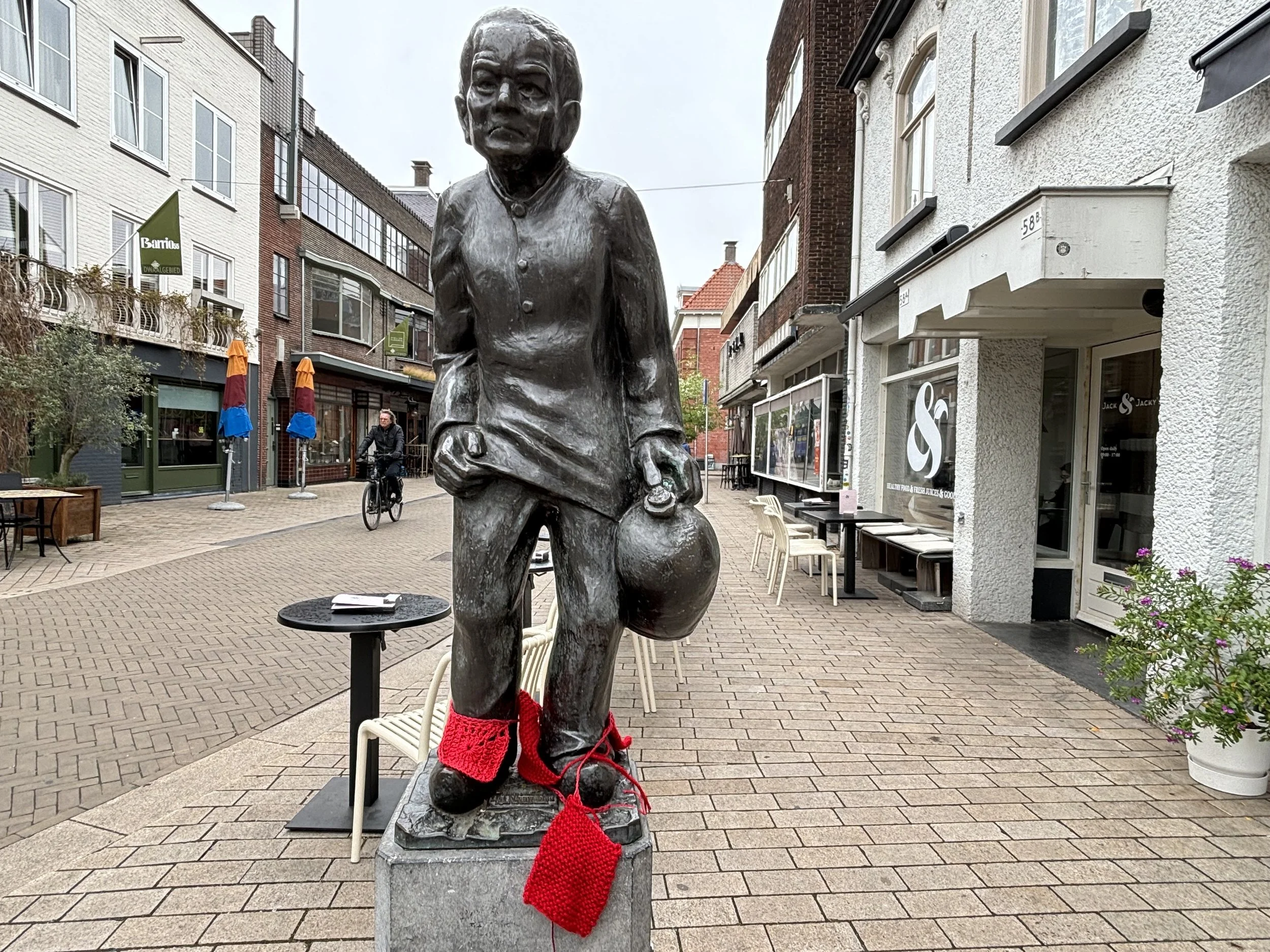
Jugpisser Statue in Tilburg © John Bills
“People from Tilburg are known as ‘Kruikenzeikers.’ Do you know what that means in English?” Unsurprisingly, I did not know what Kruikenzeikers meant in English, as my Dutch didn’t extend beyond the words for “thank you” (bedankt) and “sandwich” (boterham). Boterham is really fun to say, but it didn’t help me with this Kruikenzeikers conundrum. Whatever could it mean? Kruikenzeikers?
I’m burying the lede, as ever, but I’m working on the assumption that you have read enough to accept this tired trope. The travel writer draws out a conversation with a local, primarily to lay the groundwork for the culture and history that will follow. It sets the scene without having to describe anything or fill the first section of an article with adjectives and superlatives. It also eats into a word count requirement and is easy to edit if the writer approaches the climax of a piece and realises they require more words. If the writer reaches the end and needs to fill more space, they (or he or she) can always go back and add more meat to the bones of the scene-setter.
“It means “jug-pisser,” because workers would bring their urine to work in jugs. Urine is high in ammonia, and it was used to process or clean raw wool in the factories.”
You might not see many sheep in Tilburg, but the city’s history is delicately intertwined with wool, which may or may not be a joke. The textile industry here was a big deal in the 18th century, largely focused on woollen cloth, taking those age-old traditions of domestic spinning and weaving and putting them on an industrial scale. The usual sequence of events followed: industry brought steam power and more sophisticated machinery; factories sprang up all around; and the town became defined by its most important industry. Chimneys replaced trees, and the belching smoke of factories created a blanket of its own, one that passed through the hands of everyone in the city. Did it last forever? No, but that’s how this game is played. The 20th century saw cheaper production elsewhere take hold, and many factories closed after World War II.
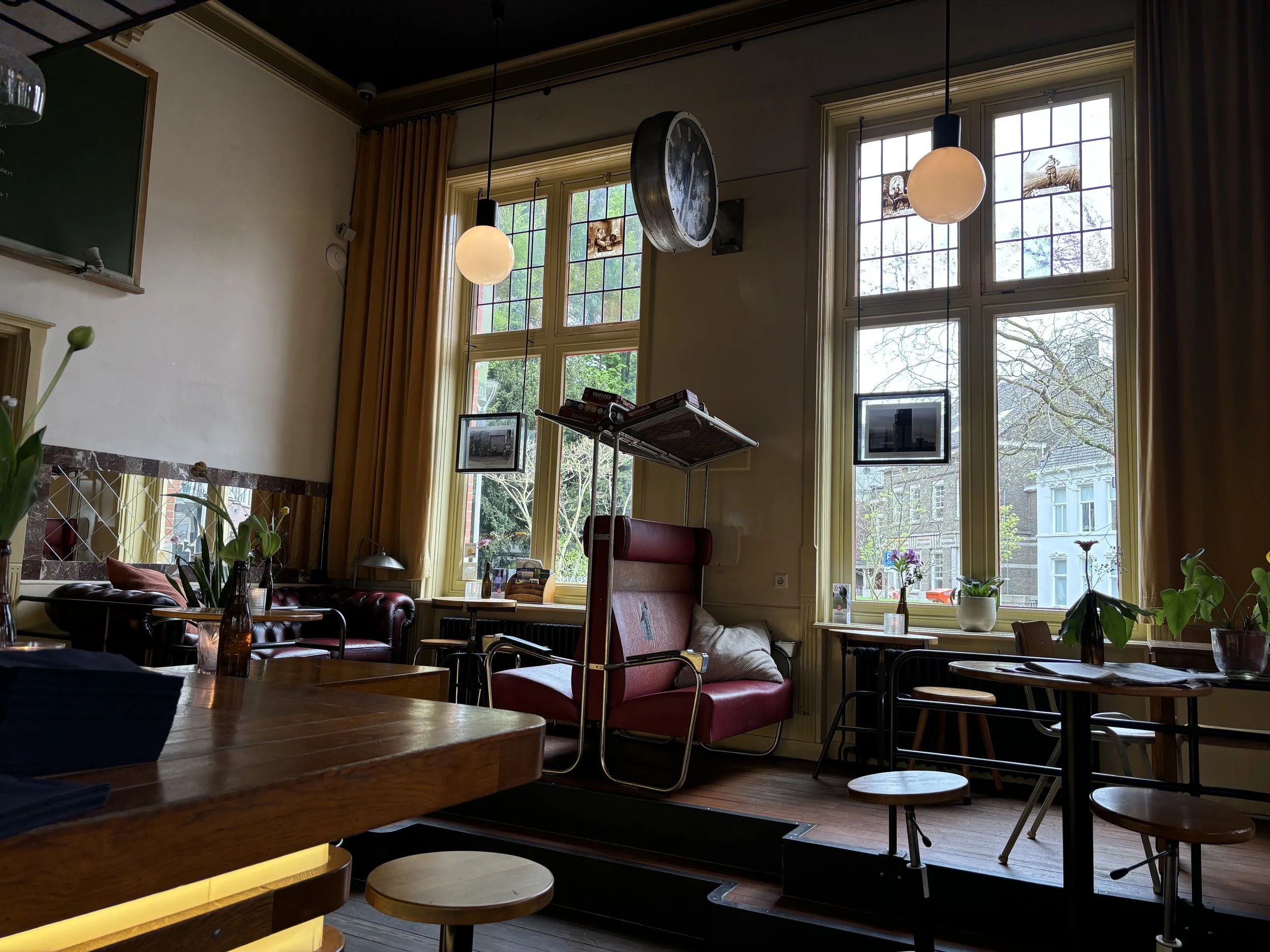
A cafe in Tilburg © John Bills
And urine? As the friendly lady in the Tilburg tourist information centre explained, it was pretty darn good for bleaching or cleaning raw wool. That stuff didn’t come clean, after all. It came from the sheep, bringing all the delights of the field with it. The ammonia in piss removed the musk of the wild, and the wool was ready for whatever came next. The jugs stood beside the looms like moons, waiting for their time to shine. Empty jugs were filled, wool became cloth, and a city developed around it all. Nothing went to waste in Tilburg; not even waste.
Unfortunately for you, that is where today’s lesson ends. You see, I wasn’t in Tilburg to learn about the magical ways in which urine led to sweaters, and I wasn’t in Tilburg to discover the links between pissing in a jug and the city around me. I wasn’t even in Tilburg to learn anything about Tilburg. I was there for one reason only: a Japanese band playing a 22-year-old album in full, from start to finish.
Envy are another in the long list of bands that Patch introduced me to, alongside artists like Fiona Apple, Stars of the Lid, Mono, and Godspeed You! Black Emperor. All told, that is a mighty important collection of music in the 40 years of my existence, and I fear that I will never see Patch again to thank him. Hug the ones you love, folks.
The nuts and bolts of Envy are not important to this story. They formed in Tokyo, they started off playing a chaotic, New York Hardcore sort of racket, before evolving into an altogether more impactful beast. They had flirted with the dynamics of post rock before, but it was 2003’s A Dead Sinking Story that revealed a band at the height of its powers, a kaleidoscopic cacophony of emotion that took visceral pain, expansive songwriting, and pure melancholy and created something special. That word gets thrown around too much, but A Dead Sinking Story is special. It is an album of noise, but noise that soars skyward, dragging the lyrical interpretation of the heart with it. Violent music at the end of its tether. The person it is directed at has long walked away. You will not be coming back.
As part of the annual Roadburn festival, Envy were to play A Dead Sinking Story in full. I had seen the band live once before, way back in 2011 at the Brudenell Social Club in Leeds, and I had long claimed that they were the best live band I had ever seen. The set was announced, I booked my tickets, time passed, and here I was, waiting patiently in Tilburg for the show to begin.
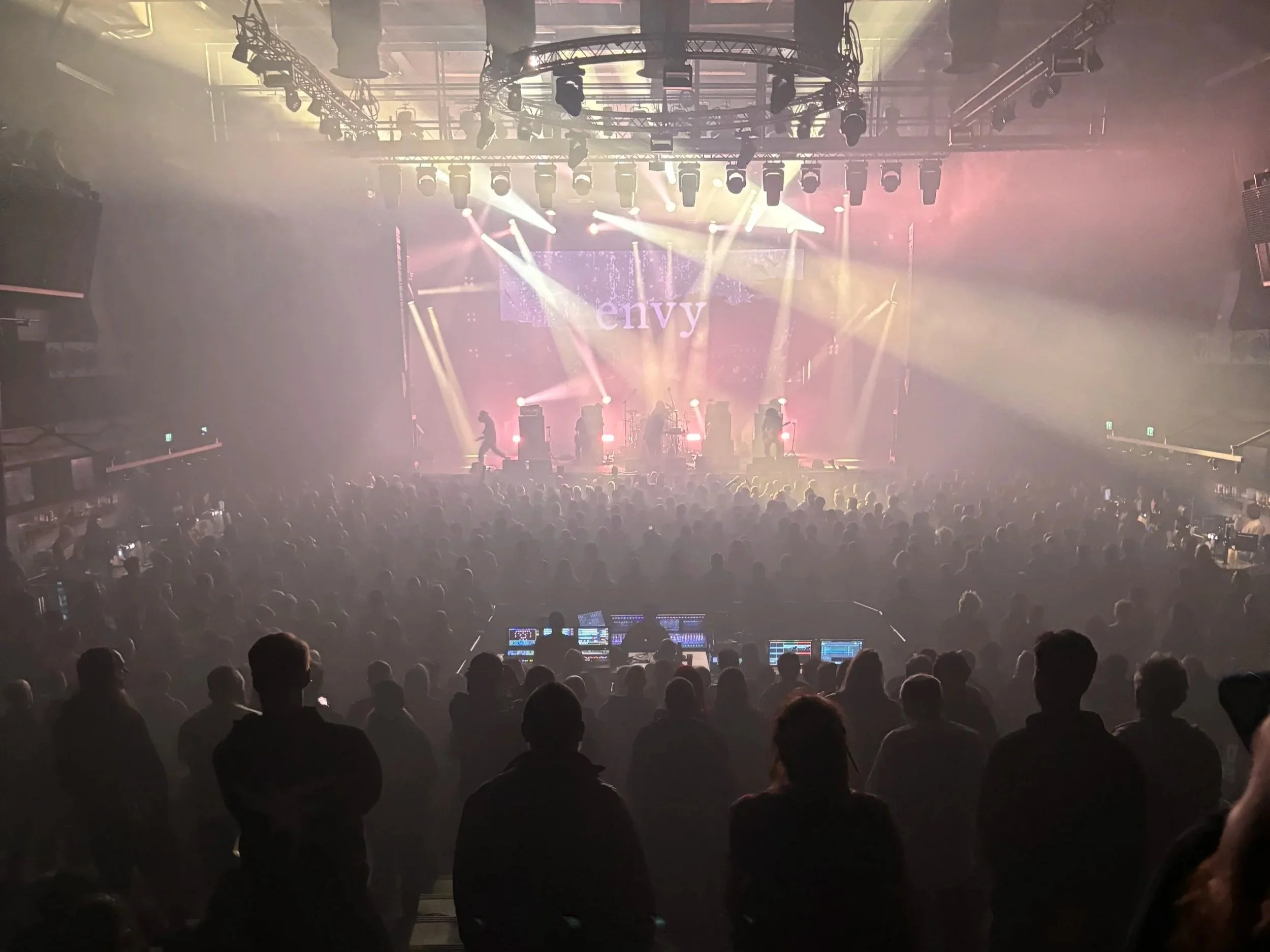
Envy at Roadburn 2025 © John Bills
Finnish psychedelic black metallers Oranssi Pazuzu opened up the day on the main stage, before Kylesa ran through a set of fun Southern chunk. There wasn’t anything particularly remarkable about either band, although that might have had more to do with the anticipation of what was to come. Next up was The Body & Dis Fig, and I had no idea who The Body & Dis Fig were. I toyed with the idea of heading to the other stage, but figured it was wise to stay put in this relatively good vantage spot. Envy were on soon enough.
It was the right thing to do, because The Body & Dis Fig ended up being one of the best live music experiences I have ever, erm, experienced. To this day, I say that it was the heaviest thing I have ever seen live, and I struggle to imagine that anything heavier can exist. The first crash of the cymbals at the beginning of “Eternal Hours” was a truly physical event. I giggled. That’s what you do at metal gigs when something is awesome; you giggle.
A giggle at a giggle. You will like that.
The Body & Dis Fig would be impossible to follow in normal circumstances, but these circumstances were anything but normal. A nervous hum of anticipation filled the hall as bodies filed in, jostling for space before the inevitable. My persistence had paid off, and I stood towards the back of the room at the front of a tiered section, giving me a clear sightline to the stage and easy access to the bar, not that it was going to be needed. Envy were about to play A Dead Sinking Story in full.
And while I would love to go into a blow-by-blow account of the performance, the songs, the moments, the feelings, and what it all means to me, I can’t. Nobody can. If you can, then it simply isn’t as big a deal as you want it to be. If you can describe love, then it probably isn’t love. Over the course of just over an hour, I thought of my friends, the places I’d lived, and all those ups and downs. I thought of my sister, I thought of Dobrinja, I thought of my parents. To you, A Dead Sinking Story might sound like noise, but the frequencies of that noise somehow align perfectly with the chemical levels distributed throughout my body, brain, and soul. If you want to know how I feel, it is something similar to the last four minutes of Color of Fetters. It always has been.
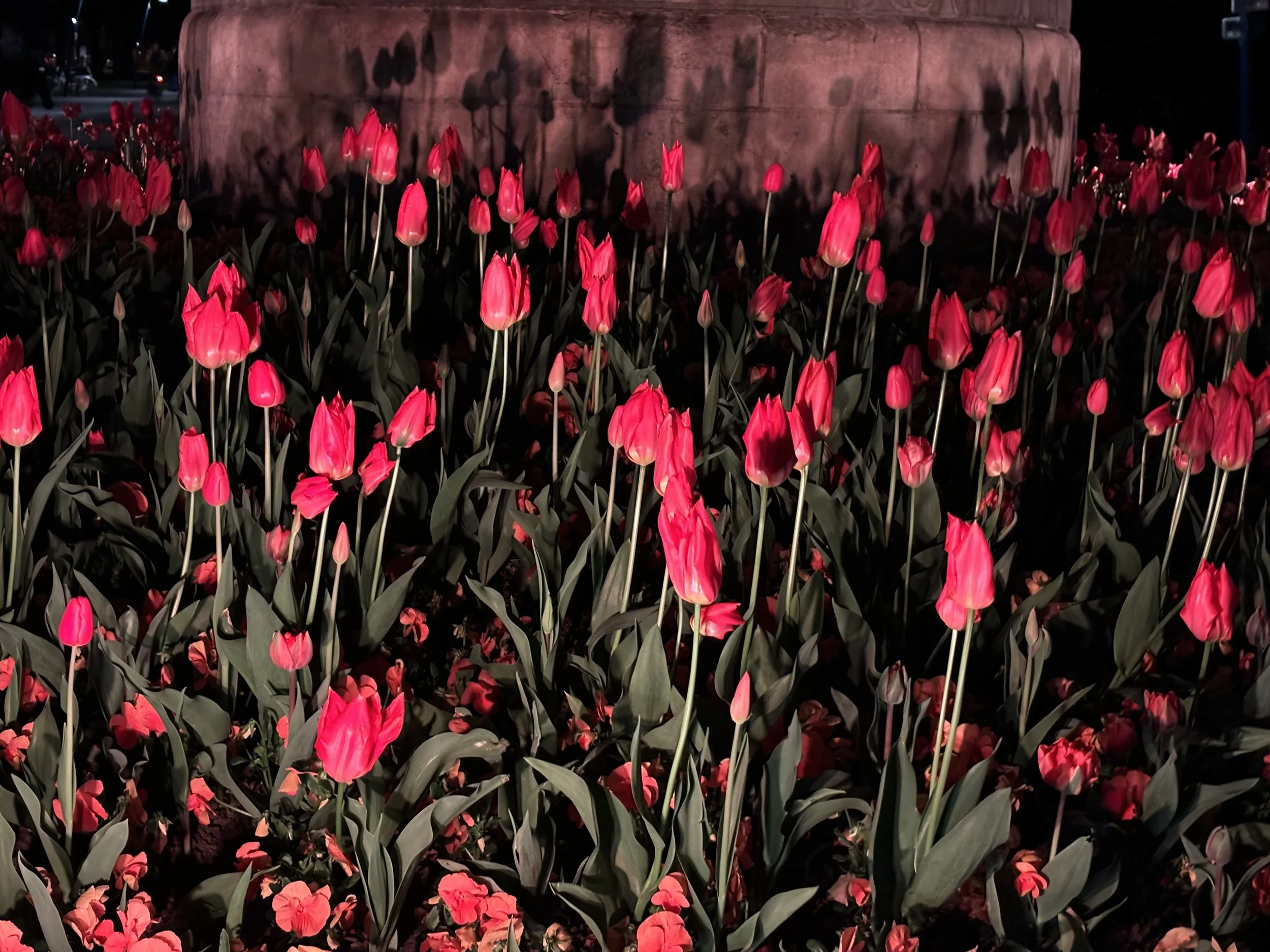
Tulips in Breda on the walk home © John Bills
As I approached the station, my bladder had lost patience. I’m not great at holding it in at the best of times, and a full day of fun in Tilburg was just about the best of times. I needed the toilet, and I was going to need it soon. Luckily, this is the Netherlands, a real country, and the train to Breda was perfectly on time, sidling into the station at Tilburg and welcoming me into its warm embrace, complete with directions to the toilet. Salvation was just a carriage away.
Except it wasn’t. Always keep a stone in your shoe, folks. The toilet was out of order, as were all the toilets on the train, leaving me no option but to squirm and sweat my way through the 15-minute journey and the subsequent 20-minute walk to my hotel. And yes, I understand that it seems too good to be true, and I’m hoping you’ve joined the dots together here, allowing me to end this love letter to Envy without having to grasp at the low-hanging fruit that is the bookend jug-pisser joke.
What I’m saying is that, much like the wool factory workers of Tilburg, I needed a jug to piss in. It’s a shame to have to break character to explain that, but you can never be sure.
The train arrived in Breda, where I was able to use a toilet at the station without any bother. All’s well that ends well. We wait impatiently for tomorrow, though we thought we could catch the moon.