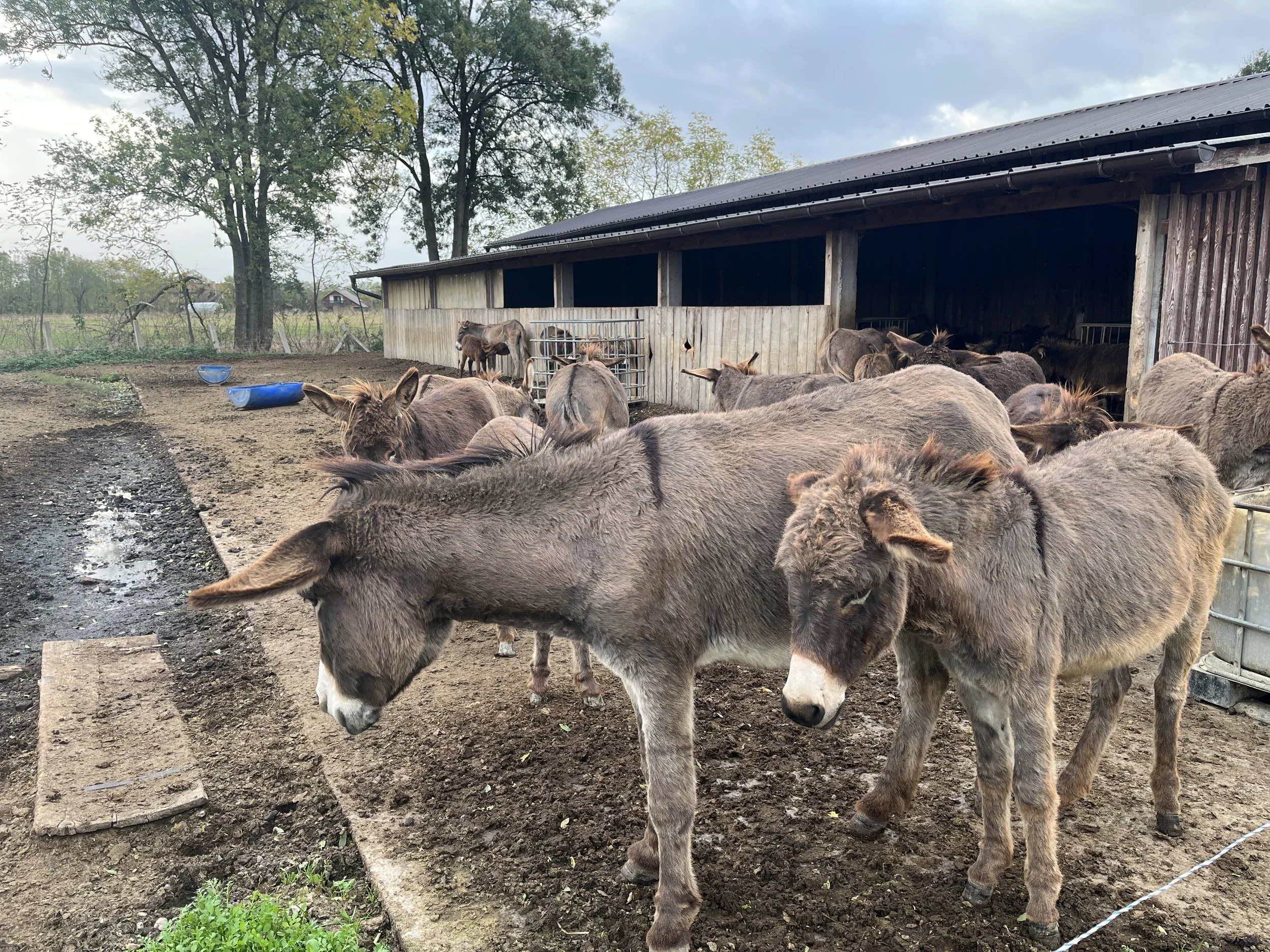
Donkeys at Agro Nika © John Bills
Early mornings are the best. I once read that people who consider themselves “night people” are actually lapsed children, forever rebelling against their parents for making them go to bed. Yes, I said that, and no, I don’t have any science to back it up. Even if I did, it would likely only take a couple of decades for newer, better, more awesome science to prove me wrong. For now, I will rely on my instincts and build opinions based on, as the young folk say, the vibes. The truth is, I like early mornings because they are the only time of day when I feel like I haven’t yet been assigned a part. Before the emails, obligations, conversations, and expectations arrive, there is a brief period where you can pretend you are whoever you want to be. Tonight, Matthew, I’ll be honest.
It was early in Modriča when my brain struggled from its slumber, and it didn’t take long for morning mode to kick in. Full disclosure: I don’t have a morning mode, but feel free to imagine me as a super-productive person in the early hours. In reality, I staggered around, showered, and went for breakfast. I had spent the night at the Monogram distillery, but a dry spell meant I wasn’t feeling the effects of a single šljiva. If anything, I was overhydrated. The distillery is gorgeous, but the breakfast wasn’t worth writing home about, so I’m not going to write home about it.
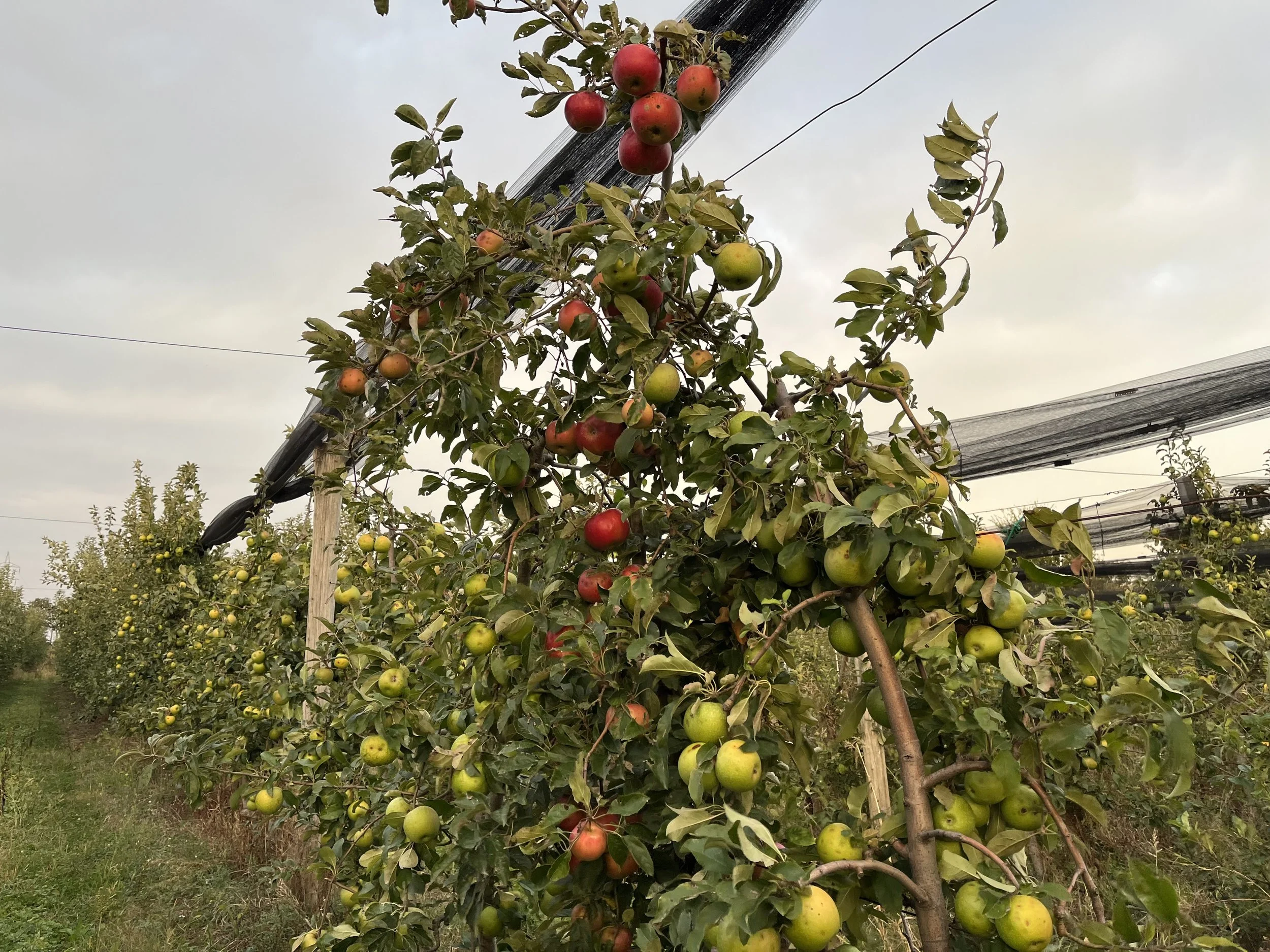
Fruit at Monogram Distillery in Modriča © John Bills
Besides, there were donkeys to find. During my brief check-in conversation with the staff at Monogram, I asked if there were any pleasant spots for a morning stroll nearby. The receptionist was non-committal, though this isn’t something to hold against her. There is a clear scripted element to the tourist/receptionist relationship. We ask questions because we feel we should be interested in the places we visit; they answer because it is their job. Besides, this is a gorgeous part of the country, and it’s just sweeping green as far as the eye can see. I could have walked in any direction, and it would have been beautiful. Still, I pushed for something more, asking if there were any nearby sights, churches, mosques, whatever.
“There is a donkey farm nearby, I suppose that is interesting.”
You bet your bottom buns that’s interesting. And yes, dear reader, this explains why I didn’t commit every moment of my morning in Modriča to memory. I was too excited. There is a donkey farm nearby. A donkey farm was not supposed to be the thing I remembered from Modriča. It was not significant enough. It was not important enough. It was certainly not the sort of thing a serious traveller was supposed to admit excited him.
I did my due diligence (looked on Google) and headed out into the wilds of the Modriča morning in search of ass.
John, grow up. You are a 40-year-old man.
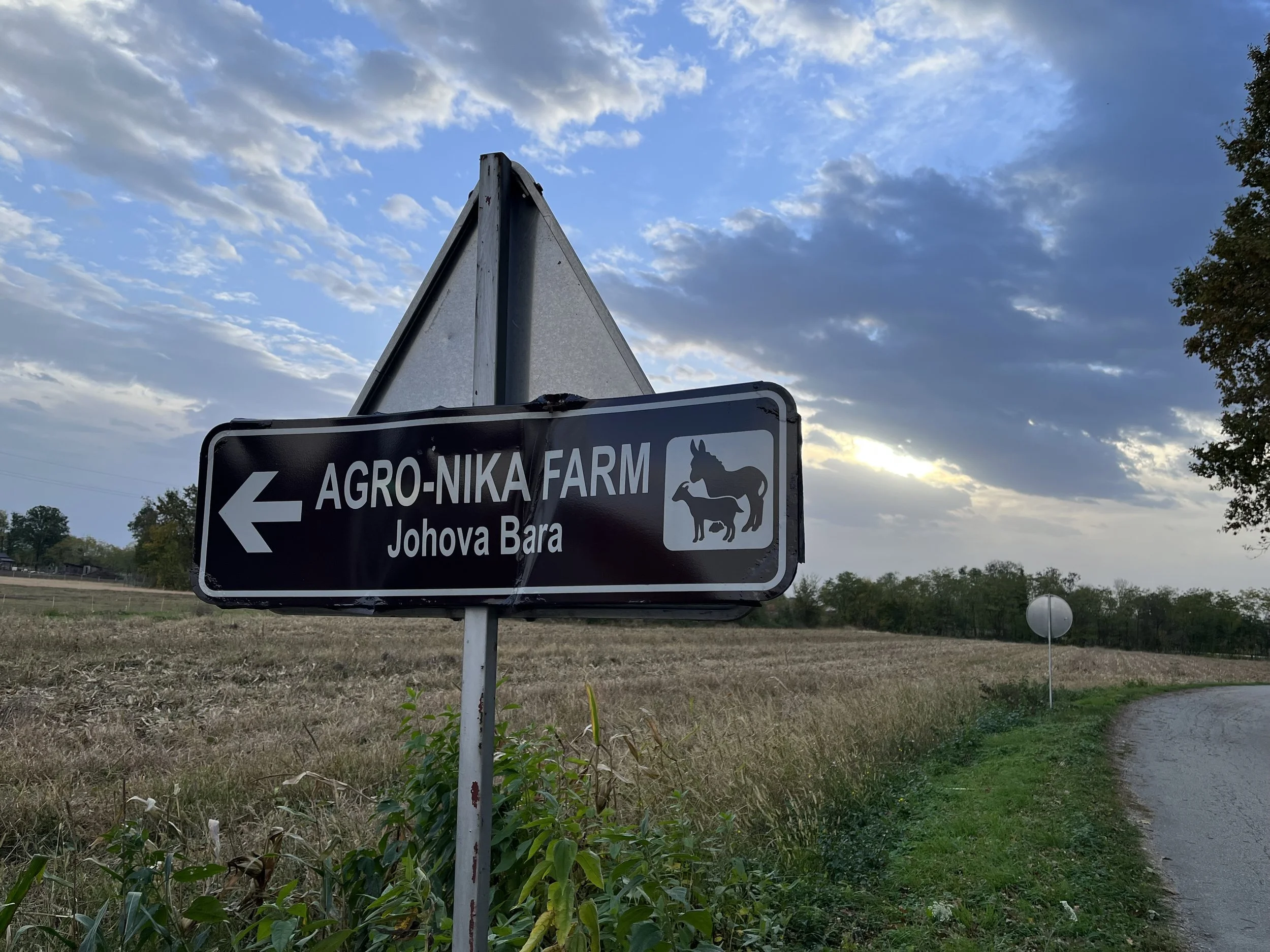
Sign for Agro Nika Farm near Modriča © John Bills
Luckily for me, the Agro-Nika Farm was a mere 750 metres from the distillery. I walked for 10 minutes, and I was there. Not enough time to explore Modriča’s surroundings, but enough to understand that there are still places in Bosnia and Herzegovina that haven’t succumbed to the brutal ways of the modern world. A dog barked, but my desire to see a donkey farm outweighed my fear of dogs. If you truly want something, fear is no obstacle.
Fear might not have been an obstacle, but reality was becoming increasingly prevalent. Yes, you are here, and yes, you like donkeys, but that doesn’t mean whoever owns this farm is going to swing open the gates so you can have a look around at 7 in the morning. What would you do if someone knocked on your apartment door and asked to have a look? That was essentially what I was doing in Johova Bara, a village without a Wikipedia page. I either needed to concoct a plan to gain entry to the farm, or I needed to be content with knowing it existed and little more. Maybe I should have been more afraid of the barking dog.
Either way, I ran out of time. It turns out you can only loiter at the gate of a farm for so long before someone comes to ask what the hell you are doing. He didn’t use those words, but he did make it relatively clear that he was friendly but also eager to hear my reasoning. Well, dear reader, I panicked, but for once in my life, I panicked well.
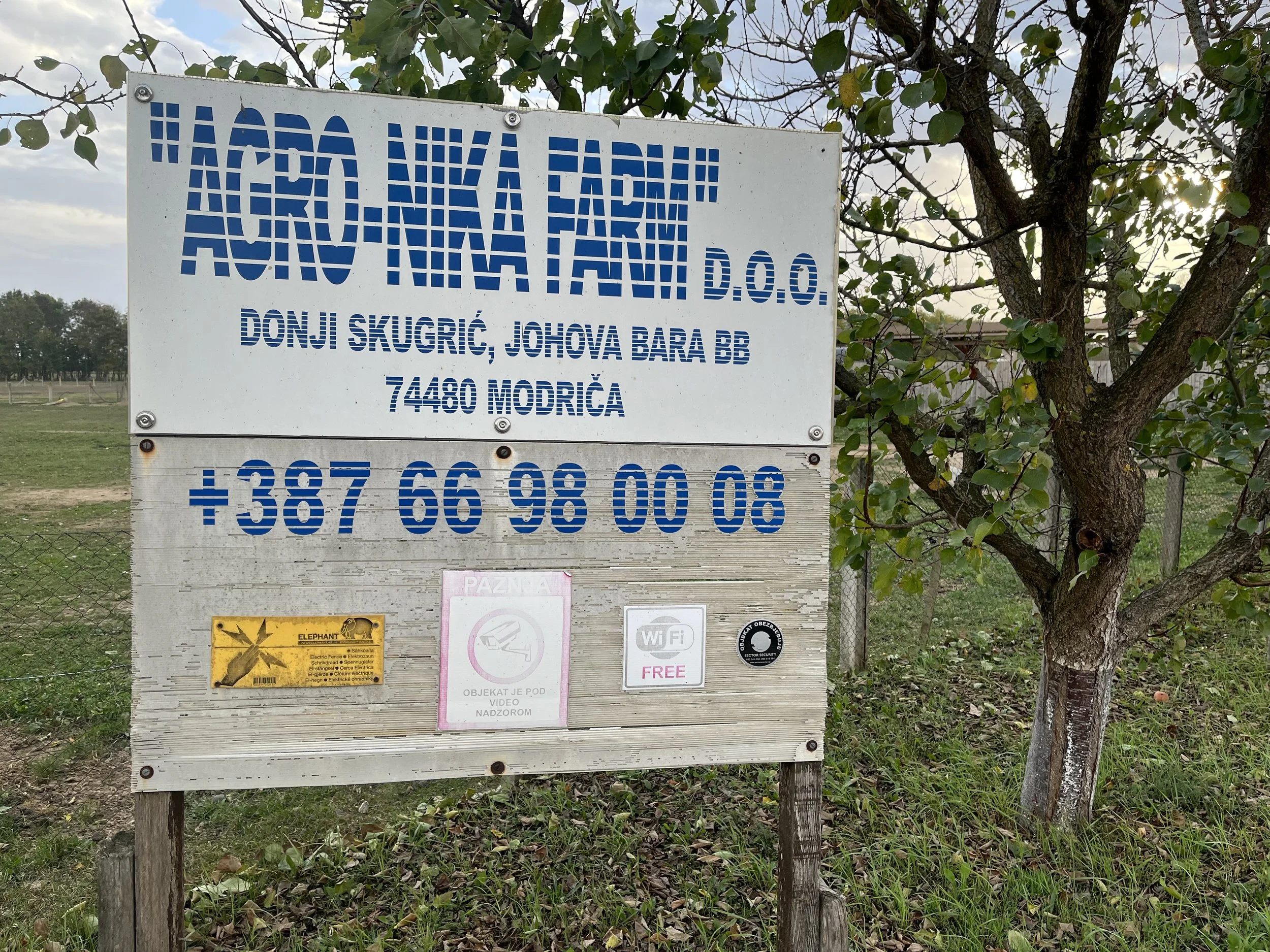
Agro Nika sign near Modriča © John Bills
“Dobro jutro, kako ste? Zovem se John, nisam odavde, pričam samo malo vaš jezik, učim polako ali sam učio zauvijek. Ja sam pisac iz Velsa, spavao sam u Monogram i rekli su da ovdje je farma magaraca. Želio sam pitati mogu da slikam magarce, zato što moja sestra, ona je farmera žena, i njen sin voli magarce.”
I really do only speak a little of this language, and while this event took place a couple of years ago, I’m confident in saying that is, word for word, exactly what I said to the unimpressed farmer. For those who don’t speak Bosnian, here’s the gist: “Good morning, how are you? My name is John, I’m not from here, I speak a little of your language, I am learning slowly but I am learning forever. I am a writer from Wales, I slept at Monogram, and they said that there is a donkey farm here. I wanted to ask if I could take a photo of the donkeys, because my sister, she is a farmer’s wife, and her son loves donkeys.”
Not bad, not bad. It seemed to work, as the farmer’s inquisitive face relaxed, and he opened the gate and welcomed me in. Moments later, I was standing next to a pen holding lord knows how many donkeys, the pride and joy of Agro Nika. I wasn’t sure what to do next, but it didn’t matter. I took some photos, admired the donkeys, and felt somewhat content with my morning.
Established in 2014, Agro Nika has an interesting backstory. According to reports, the owner left the hustle and bustle of Zagreb and moved here, gradually building a donkey farm on inherited land. It isn’t that there is no history; rather, the history is deliberate. Agro Nika is a place where someone has chosen to care about a very specific thing.
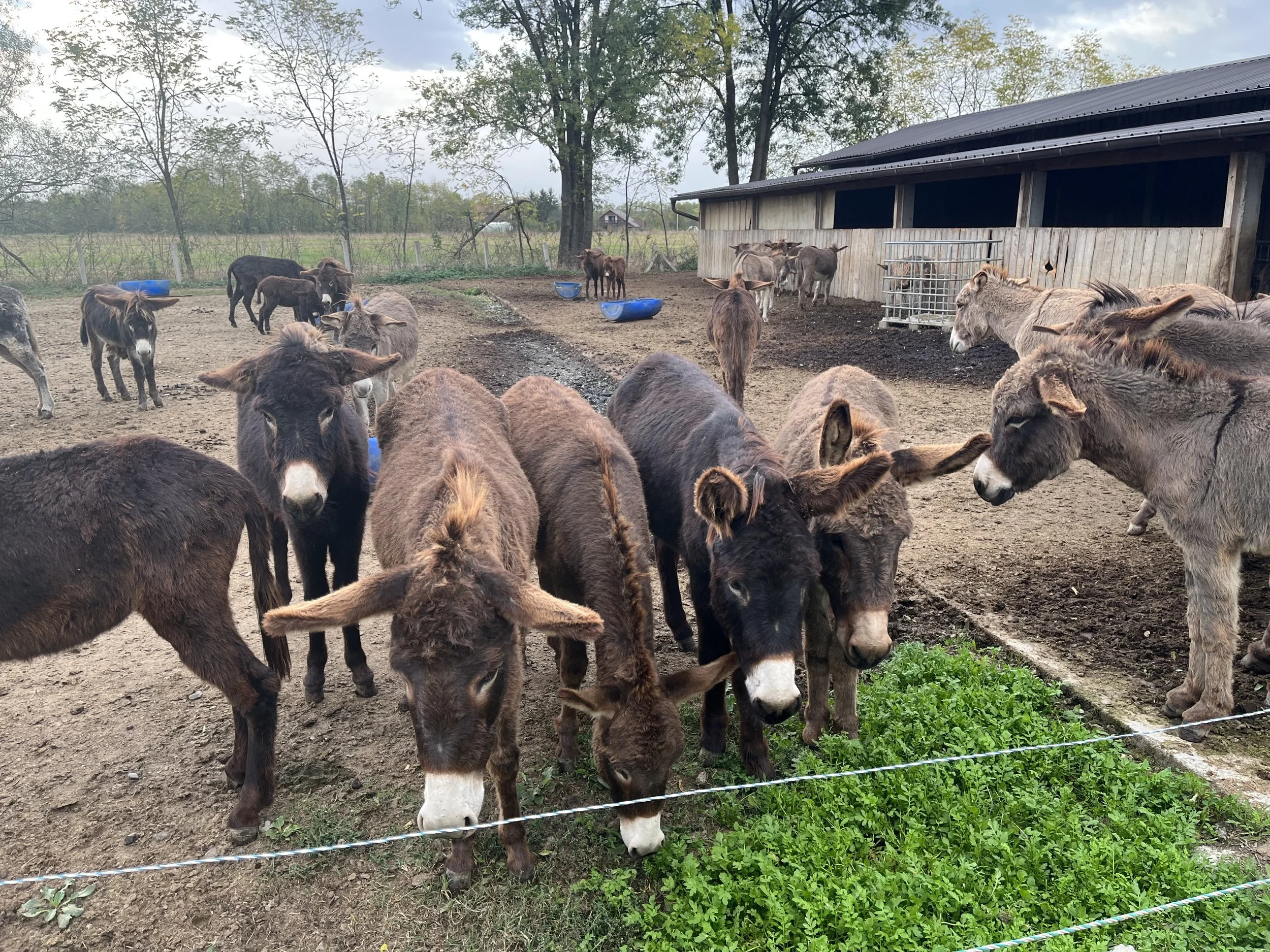
Donkeys at Agro Nika near Modriča © John Bills
And as I stood admiring the donkeys, I quietly fought the nagging pull of deceit. I don’t doubt that Billy loves donkeys, but that wasn’t why I was here. There are certain lies we tell because the truth seems too small to defend. “My nephew loves donkeys” was technically true, only in the sense that every person who loves donkeys must, at some point, have become somebody’s nephew or niece. That part wasn’t entirely untrue, but it was more obtuse than I let on. I was here under false pretences that, while possibly holding up in court, were crumbling under the quiet scrutiny of self-appraisal. I have always admired people who know what they want. They move through the world with a certainty that I have spent years attempting to imitate, armed with carefully prepared explanations and a convincing collection of reasons. In Modriča, I told a man who owned a donkey farm that I was there because my nephew loved donkeys. I had remembered all my lines, but I had simply forgotten the truth. We spend much of our lives inventing reasons for our desires, as if wanting something is only acceptable when it belongs to someone else. The strange thing about adulthood is how often we rehearse acceptable explanations for our own happiness. We are allowed to enjoy things, but only if we can provide a reason. We like museums because they educate us and mountains because they challenge us. Sometimes the honest answer is embarrassingly simple: we like something because we like it. I decided to come clean and told the guy that while the bulk of my story was true, the donkey lover in question was me. Wait, what? Poor phrasing, but what’s done is done.
The man didn’t seem to care. He continued talking to me about the delights of the farm, mentioning that they also have goats and ponies. Agro Nika sounded like it had its fingers in many pies, producing goat cheese, goat milk, donkey milk, and various other agricultural products. They used to produce donkey cheese, but it was too expensive to make. You see, the process is unusually difficult because donkeys produce far less milk than cows or goats, and it is also low in fat and casein. That makes it difficult to turn into cheese, resulting in small yields. Donkey cheese is one of the world’s most expensive cheeses, and it used to be produced in this gorgeous corner of the world outside Modriča. An animal usually associated with stubbornness and simplicity was responsible for one of the world’s most impractical luxury foods. Donkeys are not playing roles. They just are.
Alas, there’s only so long you can spend looking at donkeys, especially when you have lied to gain access to them. I thanked the farmer for his hospitality, and promised to call ahead before my next visit. Within 15 minutes, I was back at Monogram, packing up Horse and ready to jump in a taxi to Gradačac. I had arrived in Modriča expecting a quiet night at a distillery and little else. A script, if you’ll allow me to state the obvious. I left with newfound self-confidence, imbued by the power of donkeys.
John, maybe you are an ass, after all. And with one poorly timed joke, all progress is reversed.