Grude // In the Middle of Now Here
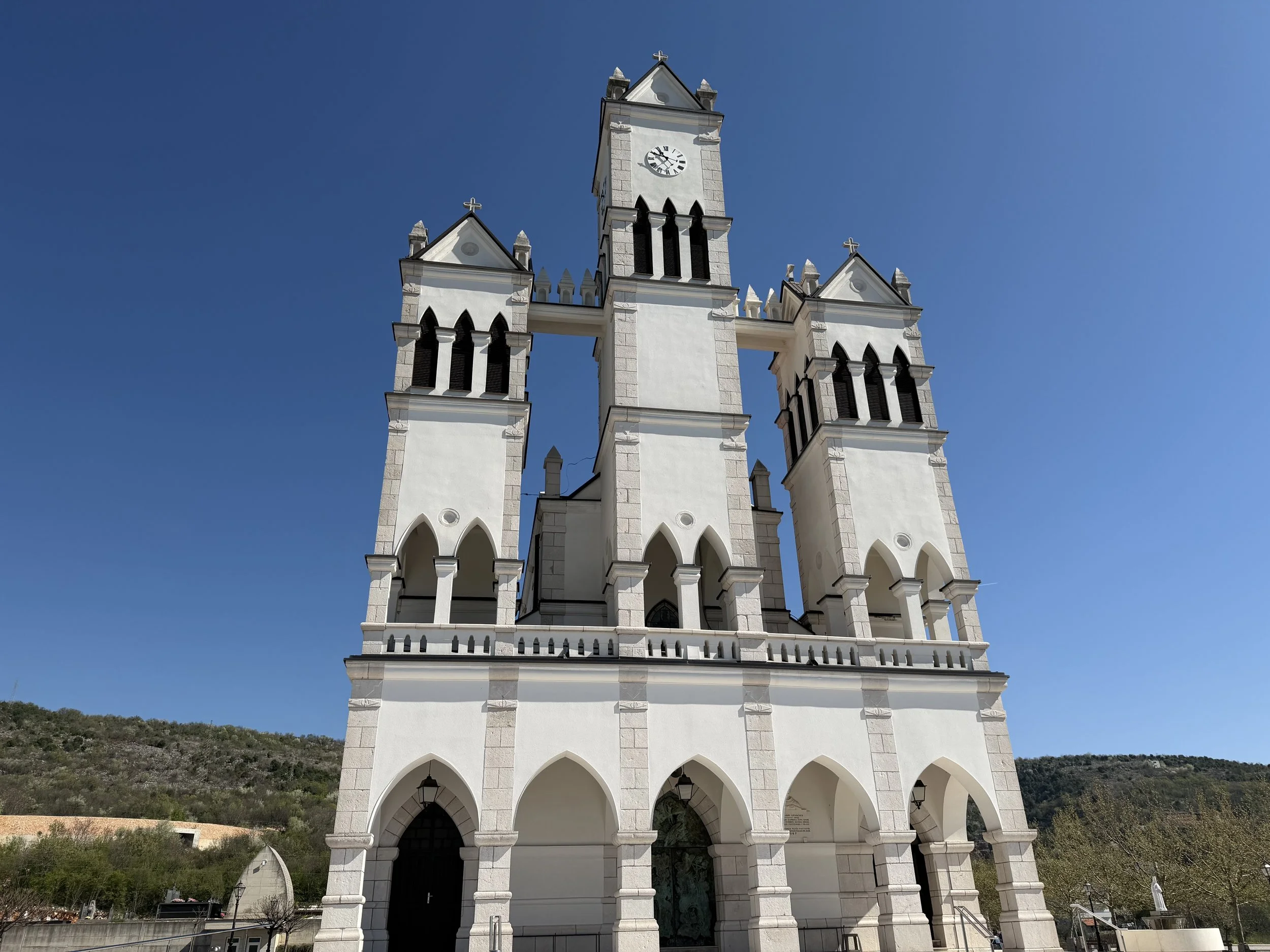
Church of St Catherine in Grude © John Bills
A small town and municipality in the West Herzegovina canton, Grude isn’t a million miles away from the country’s western border with Croatia. In fact, it is just 6 miles from the border, which is 999,994 miles fewer than a million (using current conversion rates). It is a small town, home to fewer than 4,500 people, although the wider municipality does provide a home to around 17,000 souls. They say it has “long been a crossroads for trade and travel,” but I’d wager such status is true from almost everywhere on the continent. Until the arrival of the Austro-Hungarians in the 19th century, Grude was a rural settlement, minding its own business, which contradicts the “crossroads for trade and travel” gimmick, but I’m not about to quibble with cliches. This is a place where Herzegovinian culture remains the cornerstone of everyday life. The stone houses promise silent strength, the vineyards draw life from stark landscapes, and those barren hills are dotted with small settlements and imposing churches. For most out here, Grude is the centre of it all. For me, this wasn’t going to be an “eight blokes in the hills” sort of place. Believe it or not, I had high expectations of Grude.
I just needed to get there.
As you may or may not know, I am not a driver. I once said that I would learn to drive when my imaginary wife was pregnant, but that didn’t happen. Delicious work there, John, delicious. Still, I didn’t learn to drive, and I had no interest in going through the entire rigamarole, at least until I was as old as I am today. It didn’t appeal, and I almost certainly would not have lived the same life if I had to worry about car tax, insurance. MOTs, fuel gauges, carburettors, brake pads, and all the other things I’ve heard Ben say over the years. I will never know if it was the right or wrong decision, but your interpretation of your own decisions is never static. When you are a child, you’ll be friends forever. When you’re an adult, you’ll be friends forever, but with different people. It is only in death that forever comes. After all, the only certainties in life are death and taxes.
You should be able to add “getting a bus to Grude” on that, and the internet suggested this would be no problem. I mean, a minor problem, as the bus was scheduled to leave at around 5 in the morning, but this is no major issue for me. The early bird always catches the worm, so catching a bus to Grude shouldn’t have been a problem.
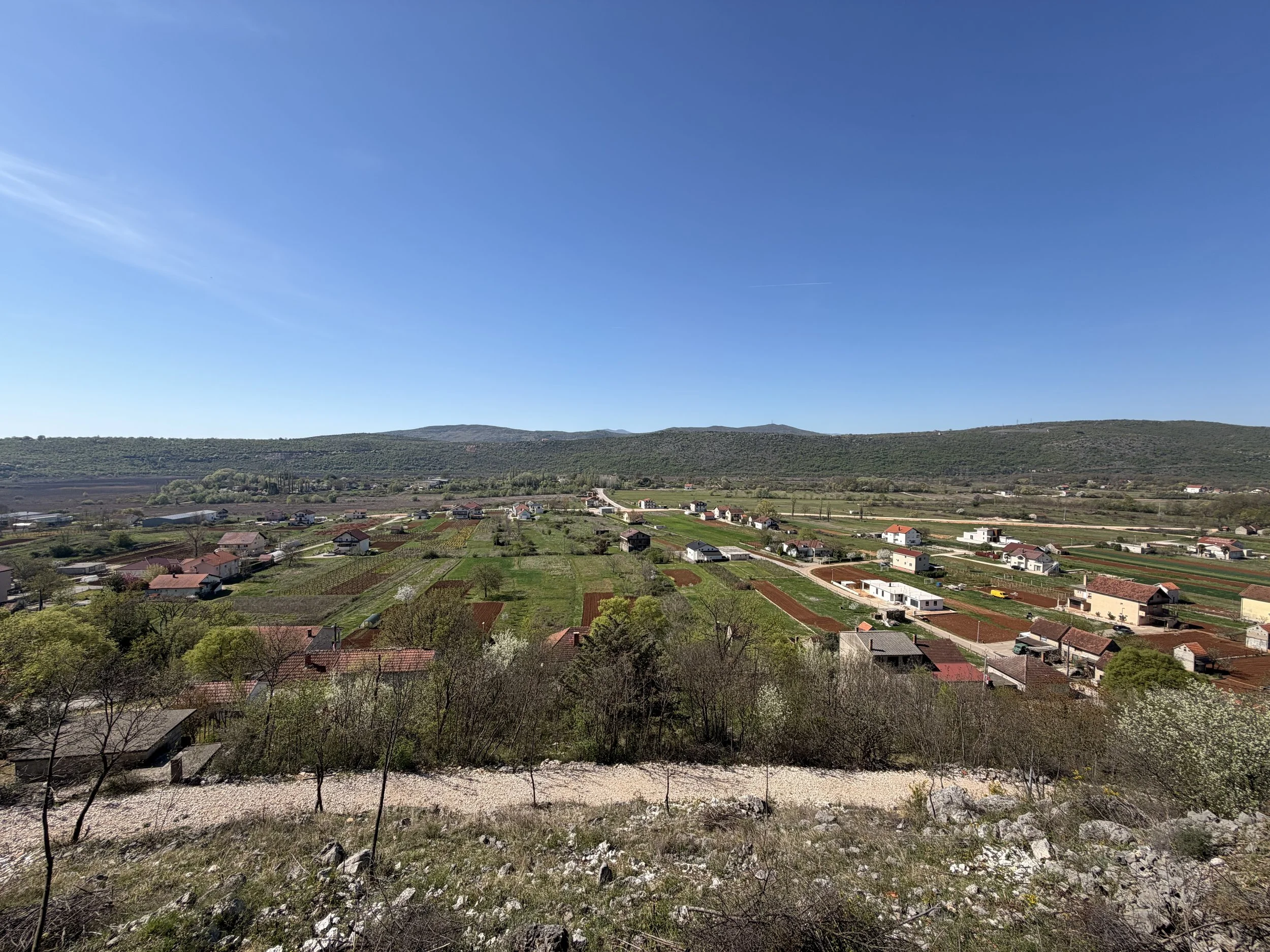
View from Grude © John Bills
But there was a problem, and it was born in contradictions. Various bus companies listed routes to Grude on their websites, but this went against a news report stating that all buses had been cancelled, with the exception of one student bus in the morning and one in the afternoon. Well, internet, which is it? A bus to Grude, or no buses to Grude?
I arrived in Mostar and headed straight to the Globtour office to find out what an actual human had to say about it. I’ve always had good interactions with the staff in the Globtour office at Mostar bus station, so I felt comfortable taking a relaxed approach. I entered the office, breezed through the pleasantries, and told them of my dilemma. I needed to go to Grude. Well, wanted to go to Grude, it was a bit of a stretch to say I “needed” to go there, but a little exaggeration was only going to help my cause. I mentioned that various websites stated that there was a bus at 5 in the morning, but I had spent enough time in Bosnia and Herzegovina to know that the internet doesn’t know anything about the truth. She listened patiently to my story, clicked some buttons, and informed me that there was indeed a bus to Grude that was scheduled to leave at 5 in the morning. The only issue was that the bus was travelling the length of Croatia, dipping into Herzegovina, and then back into Croatia, ending its journey in Dubrovnik. There was no way of knowing in advance if the bus would be on time. It might be early, in which case it wouldn’t bother stopping in Grude. It might be late, but you wouldn’t know. Her recommendation was to get up a couple of hours before, call the driver, and get a status update. Got it? Got it.
I am not getting up at 3 in the morning to call a bus driver and ask how late he will be by the time he gets to Grude. I just won’t do it. I’ve got a reputation, and I intend to keep it. I’m yet to see any demons on the wards, and I’m particularly observant.
Was this a test? It had to be. Otherwise, I couldn’t go on. There are towns in Bosnia and Herzegovina that conceal themselves behind mountains or in valleys. Some stand on top of hills, while others appear in the middle of seemingly endless fields. Grude hid behind logistics. I knew it would come to this, something deep in my gizzards told me this, but I still wanted to believe that there was a convenient public transport option to a relatively large town, at least by the standards of the West Herzegovina canton. That’s all well and good, but what becomes of all creation when the smallest prayer is firmly answered “no”? Recycling references, John, very good. Every stubborn itinerary reaches a point where pride becomes more expensive than a taxi. For me, this was that moment.
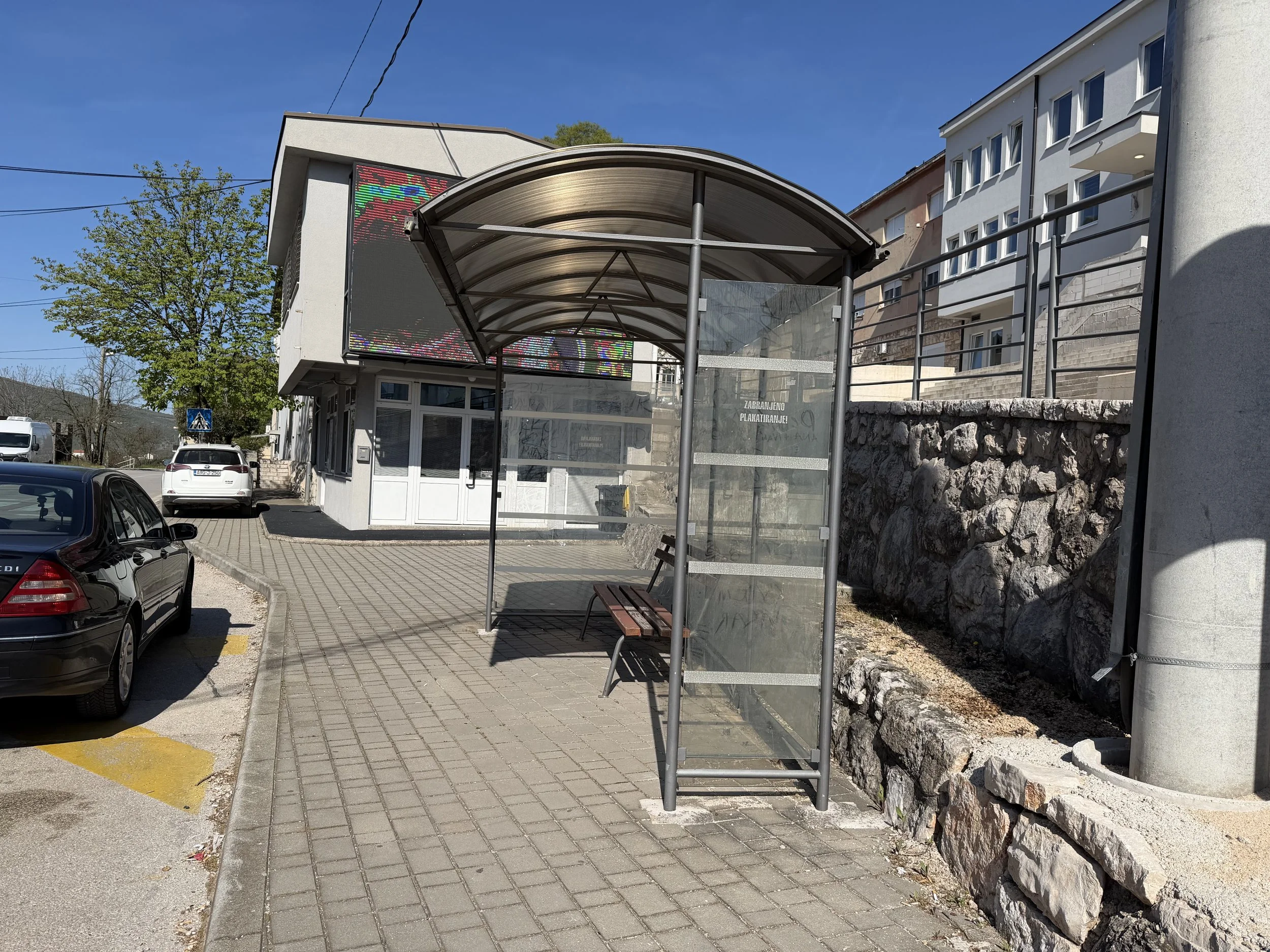
A bus stop in Grude © John Bills
So I booked a taxi to Grude. It wasn’t hard to do. I had come to think of Grude less as a place and more as a question, but the answer was an anticlimax. Get a dude to drive you there from Mostar. It’ll take 45 minutes to an hour. And that’s what I did, jumping in the taxi and sitting in relative silence for the journey, reluctant as I was to reveal how poorly I speak Bosnian while trying to explain just why I was in a taxi going to Grude.
As we are 1,000 or so words into this, you can probably see the end of the string already. We got to Grude, the taxi guy dropped me off, and I went out walking. What did I find? A small town and municipality in the West Herzegovina canton. Not a million miles from the border with Croatia. A place where Herzegovinian traditions remain strong. A place that gets the “crossroads of trade and travel” cliché, but is far more interested in the “rural settlement minding its own business” idea. Was there anything for me to see? Not really. If there were, there probably would have been a direct bus connection.
I wandered around aimlessly, stopping in the occasional cafe for an espresso that was purchased more in hope of inspiration than any need for caffeination. Grude was Grude, and it wasn’t about to put on a show for me. I was as good as done, and made my way to the Church of St. Catherine to make sure I had done all I needed to do in Grude.
Church of St Catherine in Grude © John Bills
It shouldn’t be a huge shock to read that the Church of St. Catherine is the spiritual heart of Grude. These hills have long been committed to the Catholic faith, with the daily humdrum revolving around a steady beat provided by the church. The Parish of Grude was officially established in the 19th century, a dotting of i’s and crossing of t’s, but this magnificent church didn’t rise until the early reaches of the 20th. For that, we thank Franciscan priest Fra Gabrijel Grubišić, known as Gabro, the relentless driving force behind its construction. Gabro was born in Posuški Gradac but found himself in these parts in his late 30s, and he set about fighting for a community church. On September 25, 1925, Gabro laid the cornerstone, and it was on like Donkey Kong, a phrase that still means absolutely nothing to me but I insist on using from time to time.
All of that is very important, but the words describing the construction of the Church of St. Catherine are grains of sand and little else. They build, they fortify, but it isn’t a place where history takes top billing. Throughout Herzegovina, there are churches that you happen upon almost by accident, structures standing where they always stood, as if villages grew around them rather than the village coming together to construct the church. The Church of St. Catherine is not one of these. It takes pride of place on a small brow, and it isn’t a stretch to say that it is one of the most beautiful Catholic structures in Bosnia and Herzegovina. Gabro wanted it to be special, and Gabro got his wish. The church is a Neo-Romanesque stunner, built of durable stone that holds up its end of the bargain on the aesthetics front. It appears first as geometry, its three towers standing together as an interrupted conversation, the tallest speaking only slightly louder than the others. The church is a picture of patience, with narrow paired windows admitting light only when necessary, making even brightness earn its place. It is an extravagant church that deserves it, as if Grude looked itself in the mirror and gave itself a rousing pep talk. You are beautiful. You can do this. Don’t let them tell you otherwise. Don’t write yourself off yet. It’s only in your head that you feel left out or looked down on. It just takes some time.
Worth every penny.