LJUBUŠKI
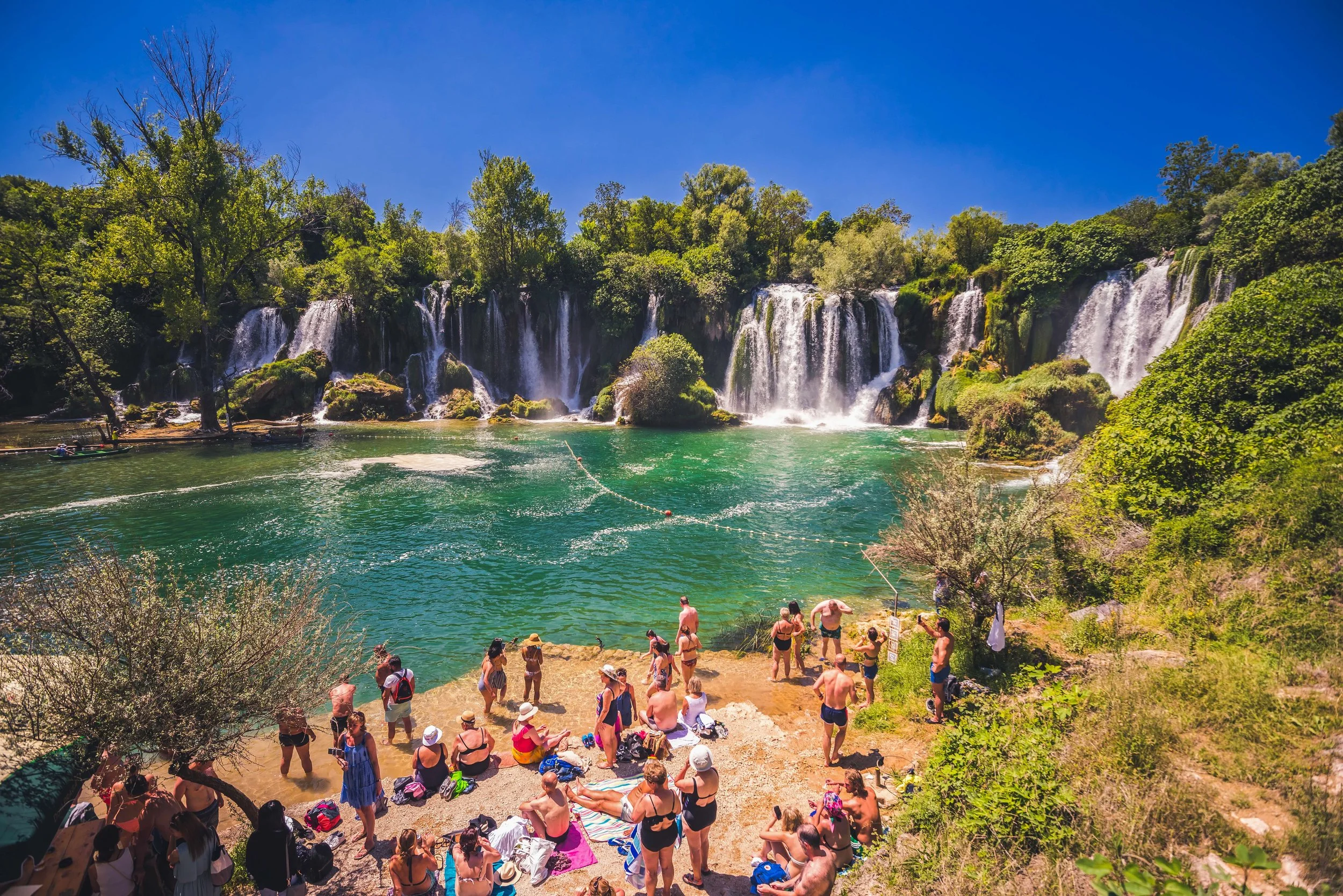
Kravica Waterfall © zedspider // Shutterstock
Is Ljubuški the most Herzegovinian town in Bosnia and Herzegovina? It’s quite the claim, but I think there’s something to it. What are the first things that come to mind when you think of Herzegovina? Rugged terrain, delicious wine, clifftop fortresses, searing heat, Roman stuff, and waterfalls? You’ll find all that and much more in Ljubuški, a municipality where the Trebižat River finds its full voice.
The waterfalls get the most attention, and it isn’t difficult to understand why. Kravica and Koćuša are two of the most impressive cascade systems in the country, and while the former has lost some of its charm through relentless commercialisation, it is still an undeniably beautiful place to spend the afternoon. In the town itself, the grand old fortress stands protectively above, keeping an eye on its people as the citizens of Ljubuški go about their business. Ljubuški is home to the oldest museum in Bosnia and Herzegovina, and there are plenty of Roman relics for anyone interested in that most overrated of historical civilisations. Wine? Loads of it, to the point where you’ll find arguably the best weekly wine club in Bosnia and Herzegovina. Ljubuški, you get a solid thumbs up.
TRANSPORT
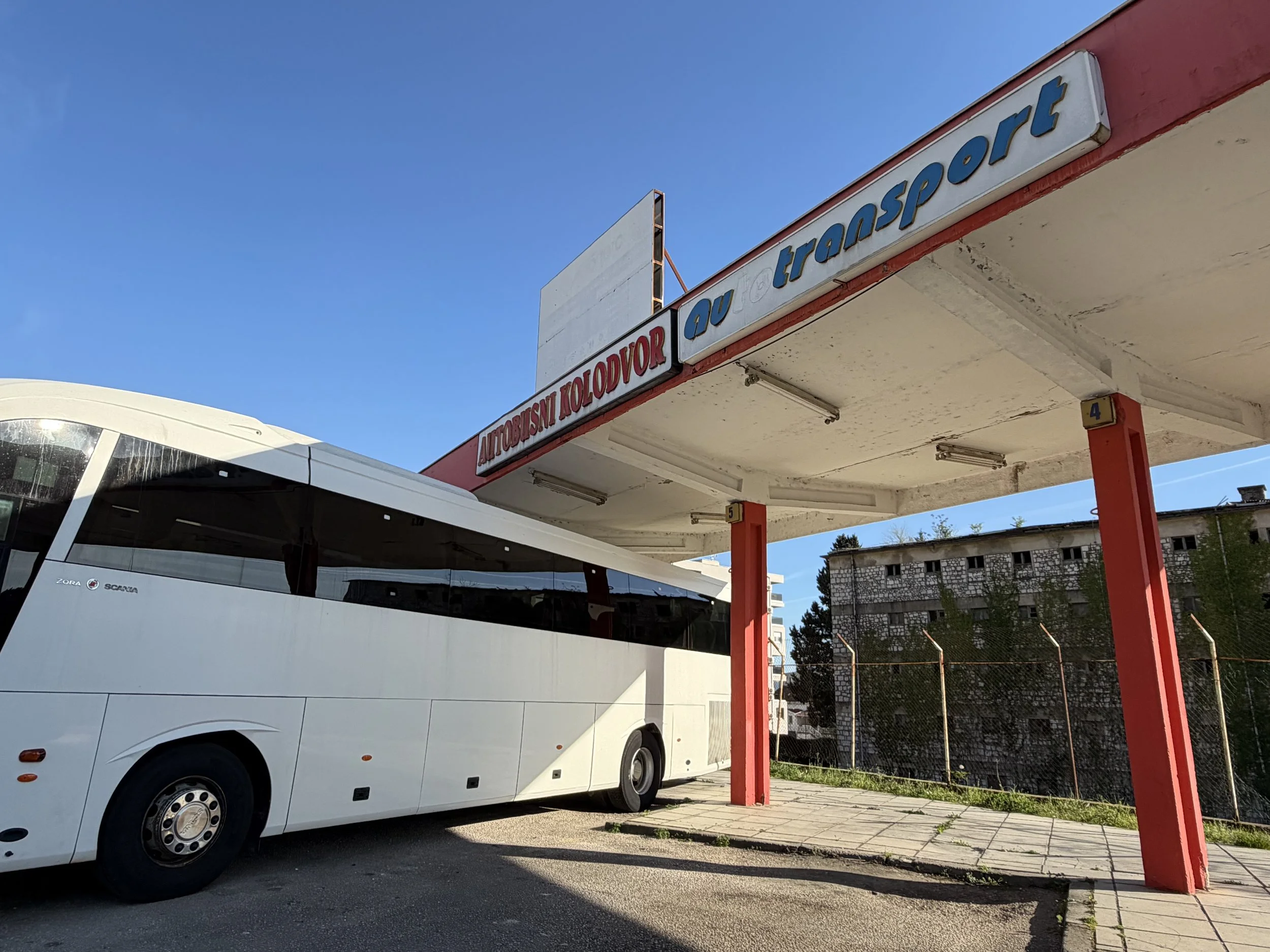
Ljubuški Bus Station © John Bills
There is a bus station in Ljubuški, but it is more of a ghost than a working terminal. Unfortunately, Ljubuški suffers from the same bus issues as nearby Grude, with a Globtour bus running through early in the morning (at some point, you’ll need to contact the agency the night before) or late at night (at some point, you’ll need to yadda yadda). There may also be direct buses to Mostar, but I’m unable to get confirmation, at least at the time of writing. The Ljubuški tourist office is pretty wretched at replying to messages, you see. If you’ve got your own wheels, Ljubuśki is 35km or so southwest of Mostar, heading through Čitluk on the way.
WHAT TO SEE AND DO

Kravica Waterfall © nomadFRA // Shutterstock
Kravica Waterfall (Vodopad Kravica)
I don’t want to sound like an old man, but the spectacular waterfall complex at Kravica sure has changed over the last 15 years. Monetisation is inevitable, however, and I have no desire to tear down good people trying to make a buck or two. Besides, the Little Cows are just about as magnificent as waterfalls get, and the more people who come here to enjoy them, the better. A tufa cascade formed by the waters of the Trebižat River, Kravica is located about 10km south of Ljubuški, near the village of Hrašljani, and it isn't too difficult to find. If you’re heading this way in summer, just follow the stream of cars. Once you arrive, there are plenty of food and drink options. The chilly cold waters are a thrilling juxtaposition to the occasionally brutal summer heat, and there are little grottos to explore once you cross the ramshackle bridge. It is a beautiful place, an undeniable stunner, and the rope swing was one of the great Herzegovina experiences. I hope it is still there.
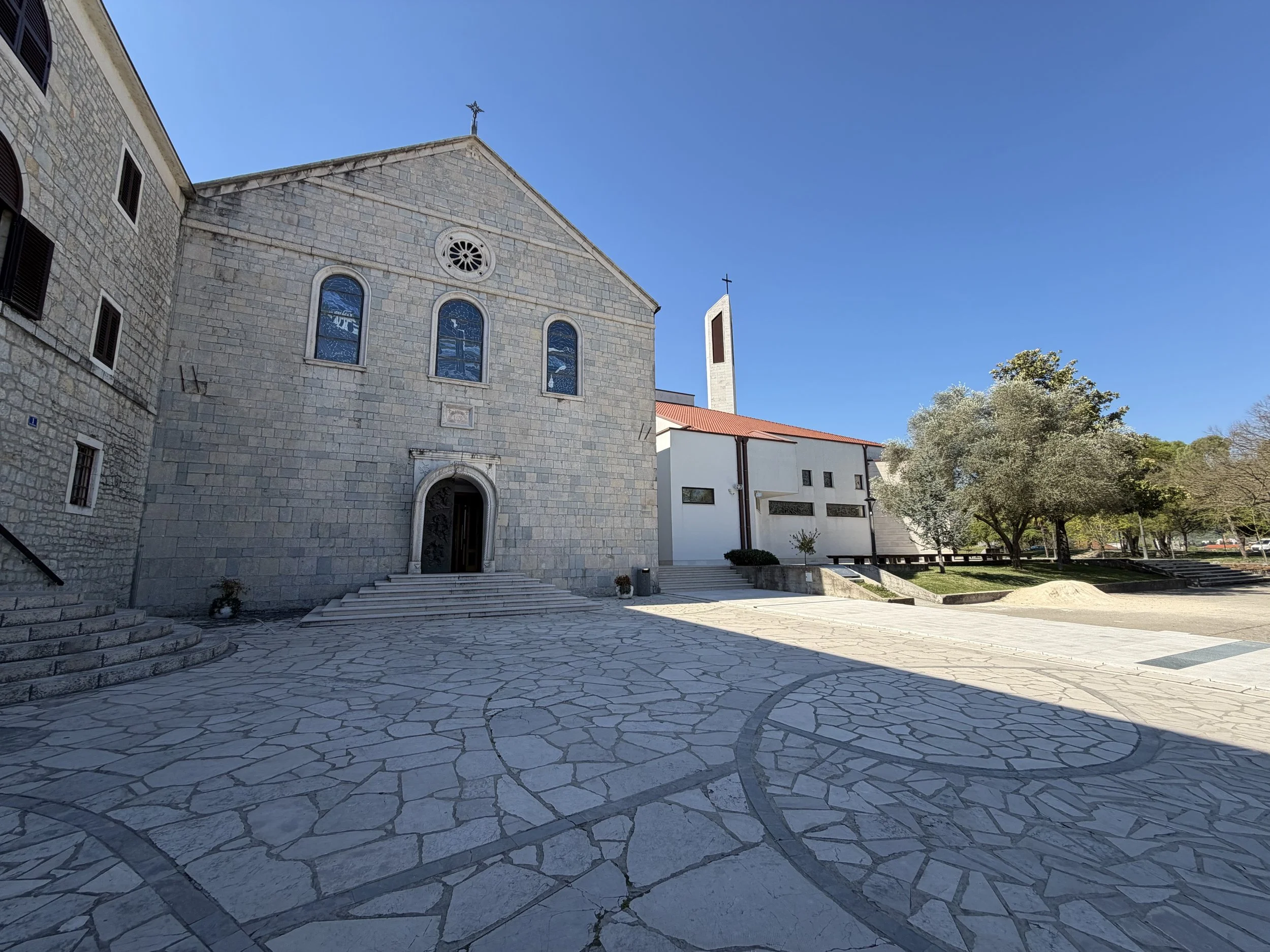
Franciscan Friary in Humac © John Bills
Franciscan Friary of St. Anthony in Humac (Franjevački samostan u Humcu)
Located an easy 20- or 30-minute walk from the centre of Ljubuški, the Franciscan Friary is a peaceful complex with plenty to intrigue. The monastery was established in the second half of the 19th century (1871, to be exact), but the history of the friary goes way beyond that, to the 15th century. Still, you can only beat what is in front of you, and the modern complex exudes serenity and charm. The Church of St. Anthony is well worth a look, and its corridors are lined with old photos of Ljubuški and the surrounding area. The museum houses one of the most important artefacts in all of Bosnia and Herzegovina, but it deserves its own description. Scroll down! Trg sv. Ante 1, +387 39 830 970
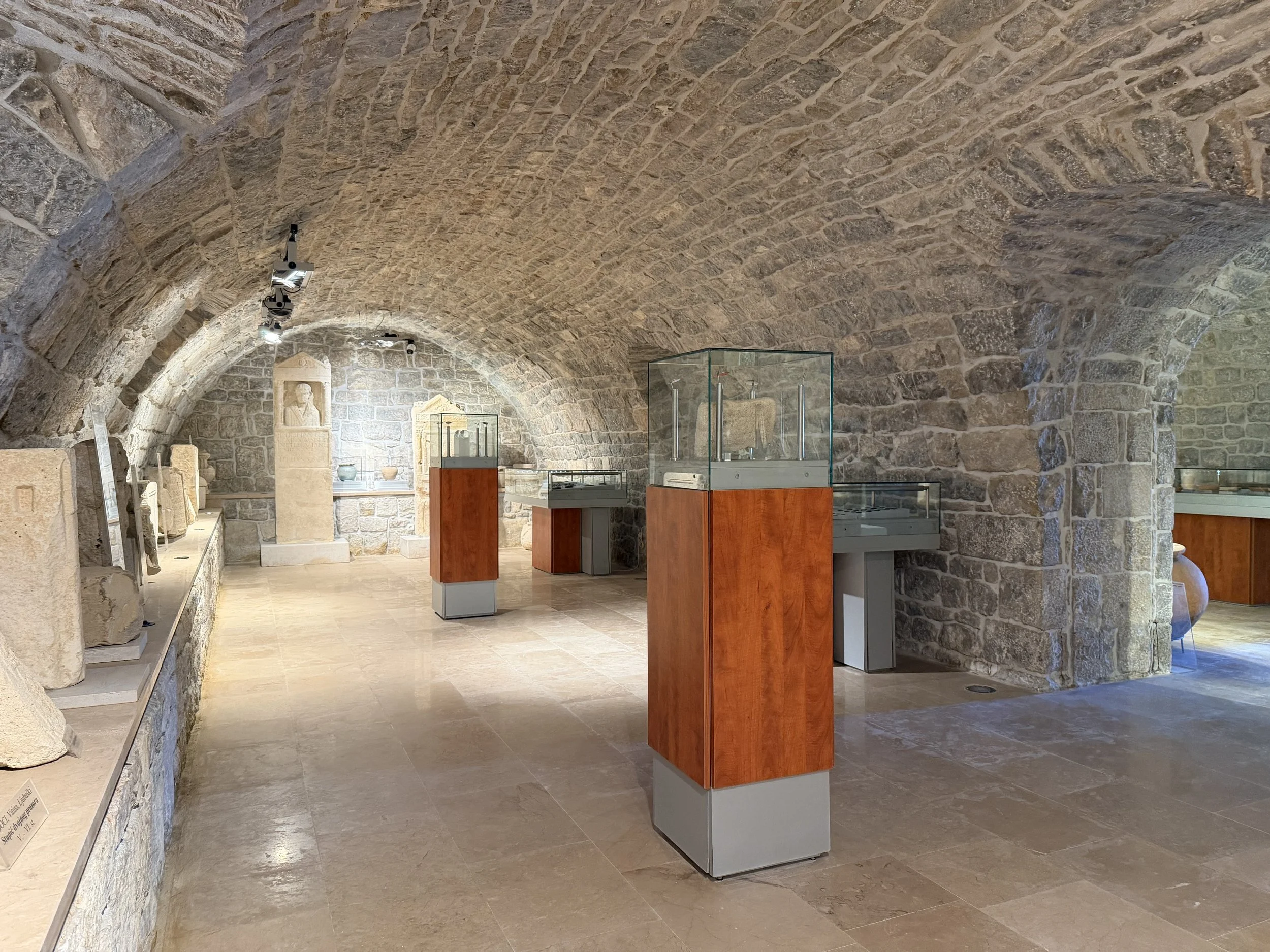
Humac Museum © John Bills
Humac Museum (Muzej Humac)
Here we are, good scrolling! Located in the Franciscan Friary complex, the Humac Museum is actually the oldest museum in Bosnia and Herzegovina. Quite the honour, but there’s more. Established in 1884, the museum is home to the Humac tablet, the oldest preserved monument written using the Bosančica script. The museum is small but perfectly formed, located in an old wine cellar and divided into three sections by era. You’ll find the usual tools, weapons, and ceramics, the classics of any archaeological museum, but the Humac tablet makes it well worth a visit. Entry is 2 BAM at the time of writing. Trg sv. Ante 1, +387 39 830 970
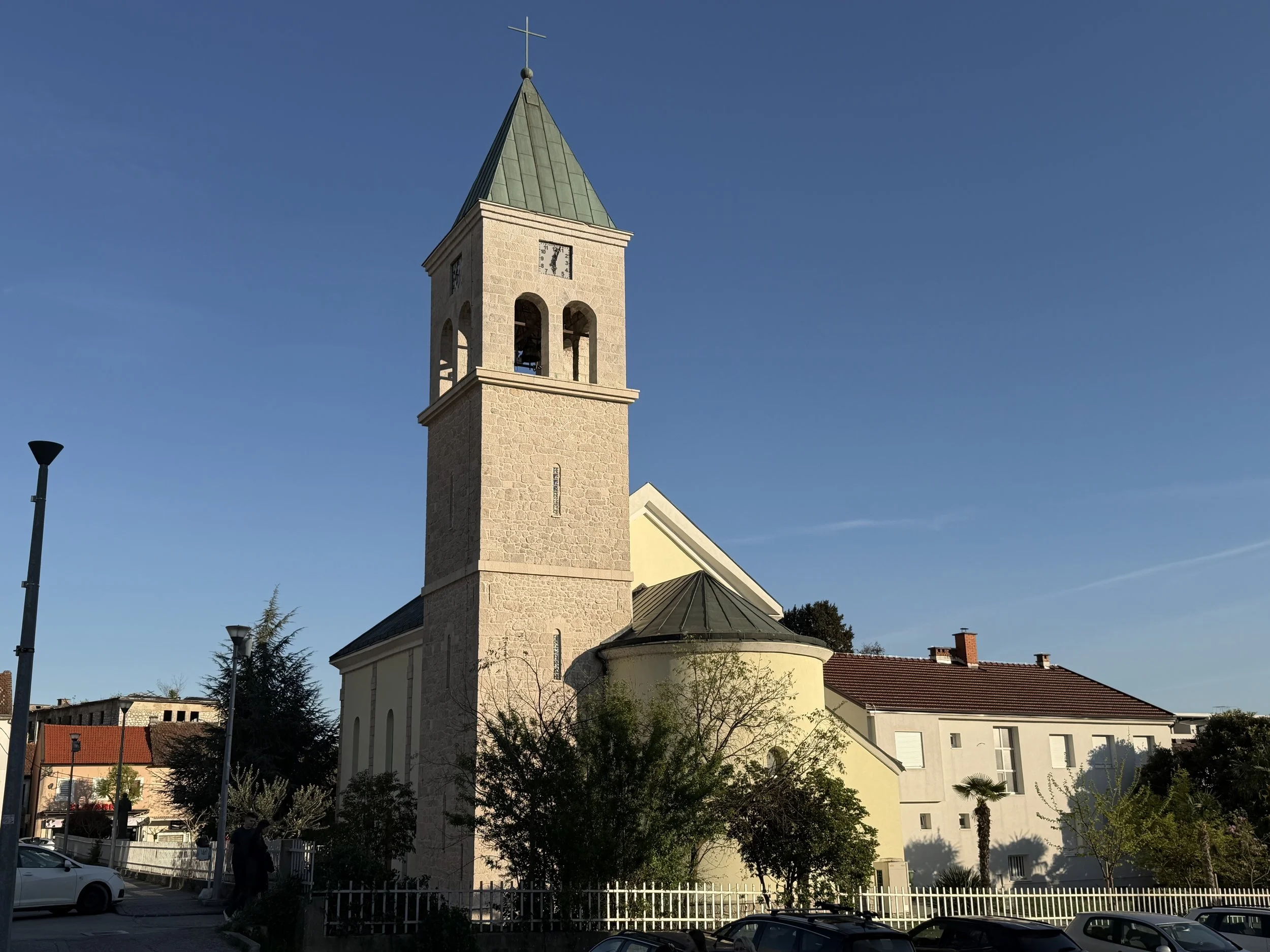
Church in Ljubuški © John Bills
Church of St. Kate (Katolička crkva Svete Kate)
For some reason, I find it hard to believe that there is a St. Kate, but here we are. Catherine, I guess, but the diminutive is used for the church in the centre of Ljubuški, constructed at the beginning of the 20th century. From the main street on the east, there is little to write home about, with the usual imposing aspects of the Catholic Church found. However, approach the church from the west and the view changes, with a stone tower every bit the rival of regional churches in terms of aesthetics. Back east, there is a statue of Lovro Šitović out in front, paying homage to the 18th-century preacher, writer, and grammarian. Fra Matije Divkovića
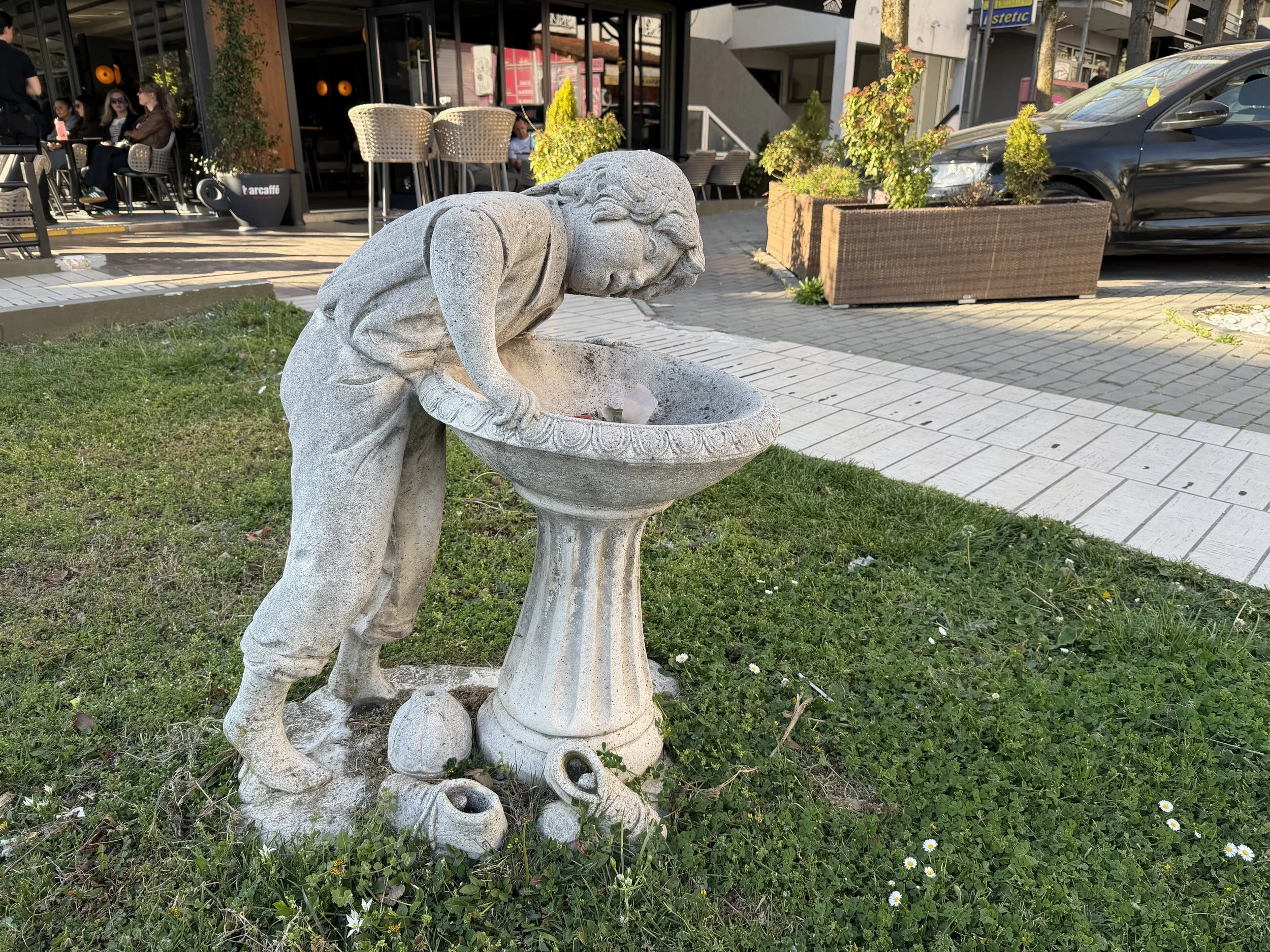
Child Statue in Ljubuški © John Bills
Child Statue
Unfortunately, I know absolutely nothing about this statue, but I feel like it deserves a mention. On the grass immediately outside of Rifugio Bar, there is a small statue of a child either drinking from a fountain or vomiting into one. I’m going to guess it’s the former, but you never know. The child’s shoes are included in the statue, discarded next to the sipping/spewing kid. I’m sure there is a fascinating story behind the statue, so if someone from Ljubuški could get in touch and let me know, I’d really appreciate that. Vukovarska ulica
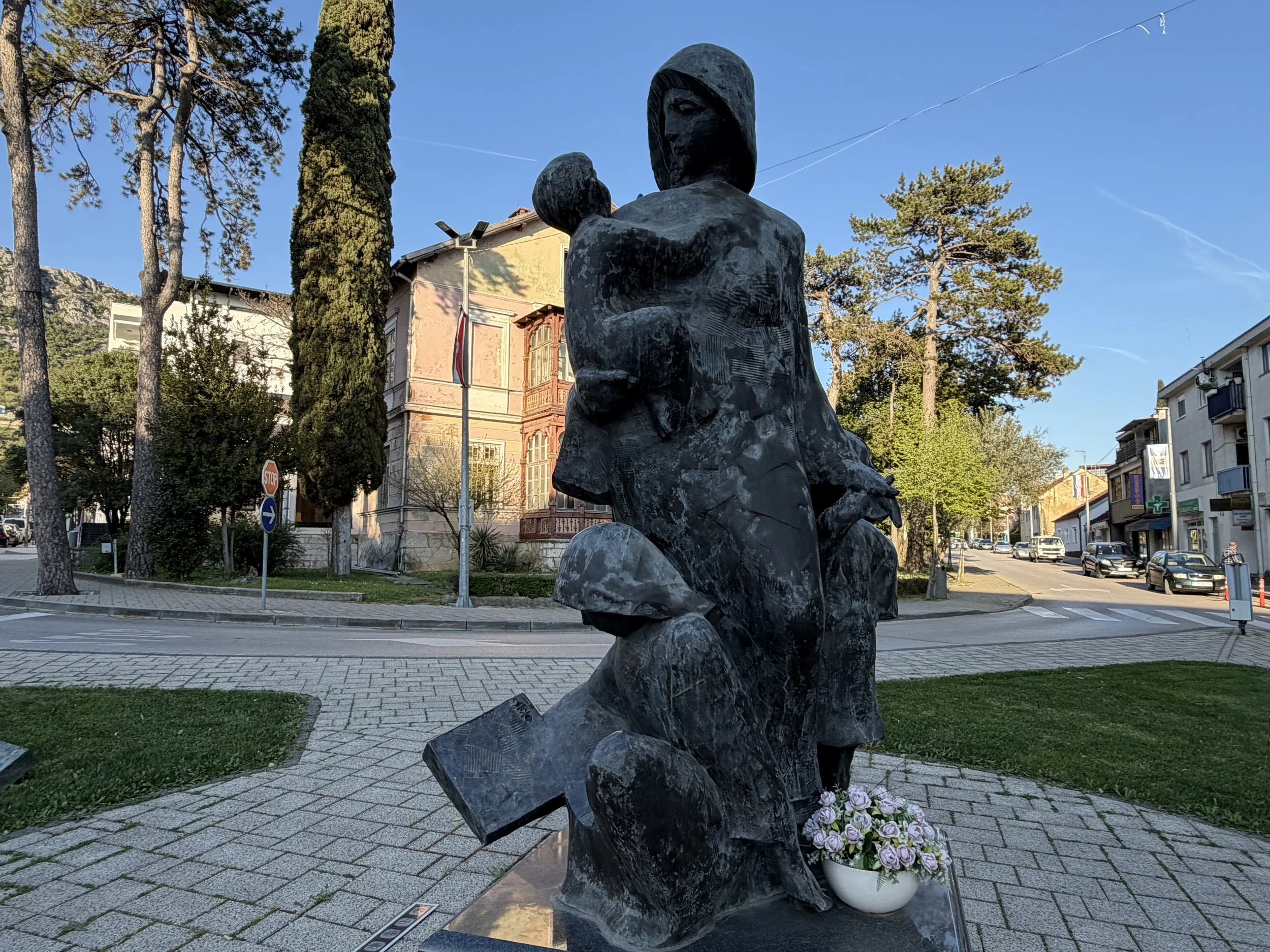
Monument to the Widows in Ljubuški © John Bills
Monument to the Widows of World War II
The work of Stjepan Skoko, this impactful monument pays homage to the widows left behind following the violence of World War II. While the monument theoretically focuses on that conflict, it can be interpreted as a monument to all widows, and the struggle of existence is clear. The statue is of a woman flanked by children, one of whom clings to her while another reads. It looks stressful, and that is the point. Majka park, Zrinskofrankopanska
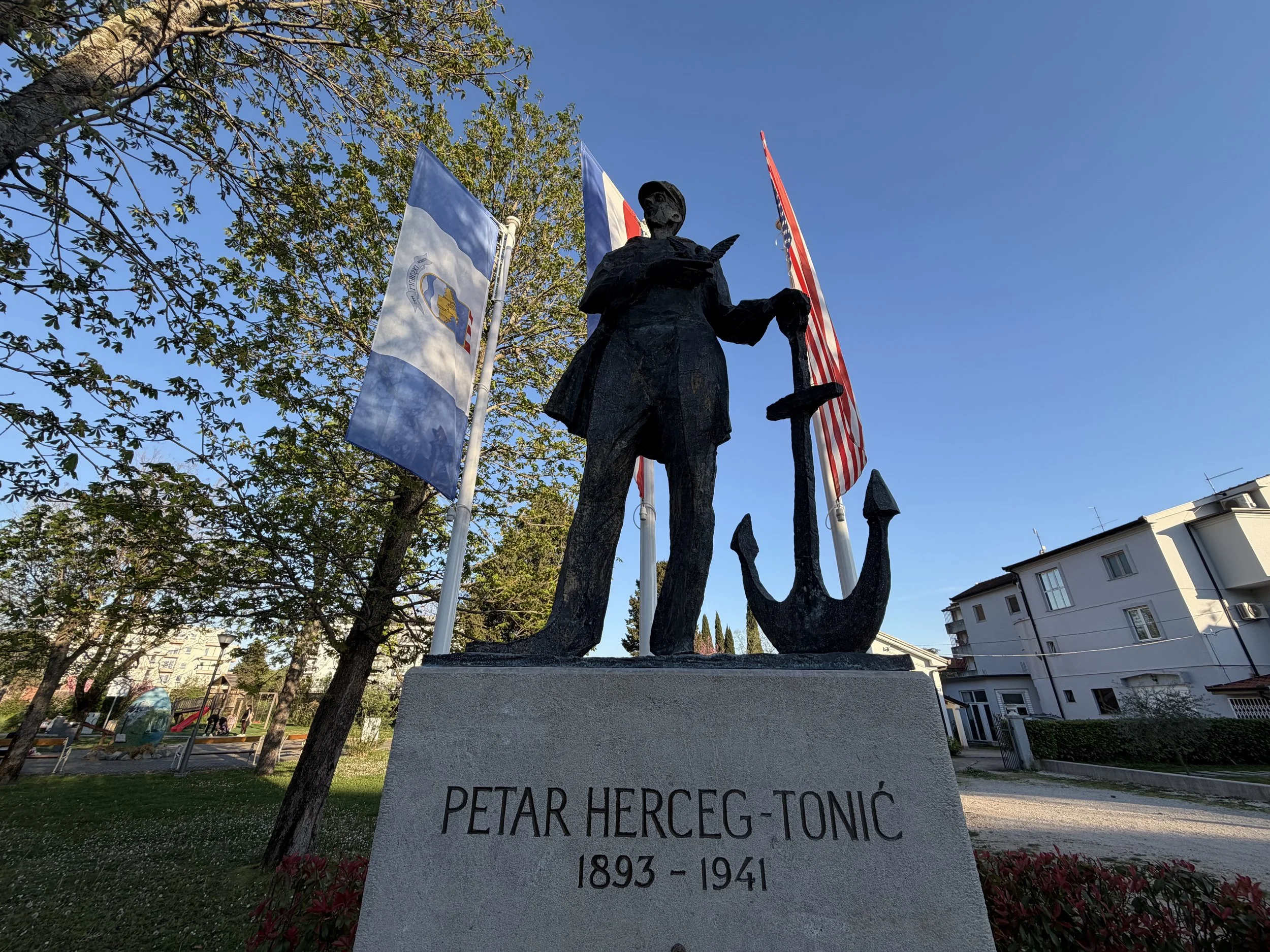
Statue of Petar Herceg-Tonić in Ljubuški © John Bills
Petar Herceg-Tonić State
It is always a little jarring to see an American flag in Europe, particularly in the charming small towns of Bosnia and Herzegovina. You’ll find one in Ljubuški, standing behind a statue of a dude called Petar Herceg-Tonić, a dude who moved to the States, joined the navy, fought in World War II, and received the Medal of Honour for helping his shipmates escape during the attack on Pearl Harbour. Herceg-Tonić died in the attack, and the statue was unveiled in late 2023. Gradski park
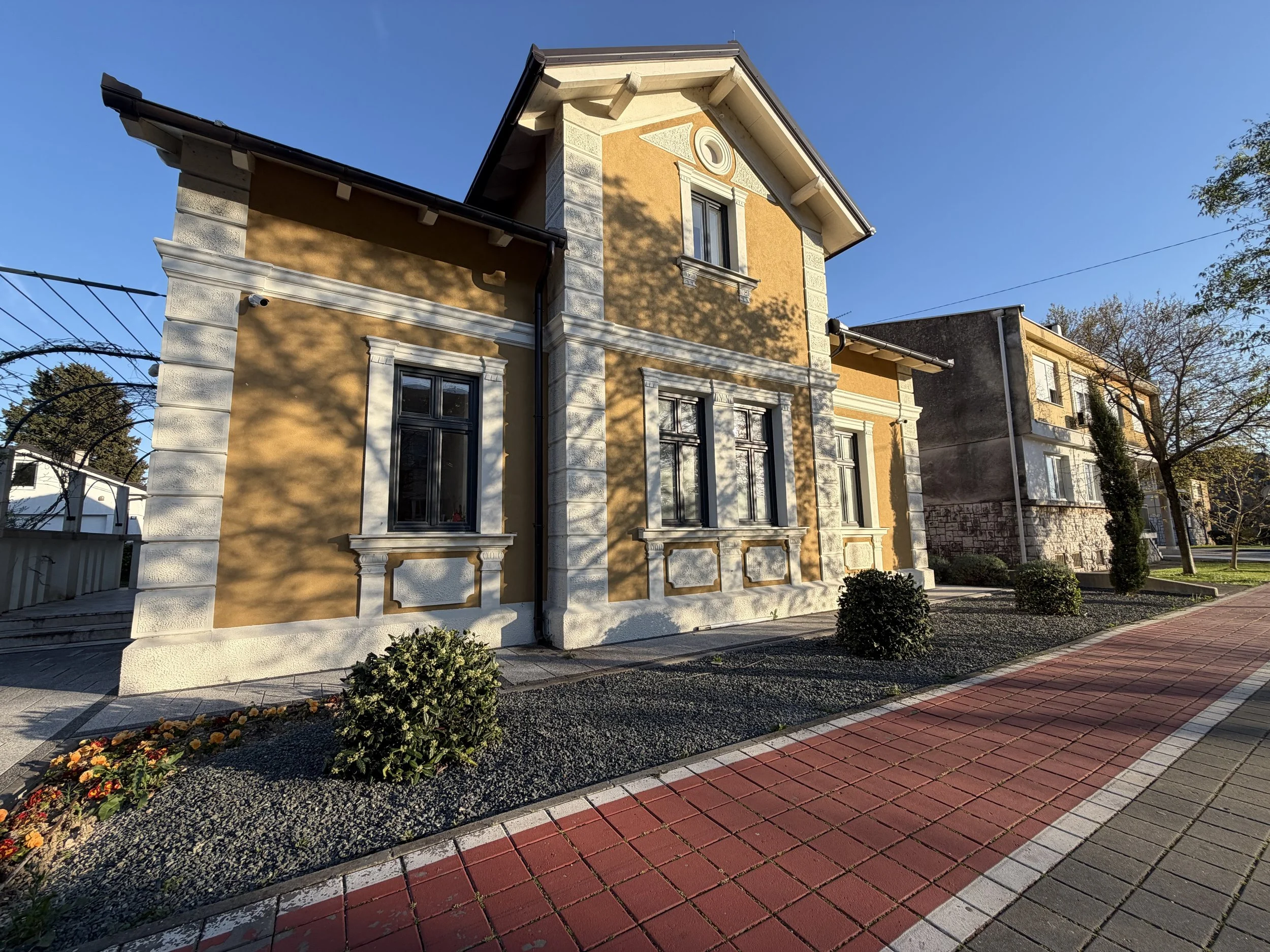
City Gallery in Ljubuški © John Bills
City Gallery (Gradska Galerija)
Small but perfectly formed, the City Gallery in Ljubuški hosts a busy schedule of temporary exhibitions, with local artists featured more often than not. Keep an eye on social media for current showcases and upcoming events. That was a strangely normal entry, John, well done. Hrvatskih branitelja 60
TABAK Museum
A fascinating new development just outside of Ljubuški, the brilliant TABAK Museum and Restaurant tells the story of tobacco cultivation in this part of the world. Herzegovina was also a big deal when it came to tobacco, and the museum shows off that heritage through education and information, not to mention a heap of old cigarette packet designs. Come for the history, stay for the food. Yes, I’m going to repeat that. Fra Nikole Ivankovića 18, Pregra, +387 63 726 777
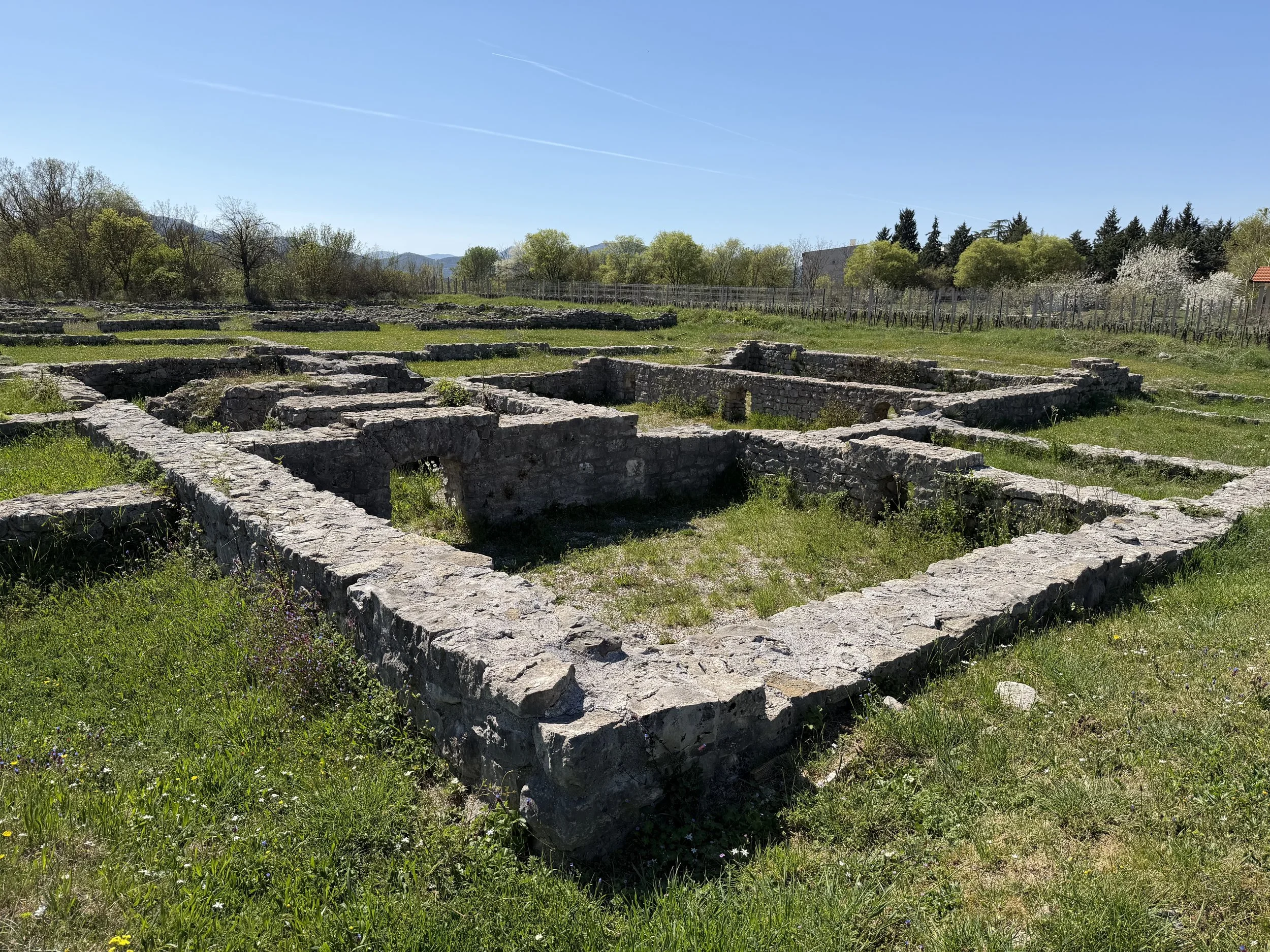
Gračine Roman Camp © John Bills
Gračine Roman Camp (Rimski vojni logor u Humcu)
There are plenty of Roman remains dotted around Herzegovina, and one of the most curious is this old military camp in Humac, just outside Ljubuški. The remains were discovered in 1977, and the camp is thought to be from the early centuries of the Common Era. All sorts of things were found during the excavations, including ceramics, weapons, tools, jewellery, and more. Some of these discoveries can be seen at the Humac Museum, while the site itself needs a tidy-up. The foundations are losing a battle against growing grass, but here’s hoping the establishment of the nearby visitor centre will lead to a little more love and care moving forward. Cara Tiberija
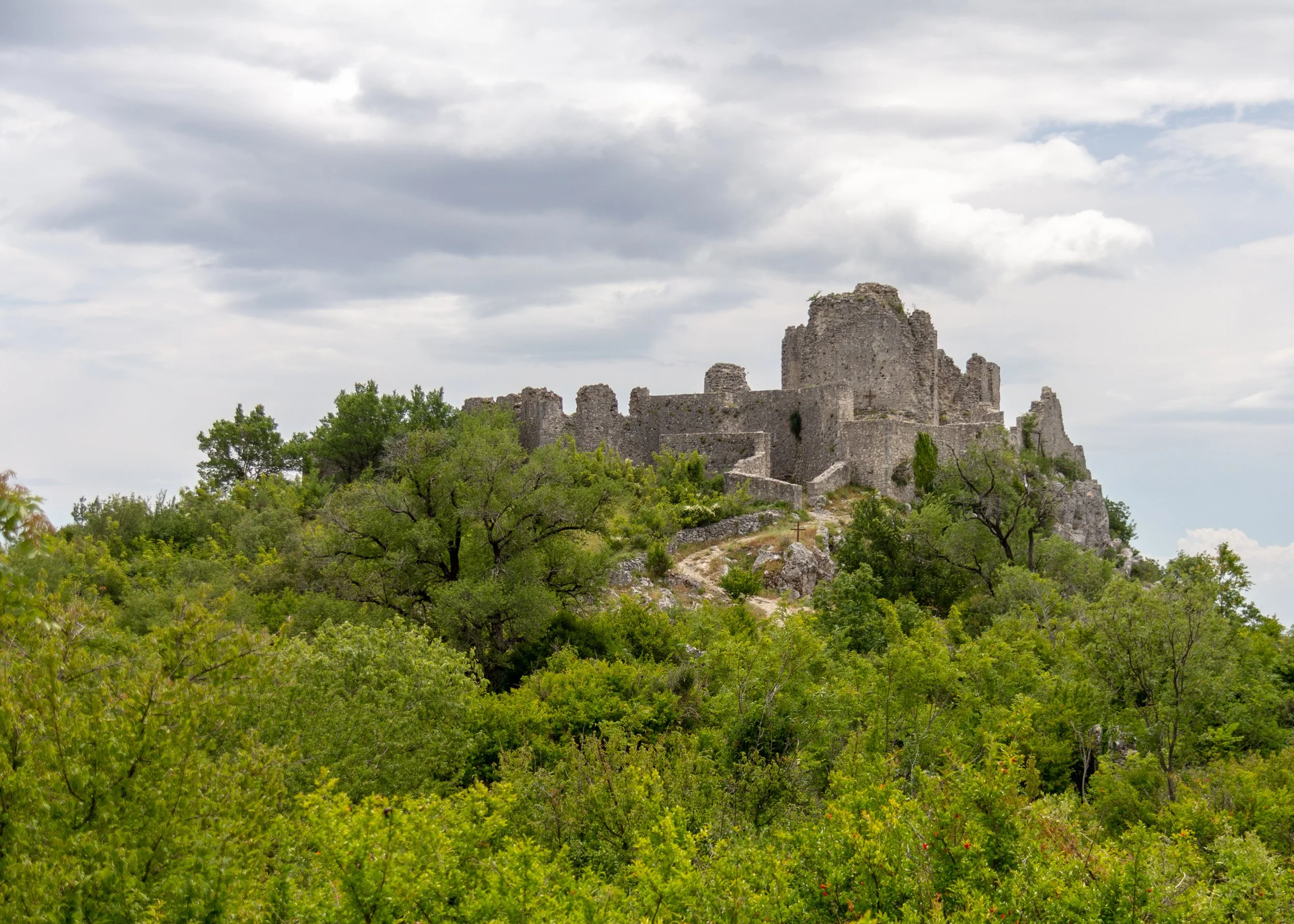
Ljubuški Fortress © Bob Grim // Shutterstock.com
Ljubuški Fortress (Stari Grad Ljubuški)
Also known as Stjepan Herceg’s Fortress, the grand old medieval fortress sits on a hill above Ljubuški. You can see it from pretty much every vantage point in the town, and the walls are remarkably well preserved in some parts. The fortress was constructed in the 15th century by Stjepan Vukčic Kosača as he sought to further consolidate his rule in the area, although some believe it may be even older. The Ottomans eventually took it in 1477, and it functioned as a border point for centuries before being abandoned in 1835. Repairs continue today, and the walk up here is some heck of a slog. Well, for me, anyway.
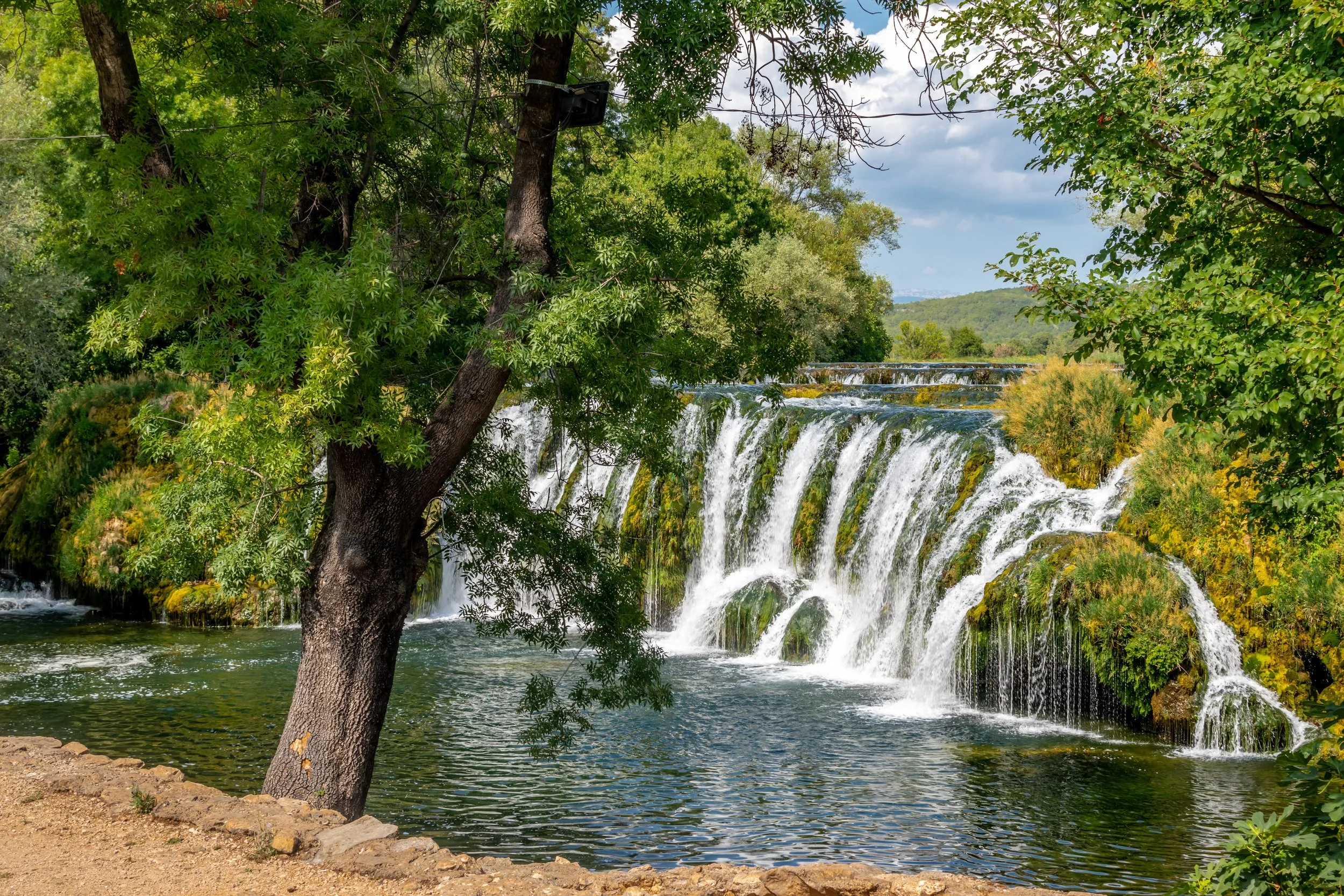
Kocusa Waterfall © Sasha Kovach // Shutterstock.com
Koćuša Waterfall (Vodopad Koćuša)
Often overlooked in favour of Kravica, the Koćuša Waterfall is a stunning cascade just a few kilometres outside of Ljubuški. It’s a beaut, and you don’t really need me to pump its tyres any more than a picture will. There are nearby mills that once utilised the power of water but now provide a quaint air of heritage to what is a stunning natural setting. To visit Koćuša, head north on the M6 out of Ljubuški and aim for the village of Veljaci. From there, follow the signs. Veljaci
BREWS, BOOZE, AND BITES
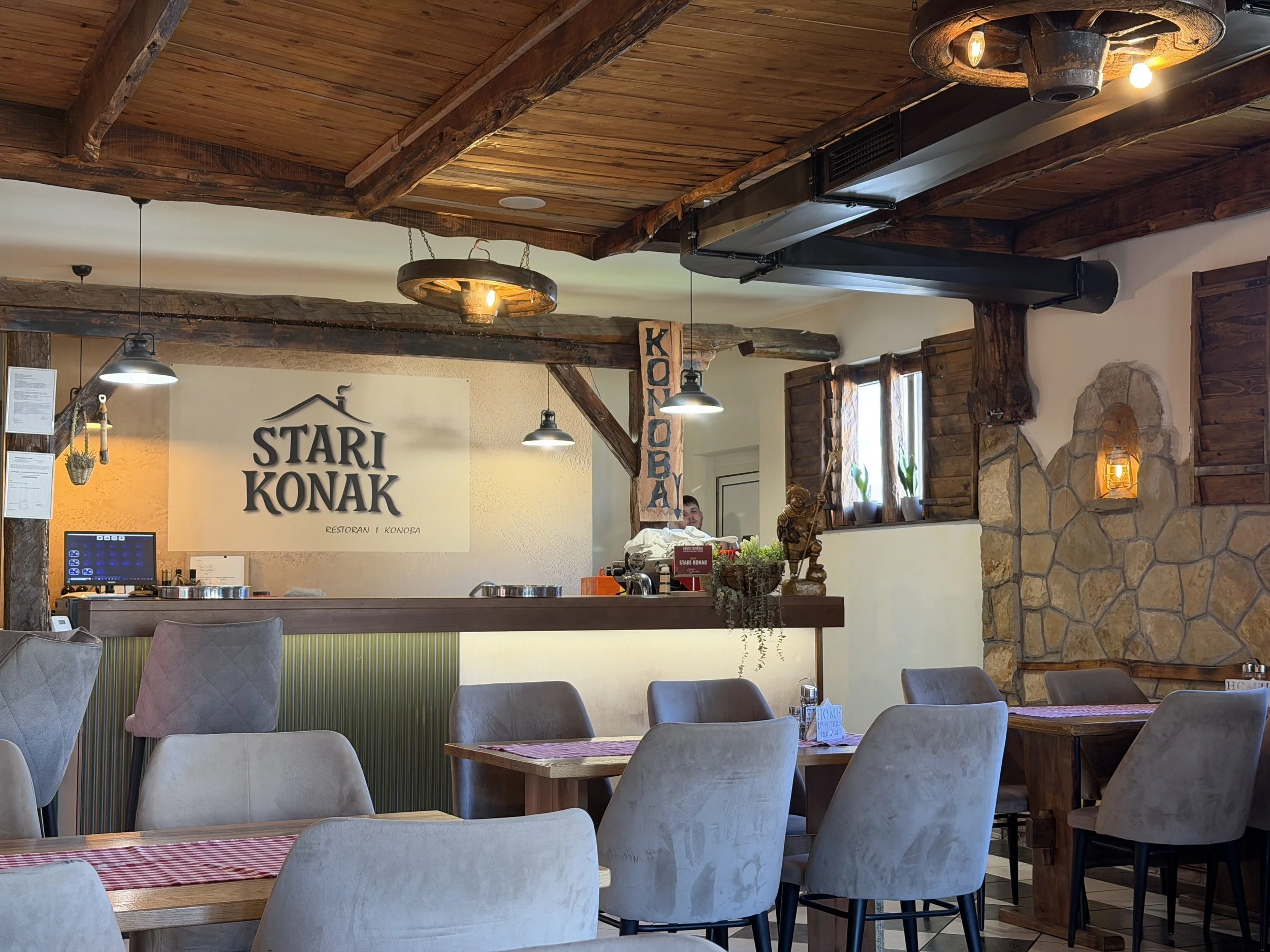
Stari Konak in Ljubuški © John Bills
I had an excellent meal at Stari Konak (Hrvatskih kraljeva, +387 63 067 677) last time I was in Ljubuški, so I’ll go ahead and give that the official guide stamp of approval. While the interior isn’t as “Stari” as you might hope, that doesn’t really matter when the hearty portions are good. Just outside of town, the aforementioned TABAK (Fra Nikole Ivankovića 18, Pregrađe, +387 63 726 777) is a truly unique experience. I’m going to repeat myself, but come for the intriguing history of Herzegovinian tobacco, stay for some of the best traditional Herzegovinian food you’ll find. Toscana (Hrvatskih branitelja 68, +387 63 543 222) is also worth a look if you’re sticking to the city. On the sipping side of things, the main drag in Ljubuški has a handful of decent spots, with No Name (Vukovarska Ulica, +387 39 831 349) getting a mention primarily because of the Onion references inside. Worker (Vukovarska 22, +387 39 834 051) is a popular spot for a coffee in the afternoon. If you consider yourself an oenophile, make a reservation for the tremendous Wine Club (Vinski Klub) at Smokva (Vitinska 8, +387 63 451 999), held every Thursday. Undoubtedly one of the finest wine bars in the region, Smokva is a celebration of the region’s best brews, complete with talks, tastings, and more.
SLEEPING
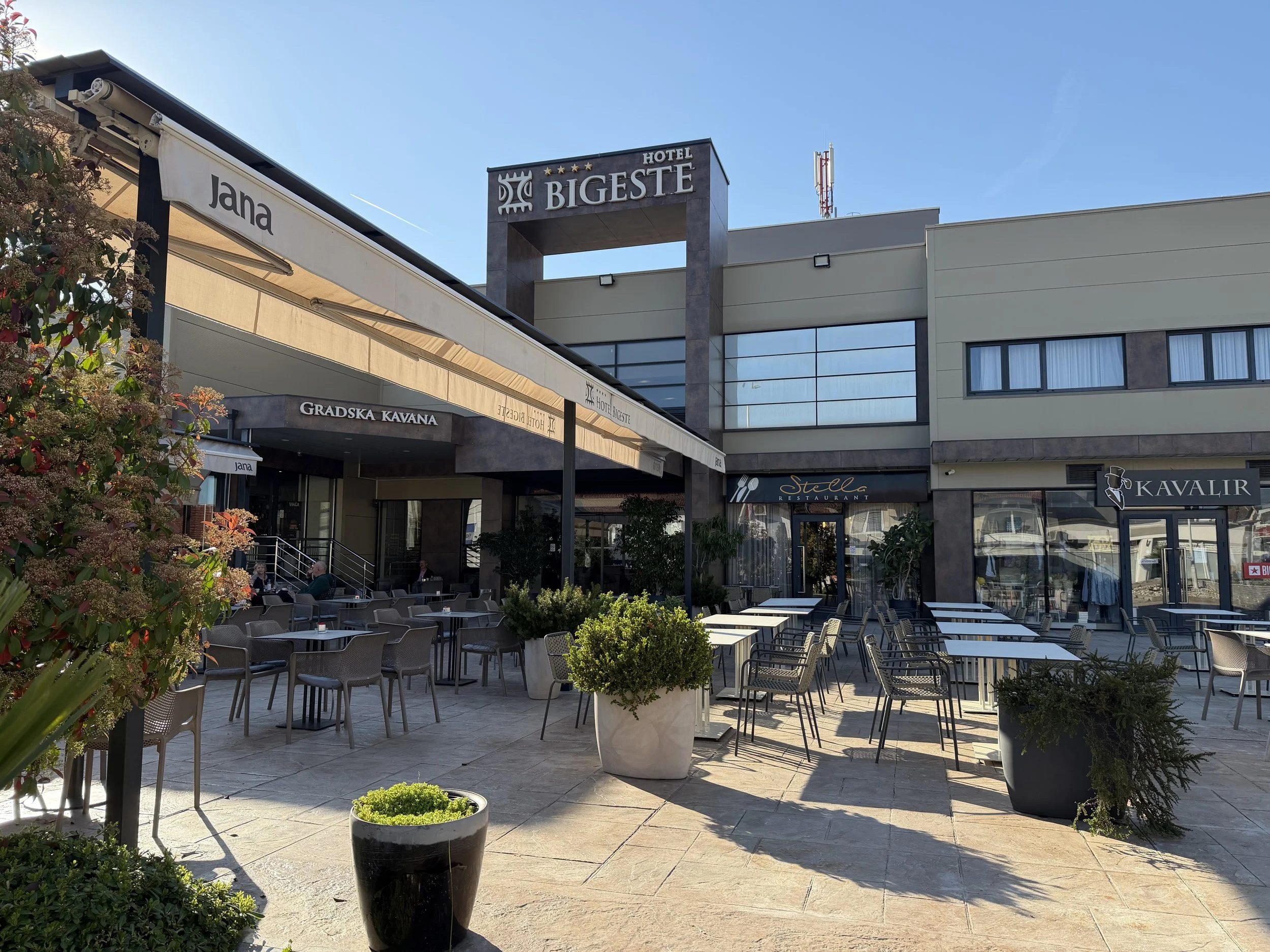
Hotel Bigeste in Ljubuški © John Bills
There are two major players in the heart of Ljubuški that are vying for your accommodation bookings, and both are well worth a stay. Despite being immensely yellow, Hotel Hum (Nikole Šopa 2, +387 63 408 554) is a charmingly friendly motel/hotel just a short walk from the town centre, with an excellent restaurant (the art is magnificent) and comfortable beds, not to mention a shower with water pressure that’ll knock your rocks off. However, if you want to go a little upmarket (complete with a fitness centre), you can’t beat Hotel Bigeste (Hrvatskih branitelja 69, +387 39 835 000). The four-star spot is smack-bang in the middle of the action, and positively oozes professionalism.