GRUDE
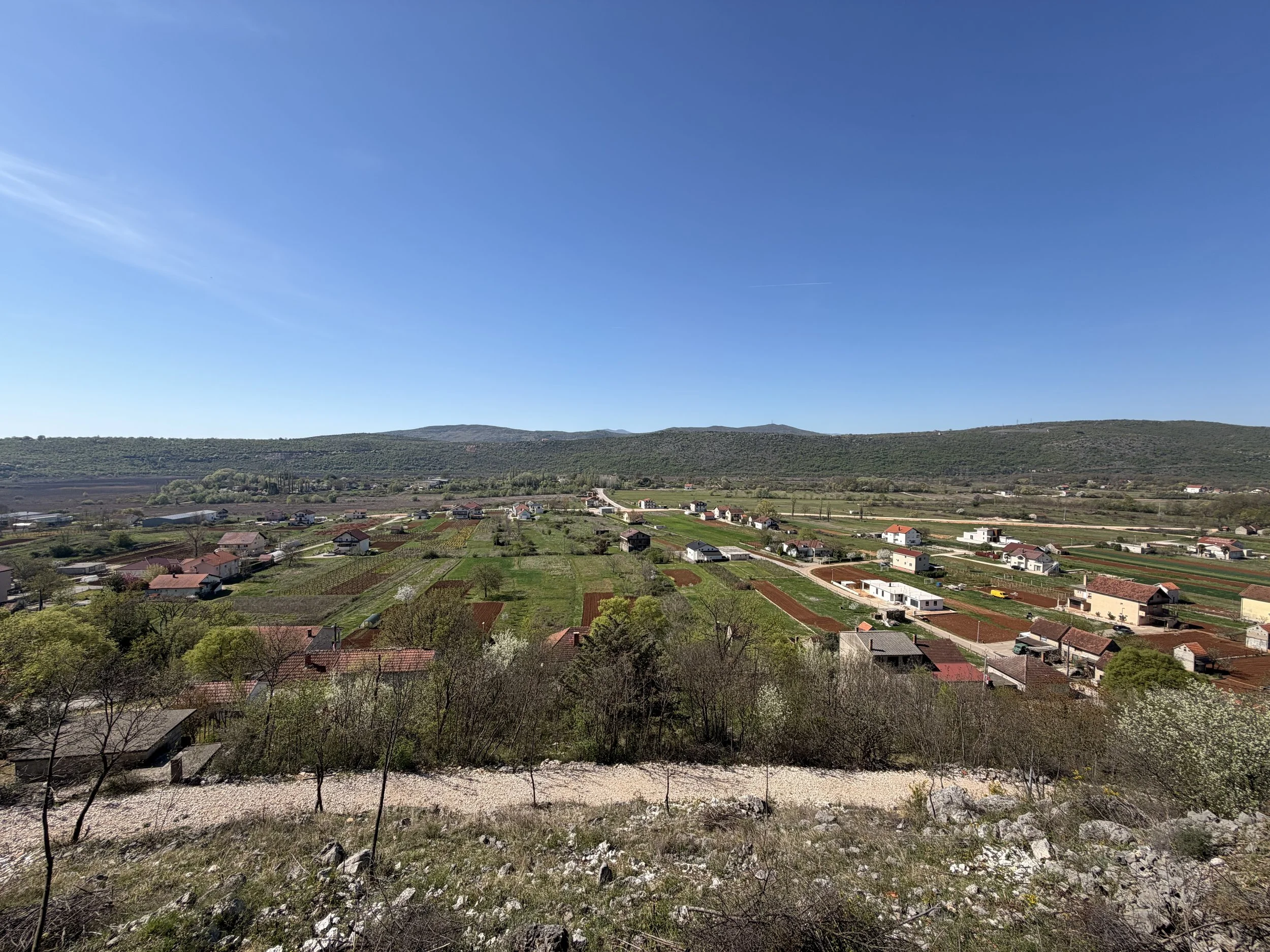
View of Grude © John Bills
It was a struggle getting to Grude, and that is an understatement. This small municipality is home to fewer than 20,000 people and is tucked away in the hills of Western Herzegovina, safe from the world and all of its ills. This is a place where tradition is king and queen, a place without the trappings of overtourism and excess. If you’re looking to get off the beaten path in Herzegovina, Grude is pretty much the dictionary definition of that tired old term. That it holds arguably the canton’s most beautiful church is a delicious, delicious thing.
People have lived in these parts for centuries, as far back as the late Neolithic, although there isn’t a whole lot of happenings to write about. Is that a good thing? I’d say so. After all, most of history is miserable, and a lack of events suggests peace. That remained the same during the long Ottoman centuries (to a point), further testament to the isolated nature of this part of the country. Austria-Hungary brought admin, but the region’s leanings during World War II directly led to its neglect by the Yugoslav authorities. Unsurprisingly, this meant that folks left in large numbers. Grude played an important role in the most recent war, functioning as the military headquarters of the HVO (Croatian Defence Council), and that brings us to the modern day. Close enough, anyway. Grude is as quiet as ever and left to its own devices, functioning primarily as a gateway to nearby Međugorje while tending to its vineyards, olive groves, and heritage. Also, erm, funny name.
TRANSPORT
A bus stop in Grude © John Bills
Once upon a time, you may have been able to visit Grude by bus, but those days are long gone. Actually, that isn’t completely true, but good luck. The Globtour that runs between Dubrovnik and Vinkovci stops in Grude, and while the timetable says that happens at 5:25 a.m., it is rarely on time. The literal advice I was given was to contact the Globtour agency the night before to get the driver's number, and then to contact him around that time to confirm a potential arrival time in Grude. Now, that’s fine in the afternoon, but at 5 in the morning? Not even I’m doing that. So, for now, you’ll need your own wheels to get to one of the most beautiful churches in Bosnia and Herzegovina. Grude lies on the M6 between Ljubuški and the Imotski border crossing. To get there from Mostar, head towards Široki Brijeg and then follow the signs.
WHAT TO SEE AND DO
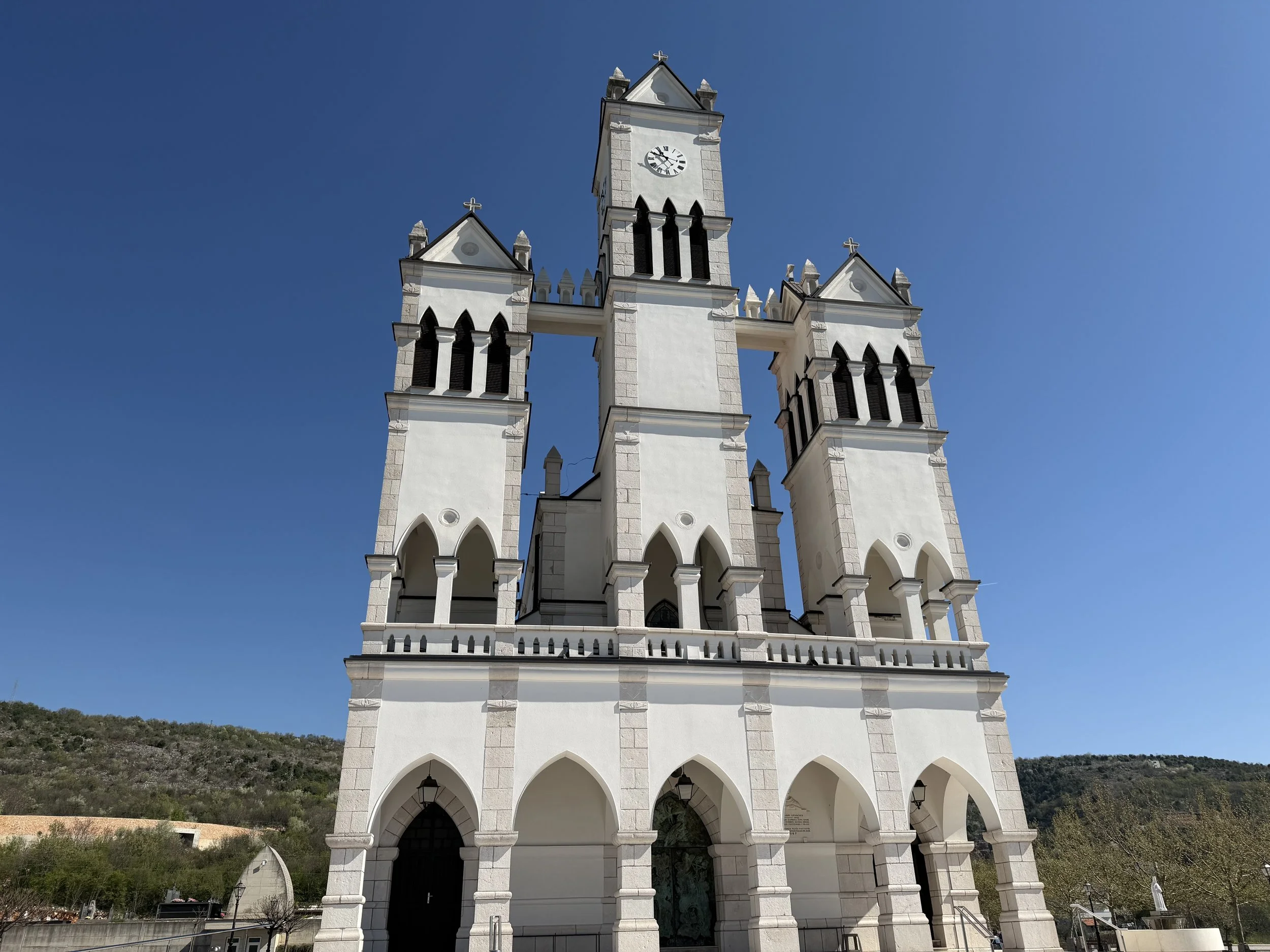
Church of St Catherine in Grude © John Bills
Church of St. Catherine (Crkva Sv. Katarine)
Grude might be an unassuming town out in the wilds, but it is home to what is undoubtedly one of the most impressive churches in Bosnia and Herzegovina. From a purely aesthetic standpoint, the Church of St. Catherine is an astounding structure, every bit as grand as Catholic buildings found across the continent. The three towers are a celebration of symmetry, and the five lower arches add an understated grace that all churches could learn from. The sumptuous details on the door are the cherry on top, but the real charm here lies in the church’s history. It took 16 years to complete (work began in 1923 and ended in 1939) and was built at a time of real poverty in the region. However, that wasn’t going to stop Fr. Gabro Grubišić, a seemingly ordinary man with an extraordinary vision. This church was his creation, a Neo-Romanesque stunner that served as a beacon of hope for a population that was primarily living in the surrounding villages at the time. There is a lovely view of the valley from the courtyard in front of the church, but it is the church itself that wins out here. Fra Gabre Grubišića, +387 39 662 271
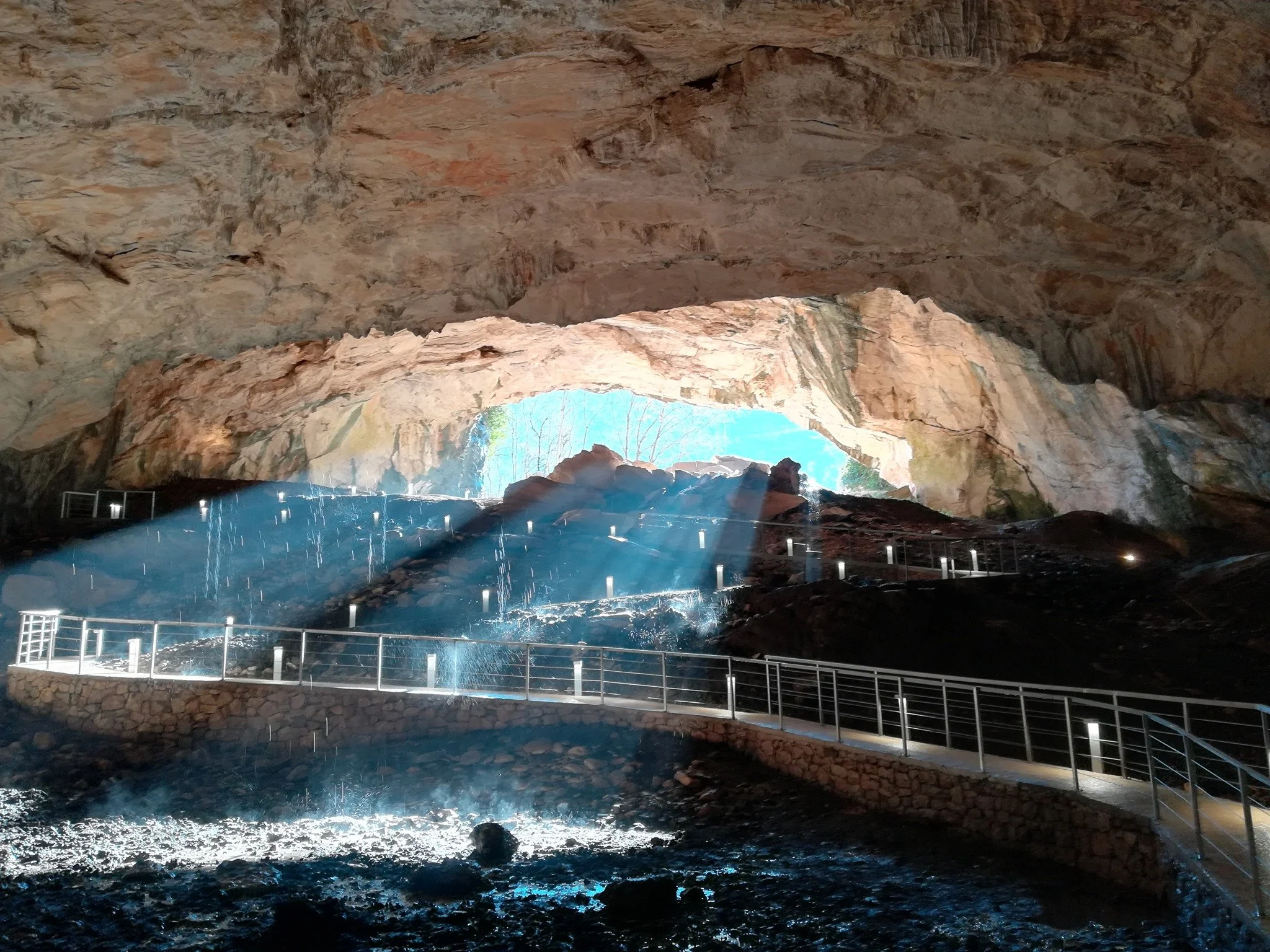
Ravlića Cave © Adventure Park Mlini // Facebook
Adventure Park Peć Mlini and Ravlića Cave
Ravlića Cave is one of the most accessible caves in the country, essentially a single large chamber, so it isn’t a massive shock to discover that folks lived here back in the day. The usual array of tools and weapons was discovered here, along with a child’s skeleton that some believe was tied to a Mediterranean Cult of the Dead, where the young were sacrificed in the hopes of inducing fertility. Now, I’m no expert, but that strikes me as being extraordinarily dumb, but who am I to judge the cave-dwelling folk of the Neolithic? Today, Ravlića is part of Adventure Park Peć Mlini, which also includes a hydroelectric power station, a zip line (the longest in Bosnia and Herzegovina), and a gorgeous karst spring, so don’t make the mistake of thinking a visit to the cave is all you’ll get here. The park is open daily from 9. The park (and cave) is located near the village of Drinovici, a 20-minute drive west of Grude towards the border with Croatia. Drinovci, +387 63 188 474
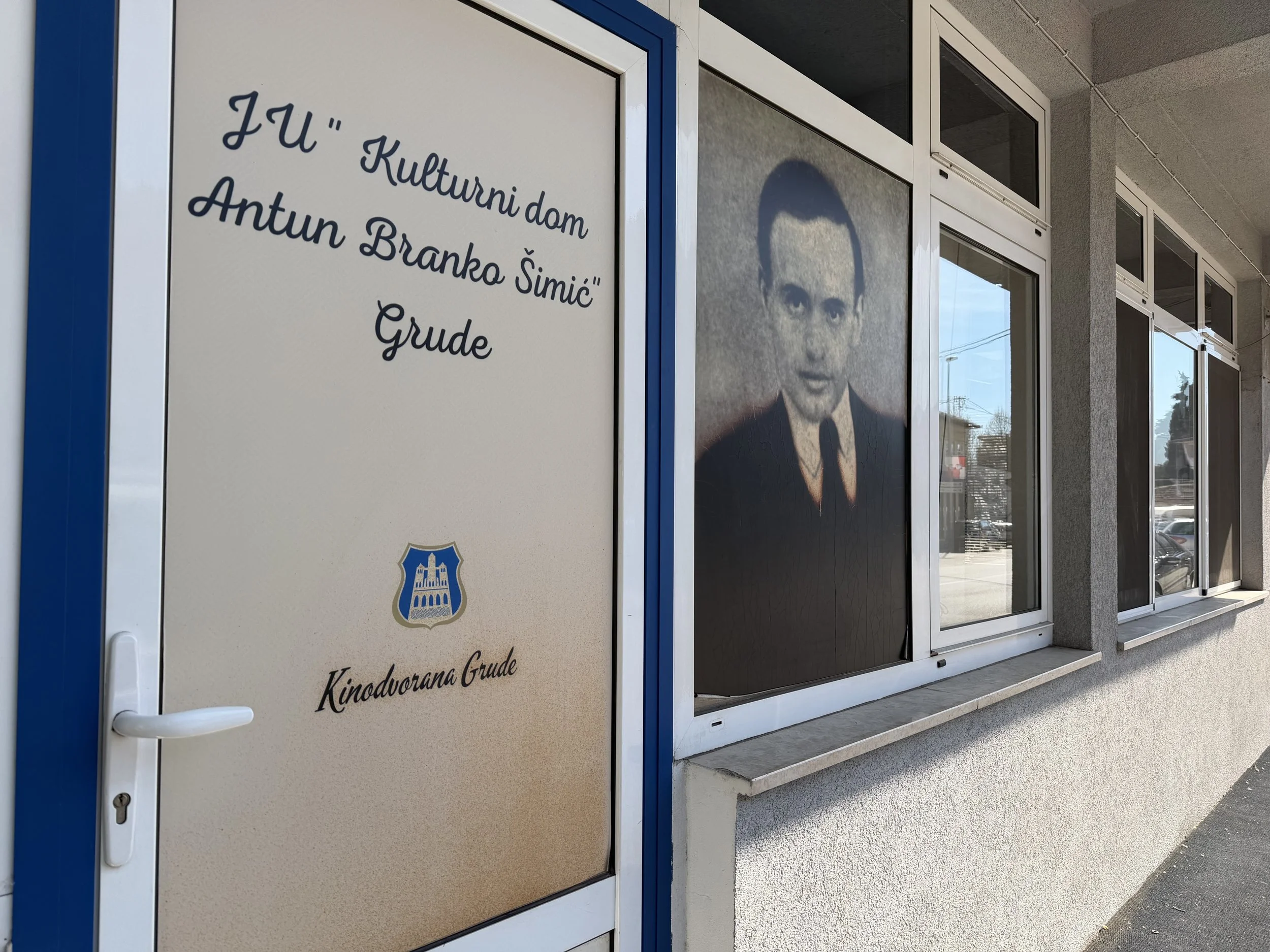
Antun Branko Šimić Cultural Centre in Grude © John Bills
Cultural House Antun Branko Šimić (Hrvatski kulturni dom Antun Branko Šimić)
Established in 2018, the Cultural Centre in Grude does exactly what you’d hope a cultural centre would do, namely organise events and promote the love of creativity and heritage around the area. The centre is named after Grude’s favourite son, who was born in the nearby village of Drinovic way back in 1898. Keep an eye on the website for upcoming events. Park hrvatskih velikana 3, +387 39 661 566
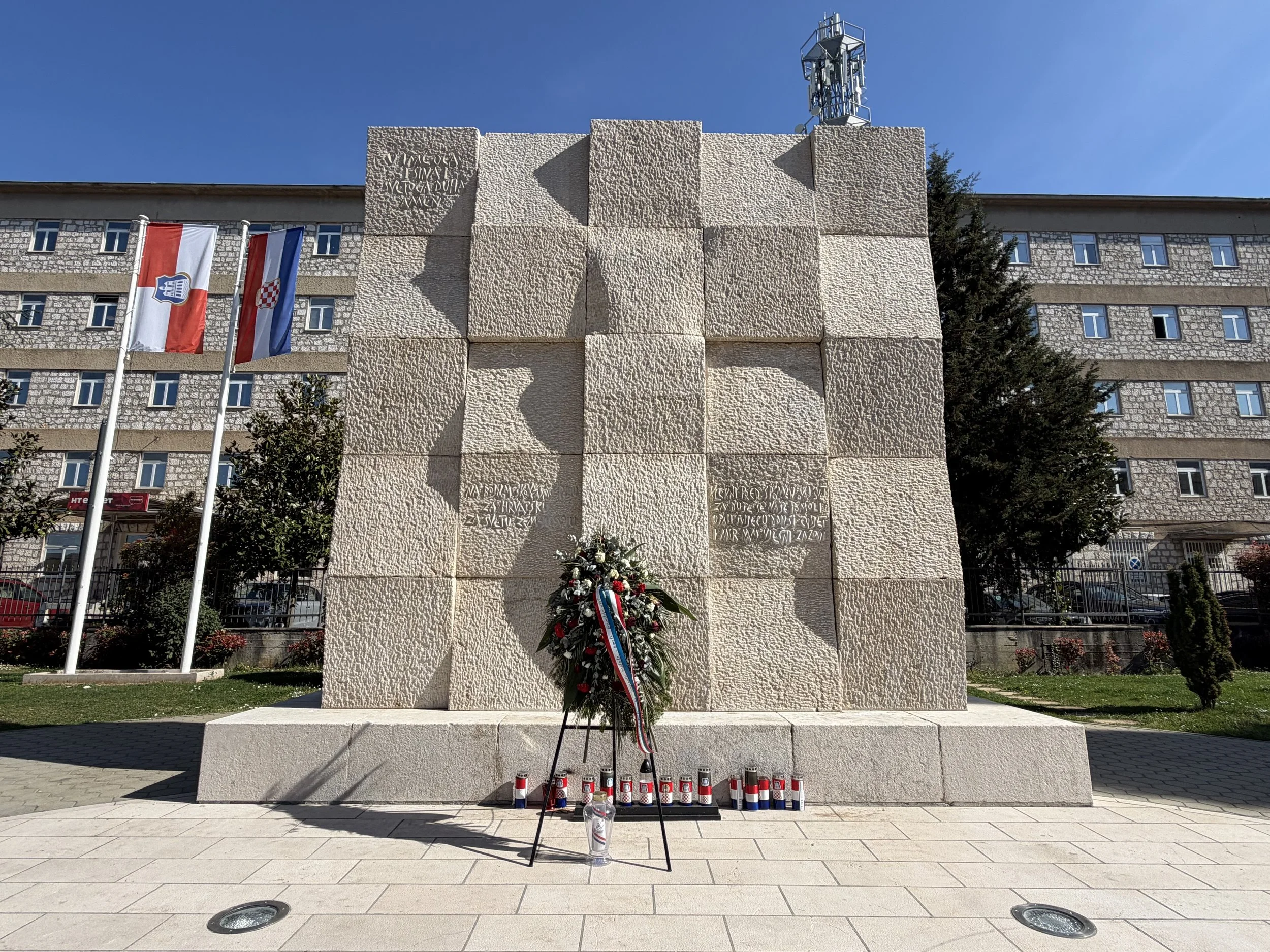
Park of Croatian Greats in Grude © John Bills
Park of Croatian Greats (Park hrvatskih velikana)
More of a square than a park, this central meeting spot in the heart of Grude features a monument honouring Croatian lives lost and lived over the years. Yes, it is a checkerboard. The building behind the monument is an imposing stone structure that might just be the most impressive in the municipality, aside from the magnificent church. Park hrvatskih velikana
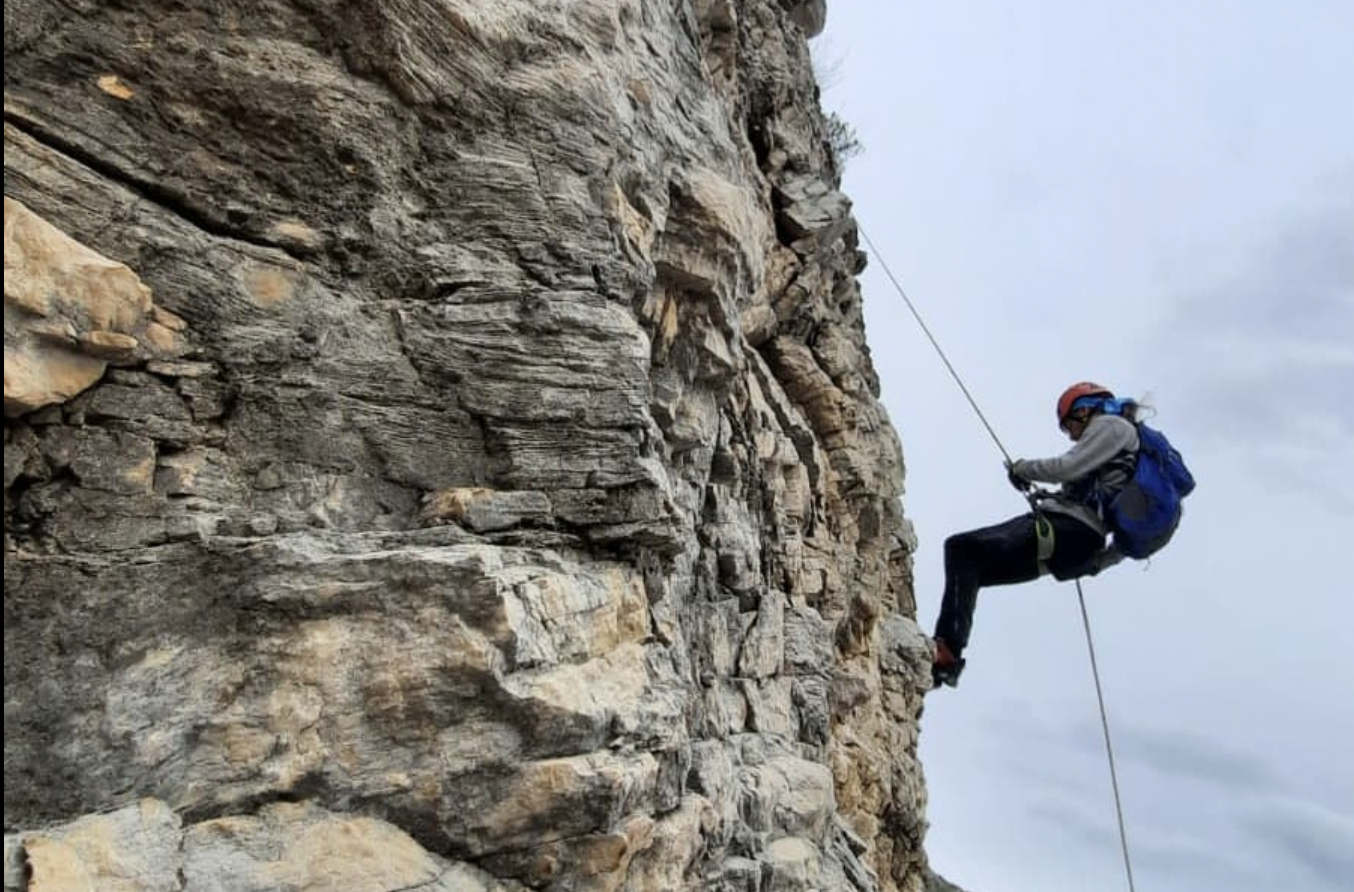
A climber on a rock wall © Adventure Park Mlini // Facebook
Via Ferrata Peć Mlini
I’m not going to pretend to know the first thing about rock climbing (climb the rocks, I assume), but when something is described as the “most challenging” in the country, it deserves a nod. According to the official Via Ferrata website, the Peć Mlini climb gets that title, requiring “constant attention and both physical and technical preparedness, with limited opportunities for resting during the climb.” Just looking at the pictures is enough to give the heebie-jeebies. If rock climbing is your thing and you consider yourself something of a pro, make the trip to the Peć Mlini Adventure Park and test yourself against this beast. Drinovci
BREWS, BOOZE, AND BITES
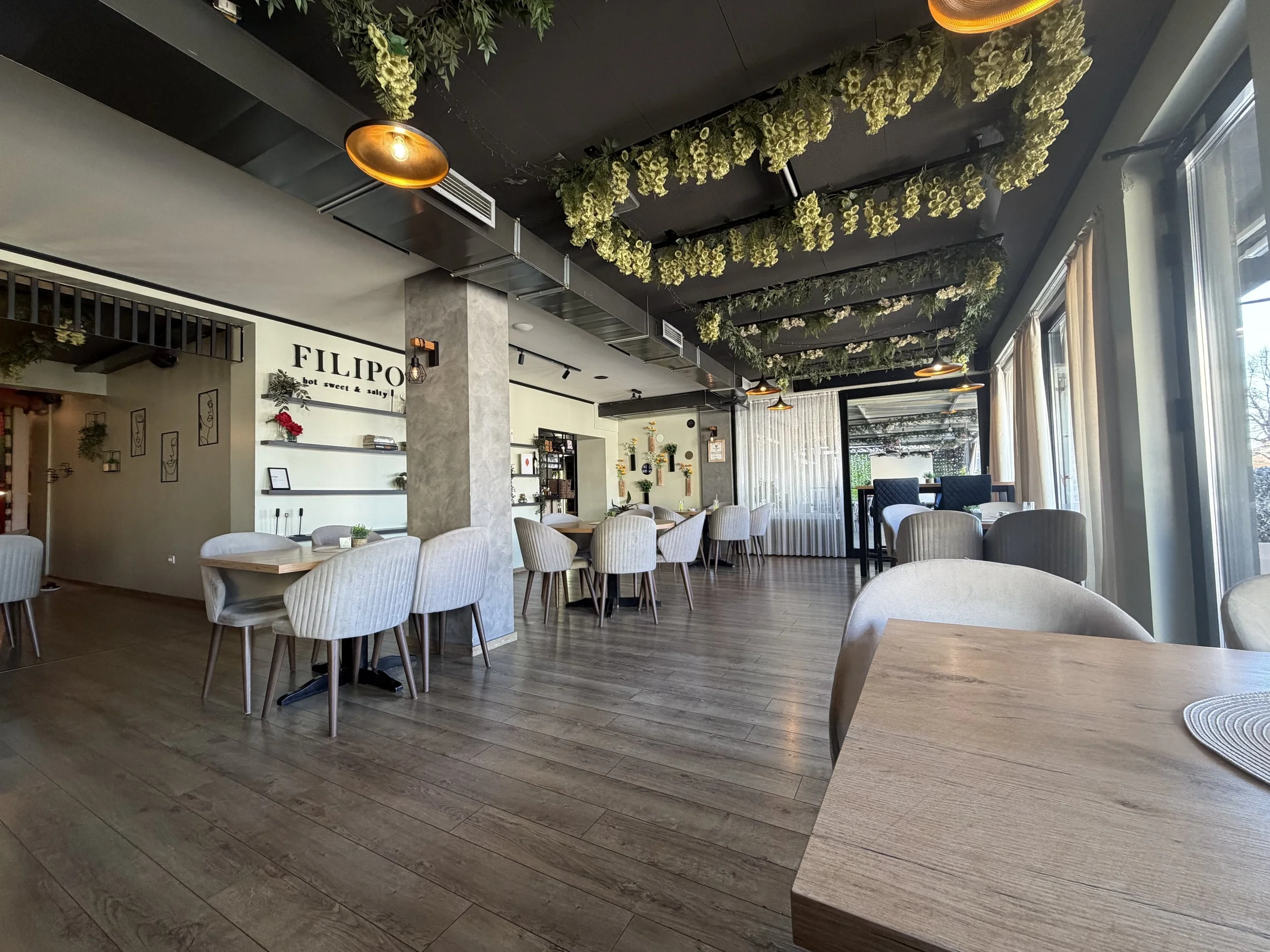
Cafe Filipo in Grude © John Bills
There are a handful of cafes in the heart of Gude, all ticking pretty much the same boxes. The espresso at Filipo (Dr Franje Tuđmana 19, +387 63 876 543) is decent, while Cafe King (Viteza Ranka Bobana), Jimmy Woo (Dr Franje Tuđmana, +387 63 498 172), and Hugo (Dr Franje Tuđmana 17) offer more of the same. There are a couple of very good food options in Grude, namely the excellent Bezdan21 (Republike Hrvatske 1, +387 63 212 121), a restaurant and lounge bar serving delicious Mediterranean dishes. The food at Kod Barića (Dr Franje Tuđmana 114, +387 39 662 246) also gets a thumbs up. And, as you should have guessed by now, the traditional dishes served at Marića Gaj (Ružići, +387 63 326 493) perfectly fit the vibes in that charming spot.
SLEEPING
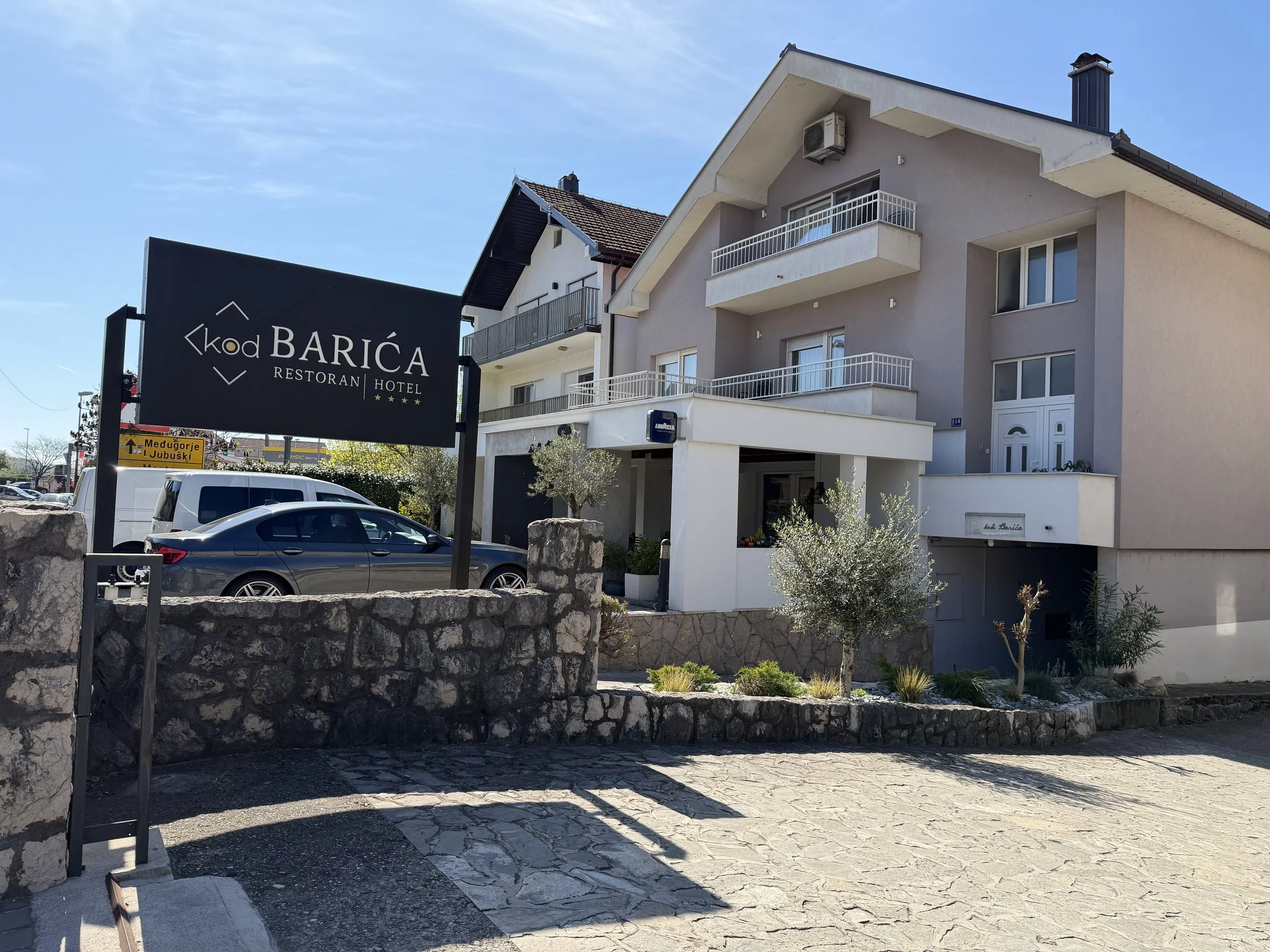
Kod Barica in Grude © John Bills
Kod Barića (Dr Franje Tuđmana 114, +387 39 662 246) is the place to stay if you’re looking to spend the night in Grude. Situated on the edge of town (entering from Ljubuški), the hotel has decent rooms (a little on the expensive side) to go with the excellent food served in the restaurant. If you’re happy staying a few kilometres outside of town, Marića Gaj (Ružići, +387 63 326 493) is a must, as you won’t find a more scenic place to rest your head in these lonely hills.