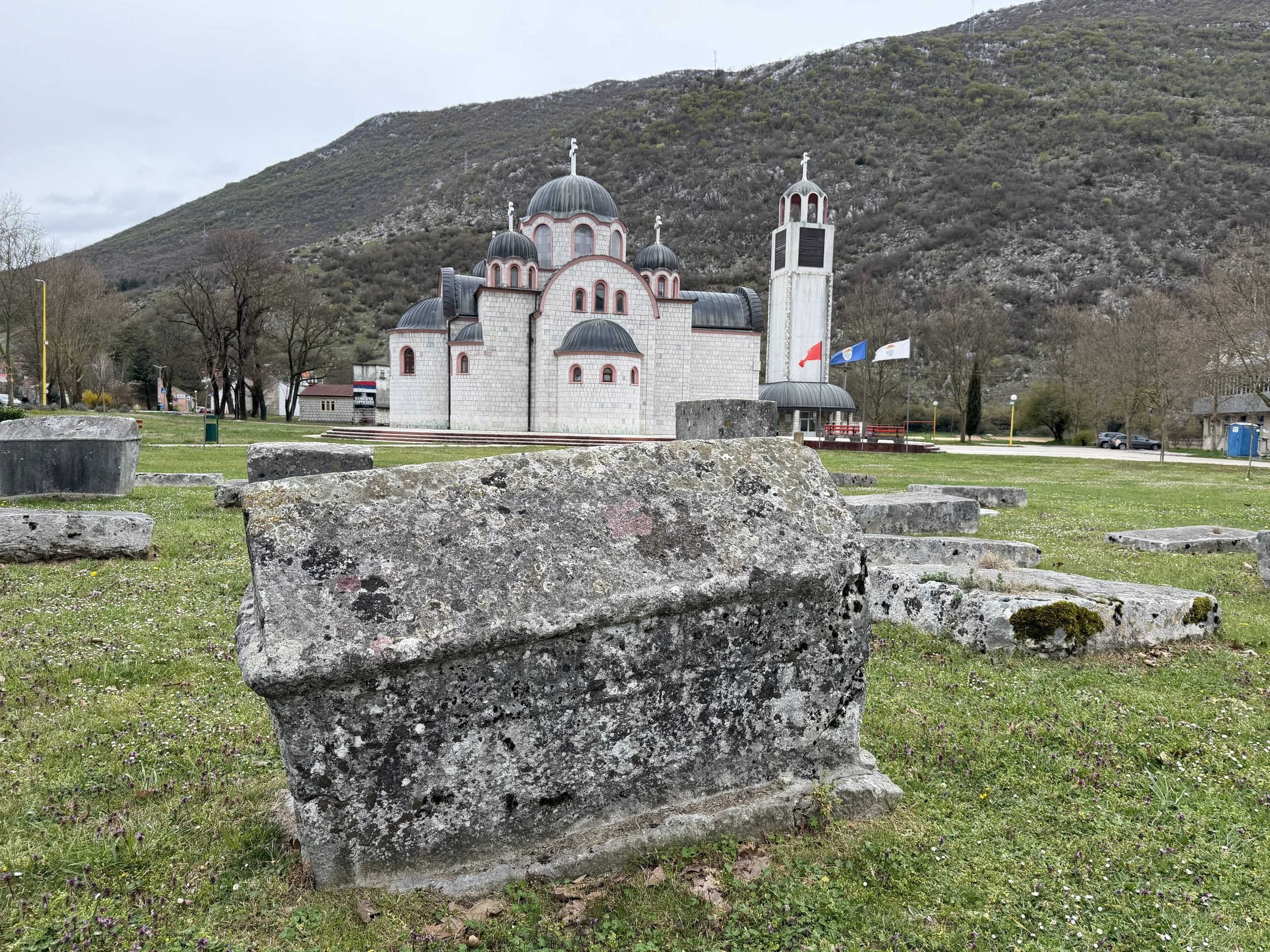
Ljubinje © John Bills
Located in the southern sweeps of Bosnia and Herzegovina, Ljubinje is famous for tobacco. Well, an old tobacco industry, although it is somewhat disingenuous to lump the history and entire municipality into thin paper before setting it alight. People have gone about their business in Ljubinje since the beginning of time, and there is a functional aspect to the town in the 21st century that appeals. There are surprisingly beautiful buildings, and the streets lead to a central field with churches, stećci, monuments, and quite terrifying graffiti. Long story short, there’s a good town in here. History hasn’t always been kind to Ljubinje, but it remains. A seemingly advantageous location on the road between Trebinje and Stolac hasn’t brought the masses, and Ljubinje is a quiet place to spend some time and reflect.
TRANSPORT
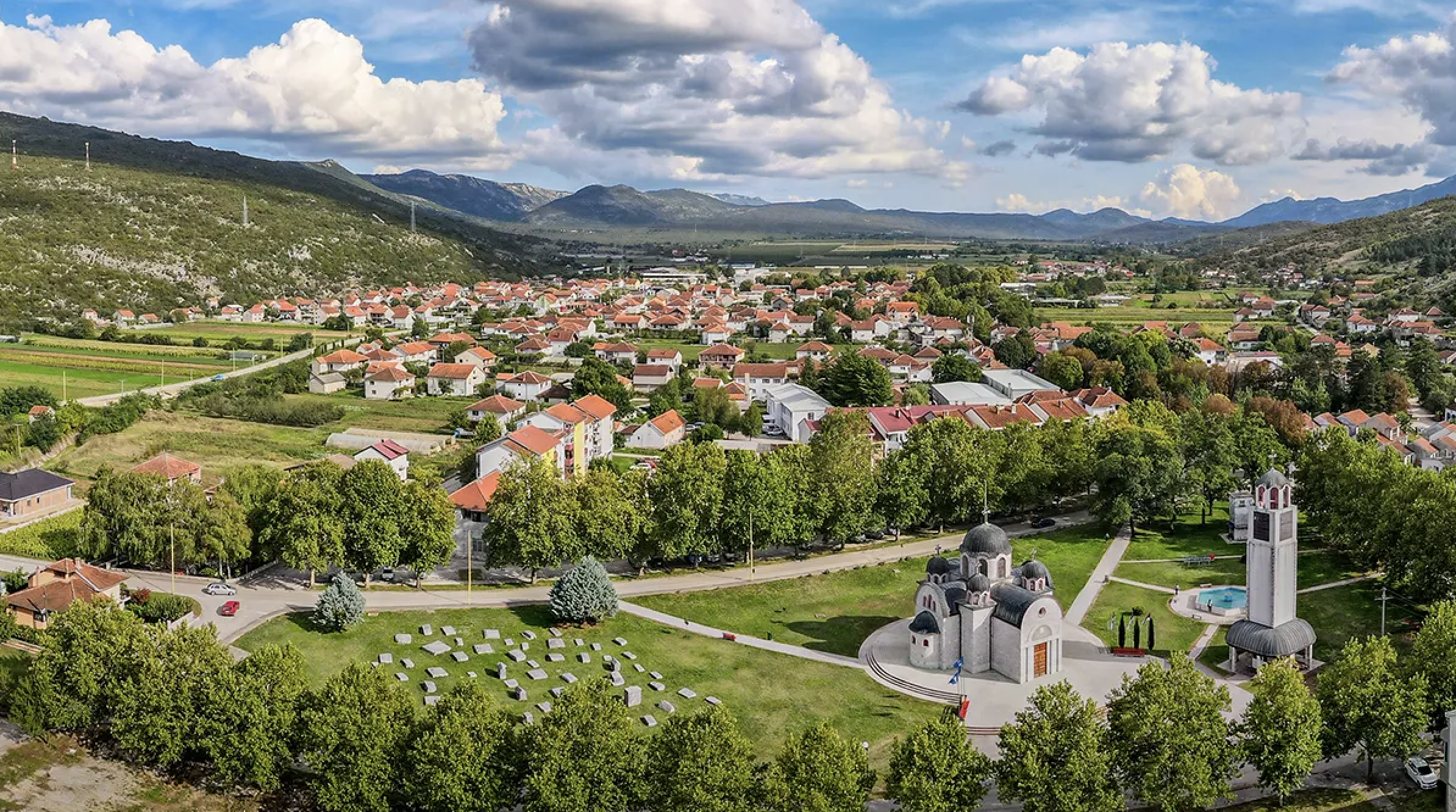
View of Ljubinje © Opstina Ljubinje
There’s no bus station of note in Ljubinje, so I’m obviously somewhat sad about that. However, the world does not revolve around me, as much as I’d like it to. There are a couple of buses that shuttle between Trebinje and Ljubinje, but the reality is that you’ll need your own wheels to get here. Luckily, the city is on a decent route, set off the M6 between Ravno and Stolac. Ljubinje is an hour or so north of Trebinje, and a similar distance south of Mostar.
WHAT TO SEE AND DO
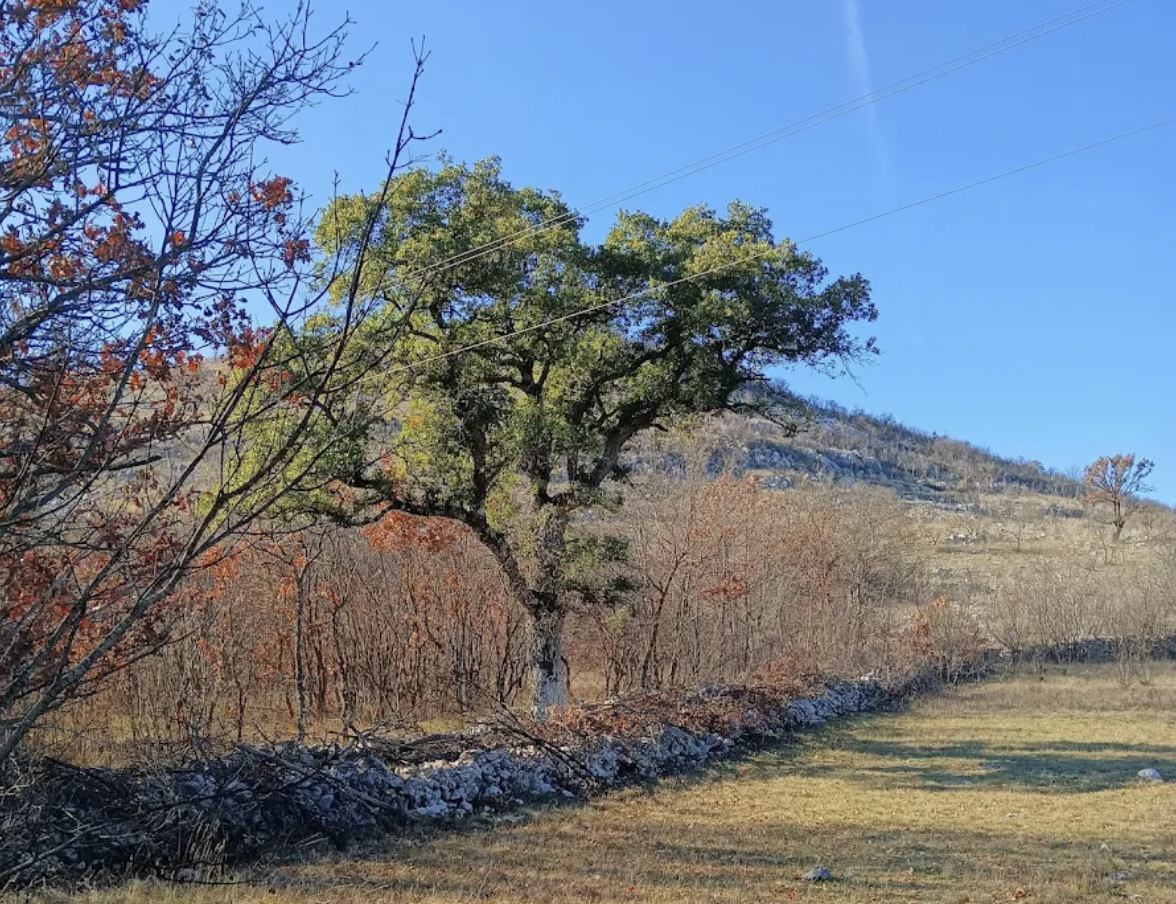
Zeleni Dub © Veljko Mihic // Google
Zeleni Dub
Ljubinje’s Green Oak (that’s what Zeleni Dub means, by the way) has seen it all. Found in a village called Bančići, some 5 miles west of Ljubinje, the old bugger has been around forever, and some put that down to being blessed by Saint Sava back in the 13th century. The tree is as evergreen as evergreens get, somehow surviving despite not reproducing, and I’m not going to pretend to know enough about dendrology to explain that. Dendrology experts can’t explain it either, so let’s just stand back and admire the thing instead. Full disclosure: We didn’t actually get to see the tree last time, as the road was blocked off to protect fresh concrete, which also happened to have relatively fresh visible paw prints. I like old trees, but I am not getting mauled by a dog to have a look at one. To get to the tree, head north out of Ljubinje towards Stolac, and take the immediate left following the Varduša restaurant (not far after the chicken factory). Then follow the road as it gets progressively worse until you come to an information sign about the tree and the nearby church. It is a 20-minute or so drive from the centre of Ljubinje. Bančići
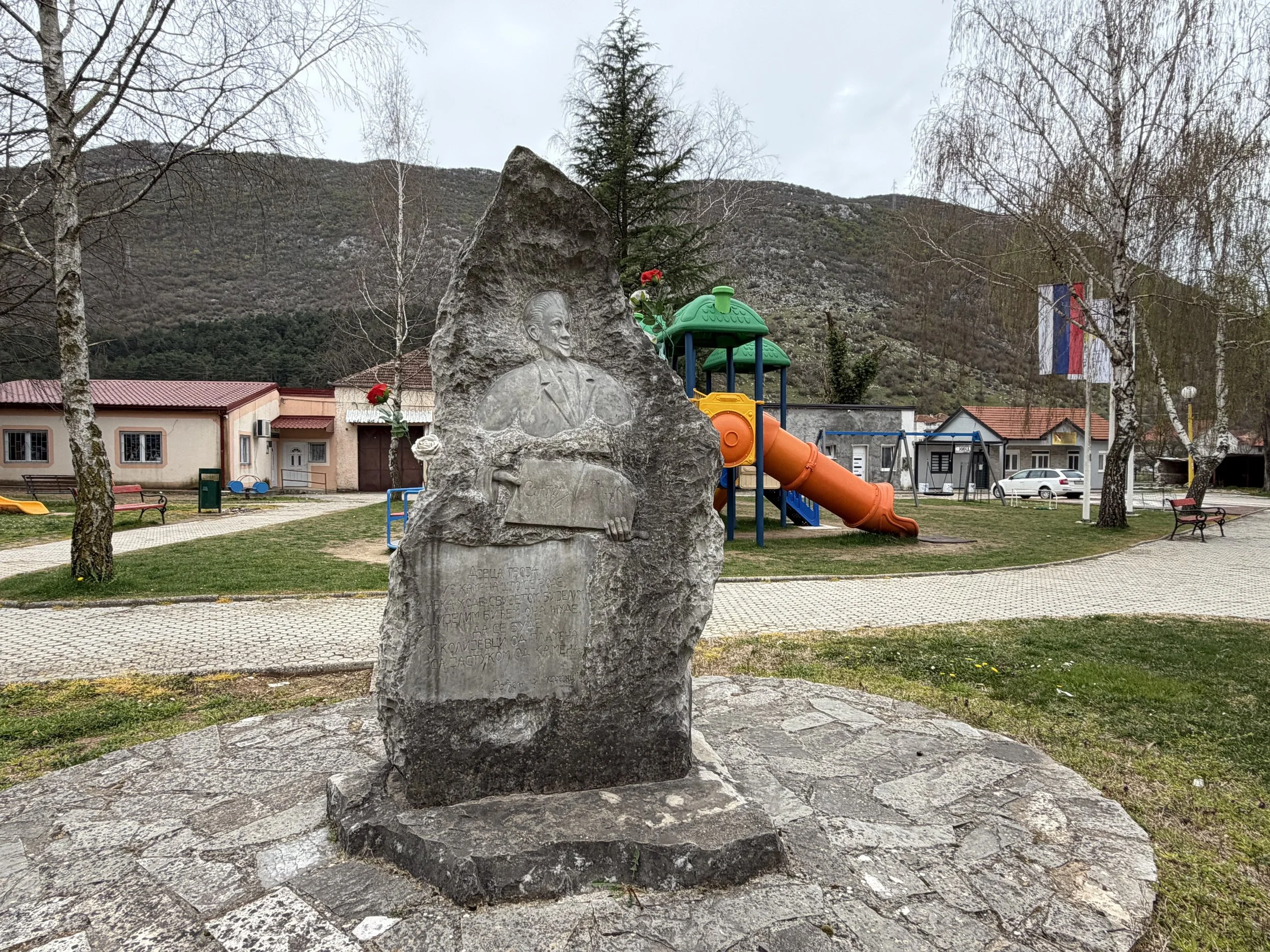
Sergej Cuk in Ljubinje © John Bills
Sergej Ćuk Monument
You know a poet was important to a place when a monument is erected within months of their death, and that was the case with Sergej Ćuk. Born and raised in Ljubinje, Ćuk spent his entire life in the city, writing poetry, organising festivals, establishing cultural houses, and so much more. It isn’t a great stretch to say that Ćuk was (and, in many ways, still is) the cultural heartbeat of Ljubinje. The monument was unveiled in Ljubinje’s City Park in August 2014, just seven months after Ćuk finally succumbed to the diabetes that had plagued him his entire life. The monument is a modest one, but that is the point. It contains a verse from Ćuk’s poem Rođen u kamenu, or “Born in Stone” to us non-local lingo talkers.
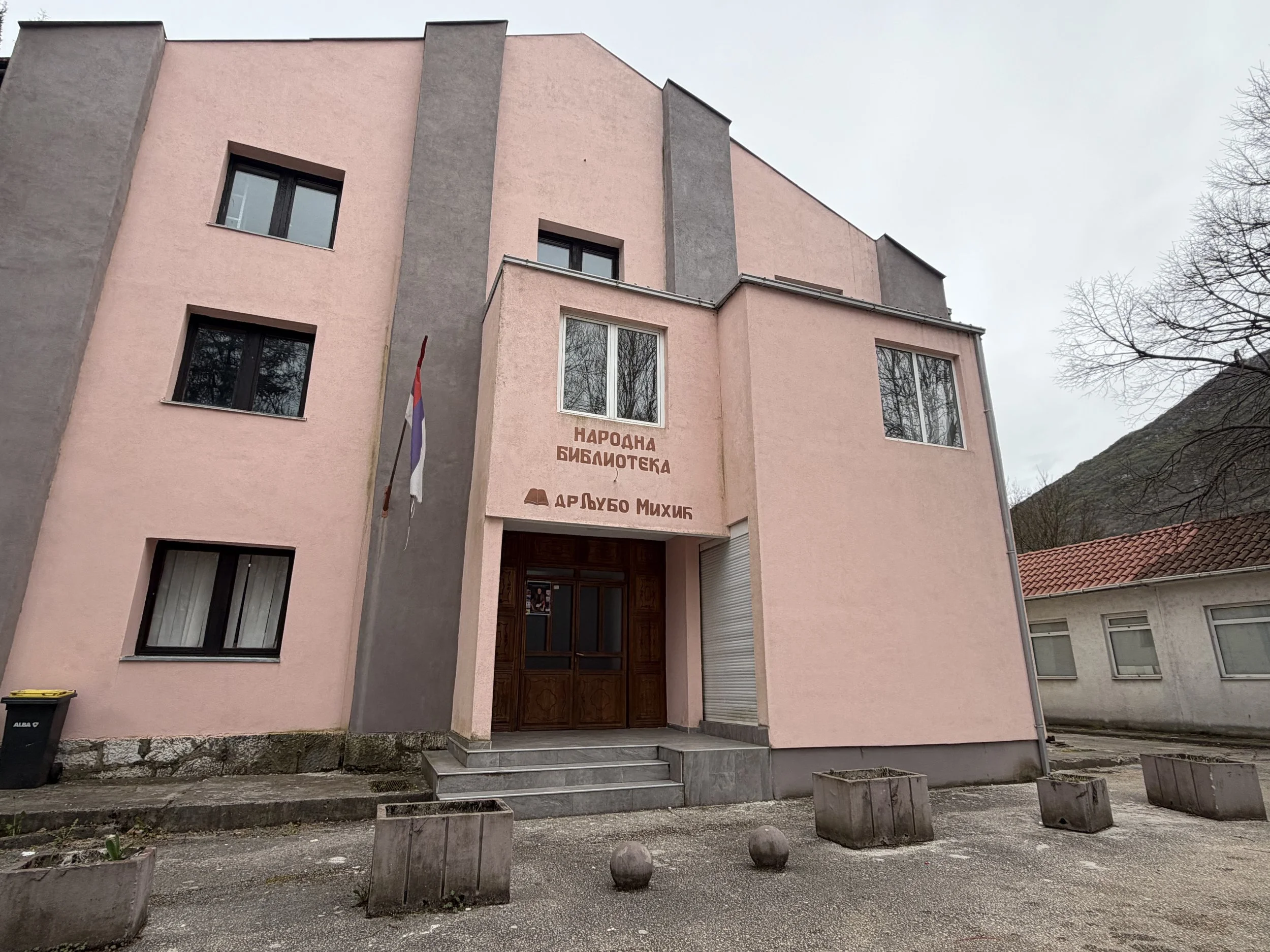
Library in Ljubinje © John Bills
Dr. Ljubo Mihić National Library (Narodna Biblioteka Dr Ljubo Mihić)
Named after the Ljubinje-born geographer, biologist, economist, and historian who helped pioneer the world of tourism in Herzegovina, the Dr. Ljubo Mihić National Library is more than just a place to hold books. This is Ljubinje’s premier cultural institution and has been since it was established in 1965, hosting workshops, round tables, book presentations, and more. The library itself is divided into the usual sections, with a special area given over to linguistics. There is also a small ethnographic exhibition within the library. Svetosavksa, +387 59 621 264
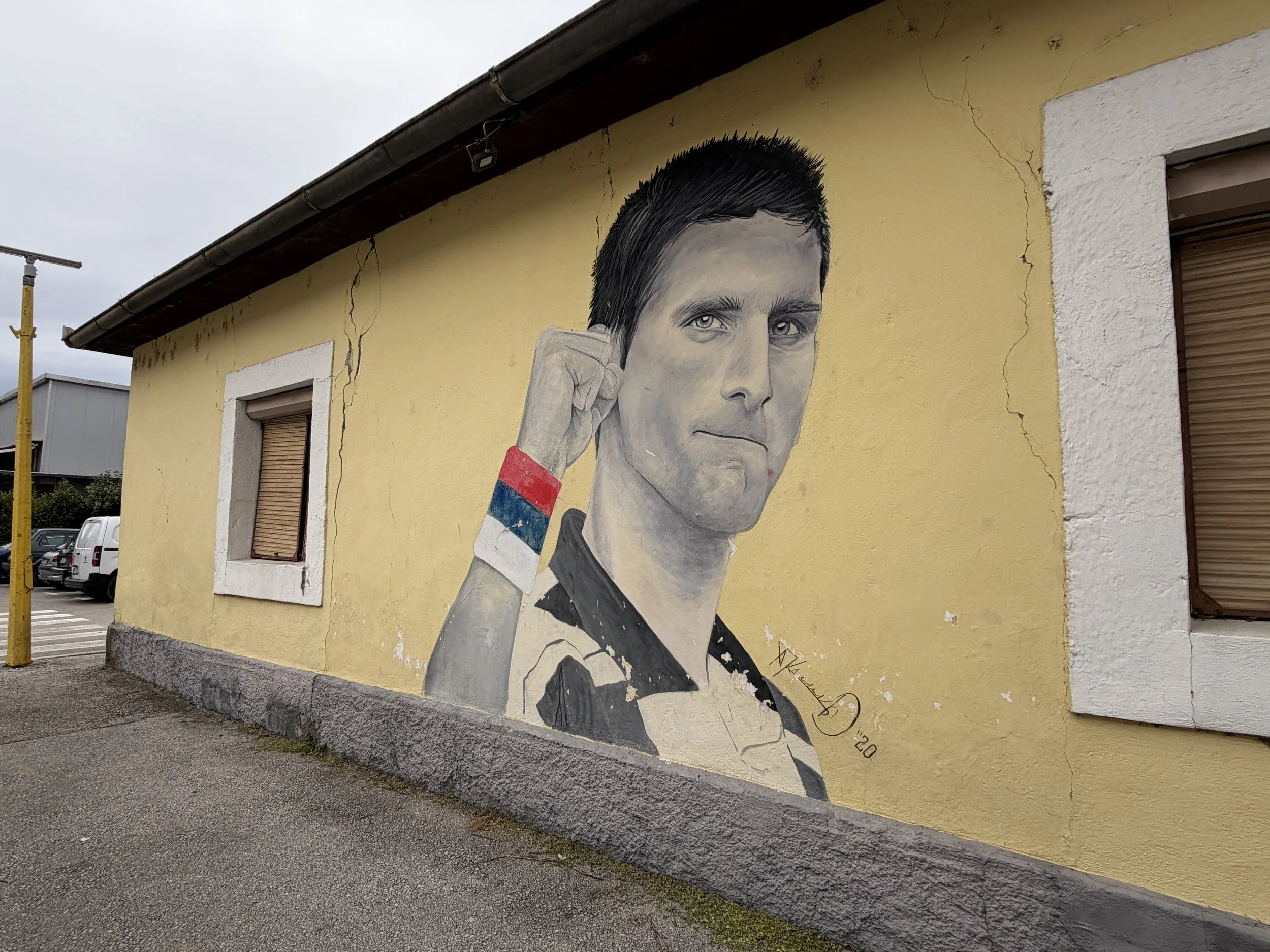
Djoković mural in Ljubinje © John Bills
Novak Djoković Mural
Not a lot to report here, but I feel it is worth mentioning, Djoković being the greatest tennis player in the history of tennis players, after all. The mural is on the side of a house in the centre of Ljubinje and was painted by Belgrade artist Lazar Kantančević back in 2020. Supposedly, it is lit up by a spotlight at night. Having never been in Ljubinje at night, I can’t verify this. The world continues to turn. Svetosavska
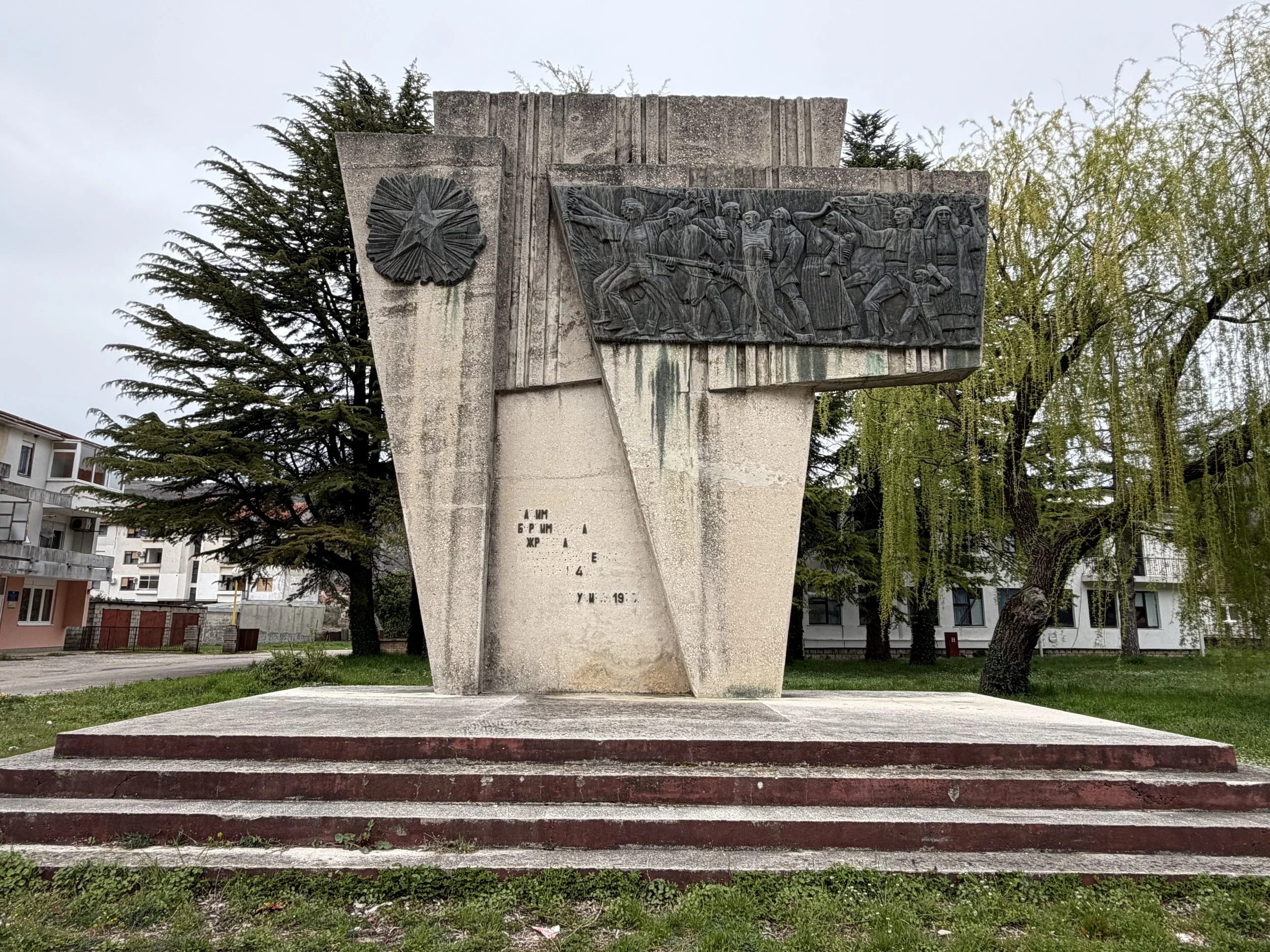
World War II monument in Ljubinje © John Bills
Monument to the Fighters of the National Liberation War (Spomenik Borcima NOB-a)
Constructed in 1976, the World War II monument in the heart of Ljubinje is in relatively good condition, though that probably says more about the condition of other monuments across the country. For the time being, the relief remains undisturbed (the description is all but destroyed), and this monument to those who sacrificed their lives in the battle against fascism is well worth a look. The relief follows the usual line, depicting civilians and soldiers in a variety of actions during the conflict, with the ubiquitous star nearby. Trg Nemanjića
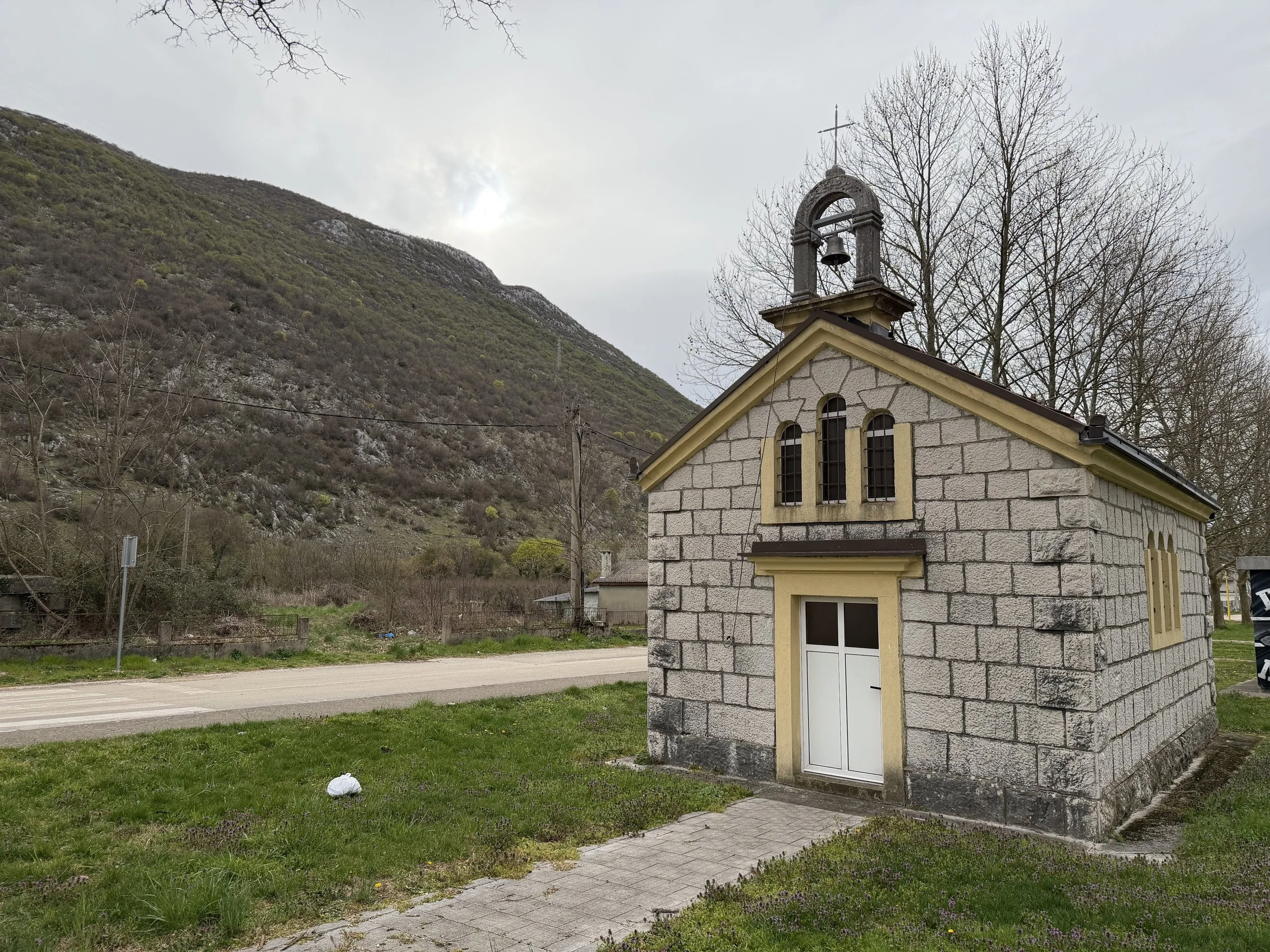
Catholic Church in Ljubinje © John Bills
Church of the Sacred Heart of Jesus
Ljubinje’s Catholic Church is almost a miniature version of one, and I’m not sure how much to read into that. From what I gather, the church (located in the same park as the main Orthodox one) was constructed in 1936, and that’s pretty much all I’ve got. It is a cute church, although I fear that it might have a history that leans a little more tumultuous. I’m speculating there, obviously.
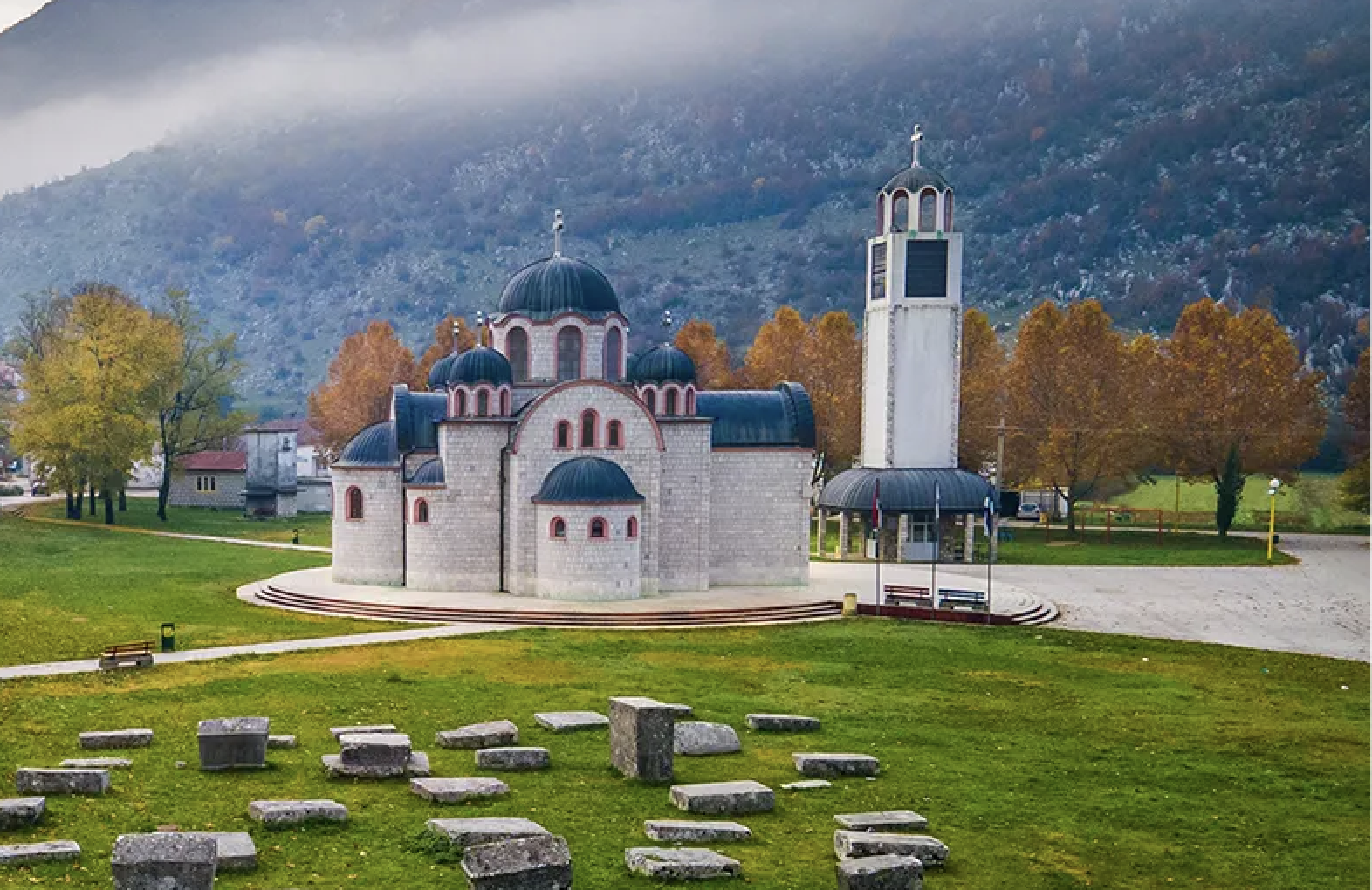
Church in Ljubinje © Opstina Ljubinje
Cathedral of the Nativity of Jesus Christ (Saborni hram Rodjena Gospoda Isusa Xrista)
The central church in Ljubinje was completed in 2004 and follows the usual form, with domes, bell towers, and inscriptions of respect. The church is pleasant without dropping jaws, aesthetically admired as much for its surroundings and location as the brick and mortar that give it life, but it remains a spiritual anchor in this small Orthodox-focused town.
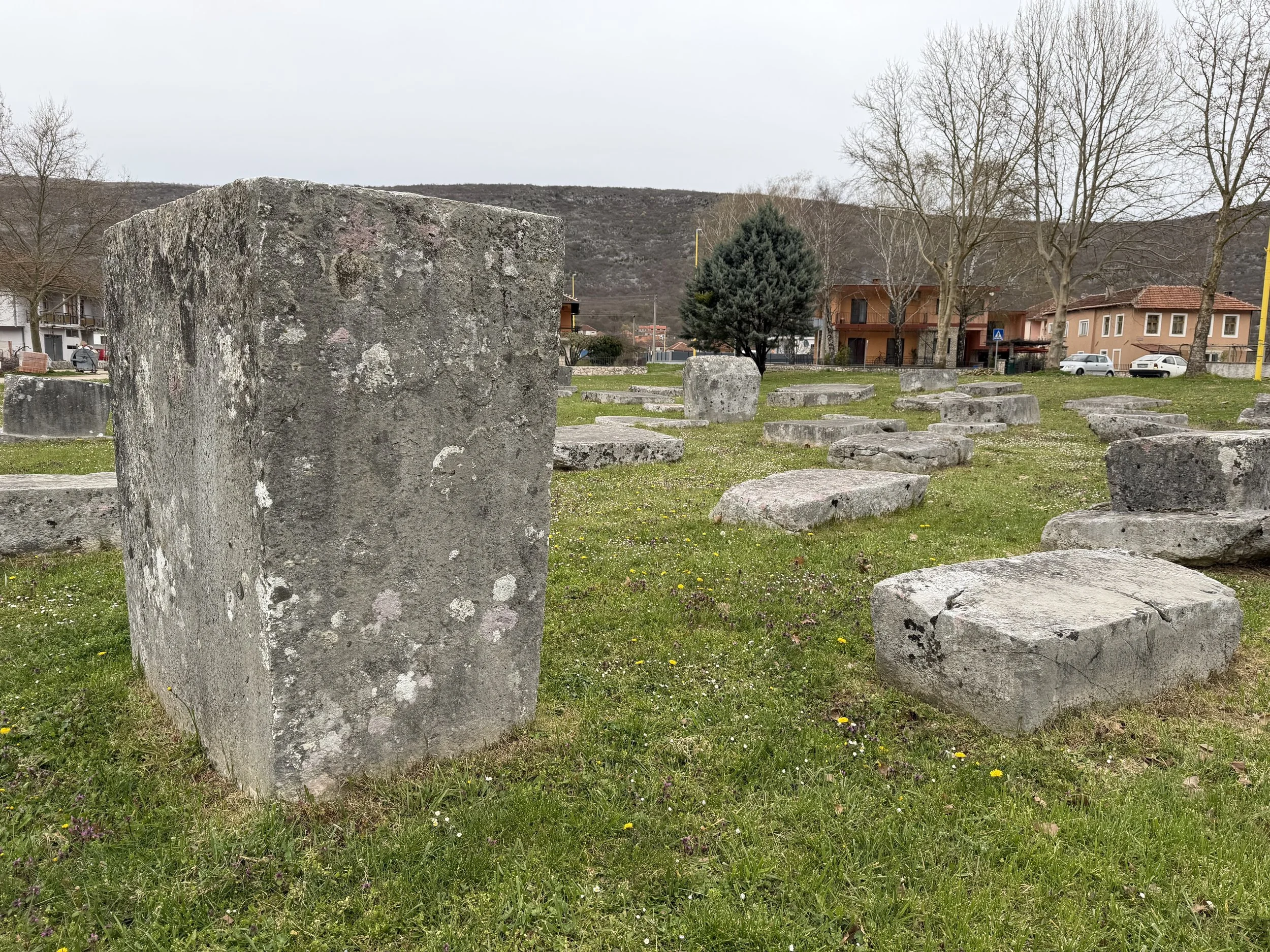
Stećci in Ljubinje © John Bills
Ljubinje Stećci Necropolis
The real gem in the Ljubinje tourism crown is its gorgeous stećci necropolis, located in the centre of town next to the Orthodox Church. Make no mistake about it, this is one of the most important necropolises in the region (quite the claim, but justified), and has become a vital source of documentation for better understanding the wonderful world of medieval Bosnia and Herzegovina. From what I can tell, these tombstones were actually brought into town from the 15 registered necropolises in the municipality, showcasing these vital cultural artefacts in a most visible place. There are around 40 tombstones in the field, and they are well worth some love and attention.
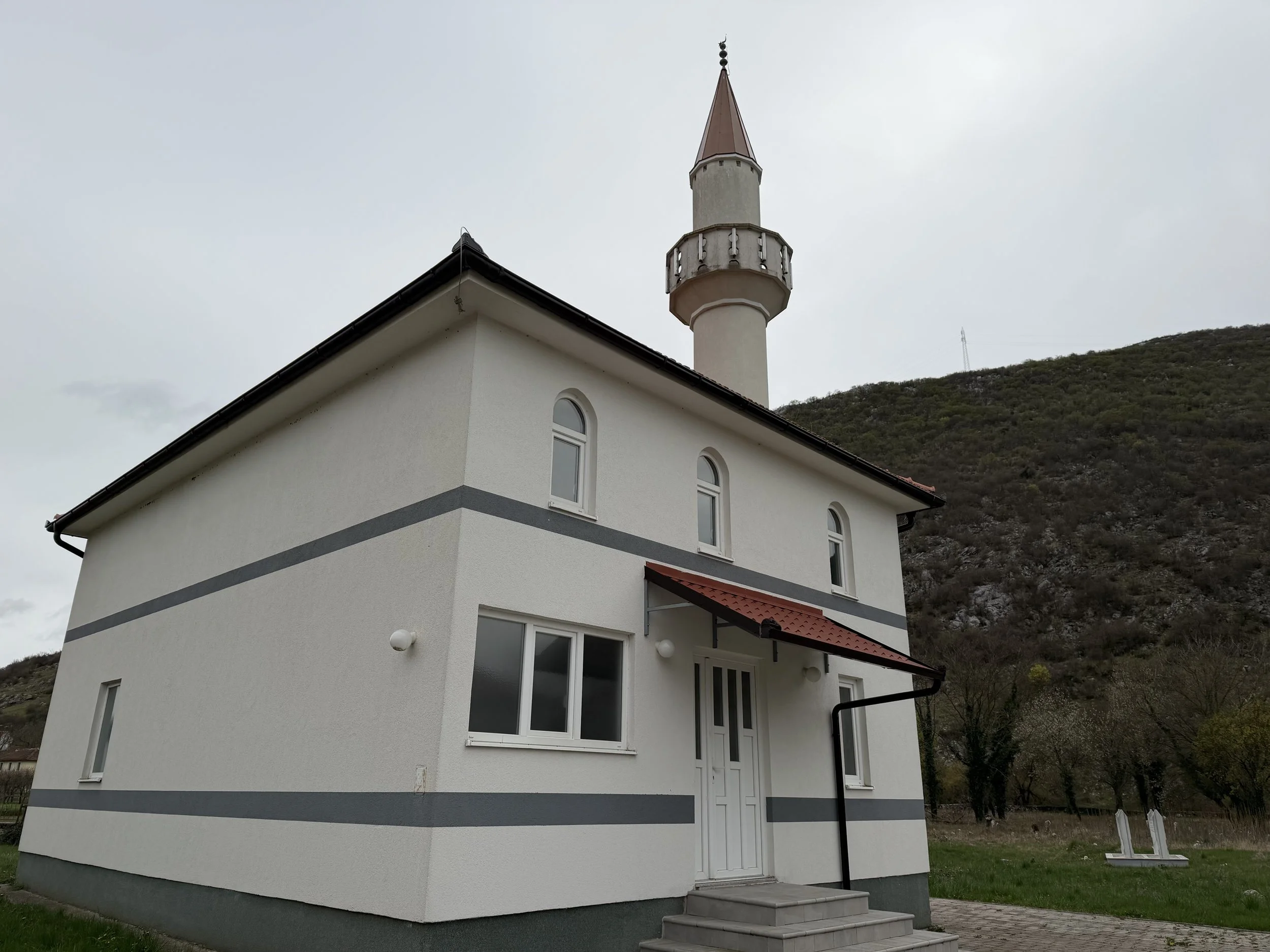
Mosque in Ljubinje © John Bills
Mustafa-aga Mosque (Džamija Mustafe-age)
There are no Muslims living in Ljubinje today, but the history of Islam in these parts goes back centuries. The first mosque in Ljubinje was constructed in 1592 and stood in relative peace until just after World War II, when the Yugoslav authorities demolished it. A new mosque was constructed in 1986, only to be destroyed in the conflict just six years later. Fast forward to the 2020s, and the mosque has risen once more.
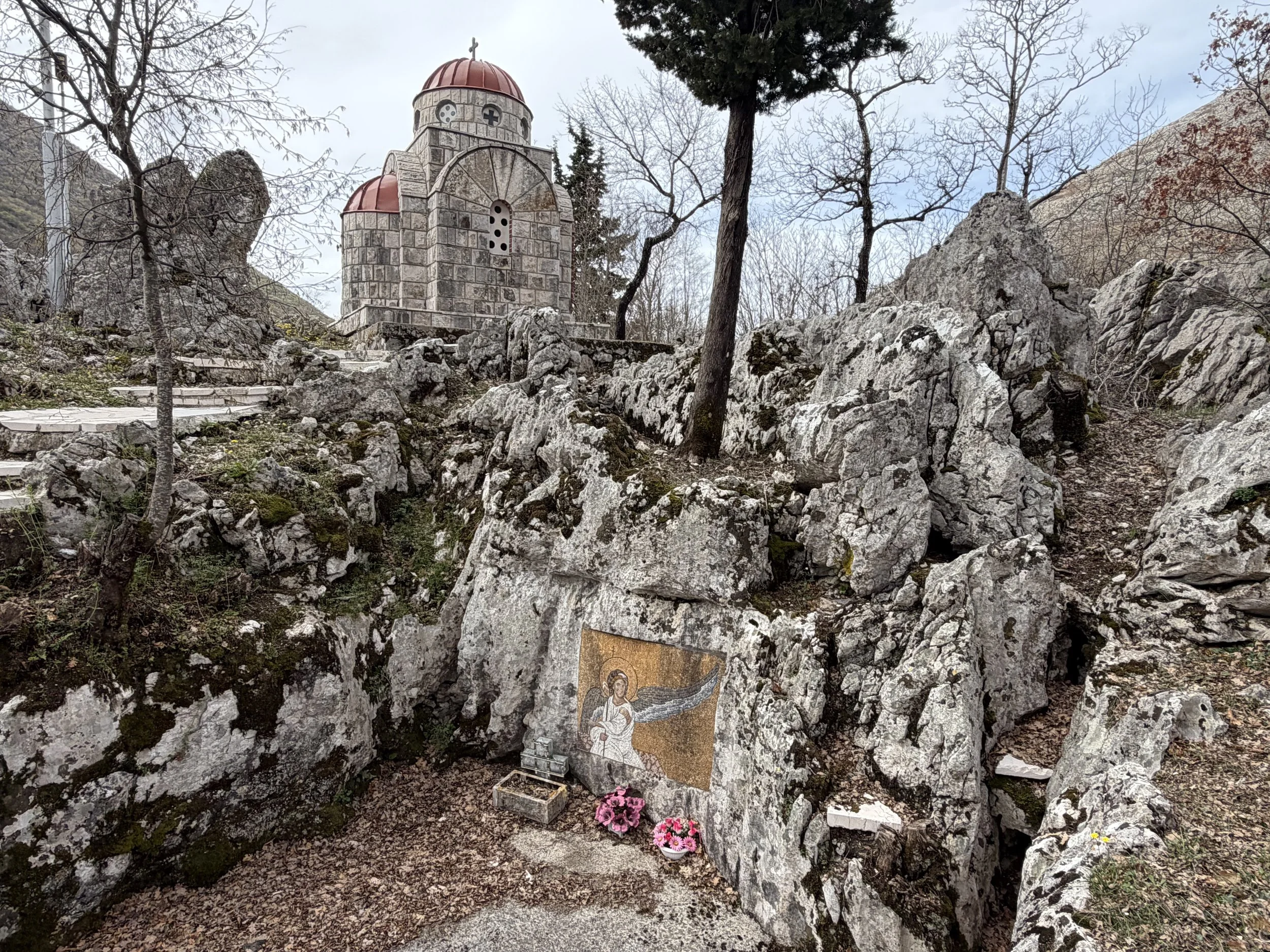
Ržani Do near Ljubinje © John Bills
Jama Ržani Do
There are a number of small memorials on the road between Ravno and Ljubinje, each with a tragic story to tell. All are memorials to people who suffered brutal deaths at the hands of the Ustaše during the early days of World War II. It doesn’t feel like the right term, but the most notable of these is commemorated at the Jama Ržani Do monument, where a small rendering of a Serbian monastery sits next to an obelisk, both of which hide a pit of sorts, where civilians were murdered. There isn’t a lot that you can say about this sort of evil, but the monument is impactful and thoughtful at the same time. As mentioned, there are a number of these dotted along the side of the road, so keep your eyes peeled to give them a look. Obzir
BREWS, BOOZE, AND BITES
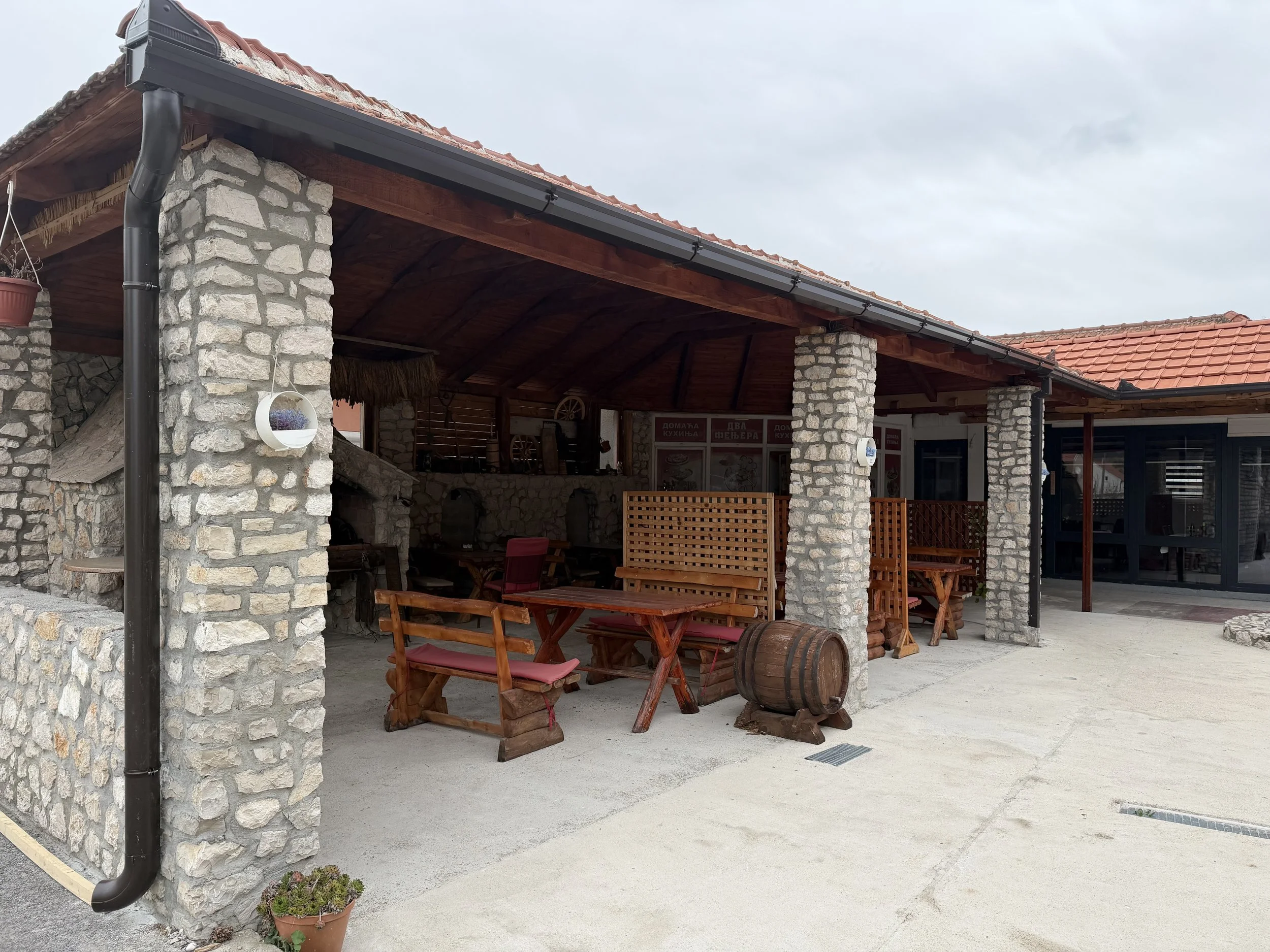
Dva Fenjera in Ljubinje © John Bills
The centre of Ljubinje has a handful of cafes for sitting and sipping, with Gastro Pub London (Svetosavska, +387 65 632 235) top of the pile. That is particularly true if you fancy something a little stronger, and the football scarves and eccentric decor should create a sterling atmosphere for a beer or two. There aren’t a huge number of food options in Ljubinje proper, but Dva Fenjera (M6, +387 65 967 854) more than makes up for it. A little grill restaurant on the side of the road, it straddles the divide between formal and informal, with an interior that is definitely an establishment but an atmosphere that more closely resembles a living room. The food is fabulous, proper home-cooked BiH fare, with friendly service and a pleasant outdoor terrace to boot. If you’re heading out to the old tree, Restoran Varduša (M6, +387 65 975 800) is handily placed at the turn-off. Continuing along the M6, Restoran Zvijezda (M6, +387 66 896 477) is another classic option, just 7km north of town.
SLEEPING
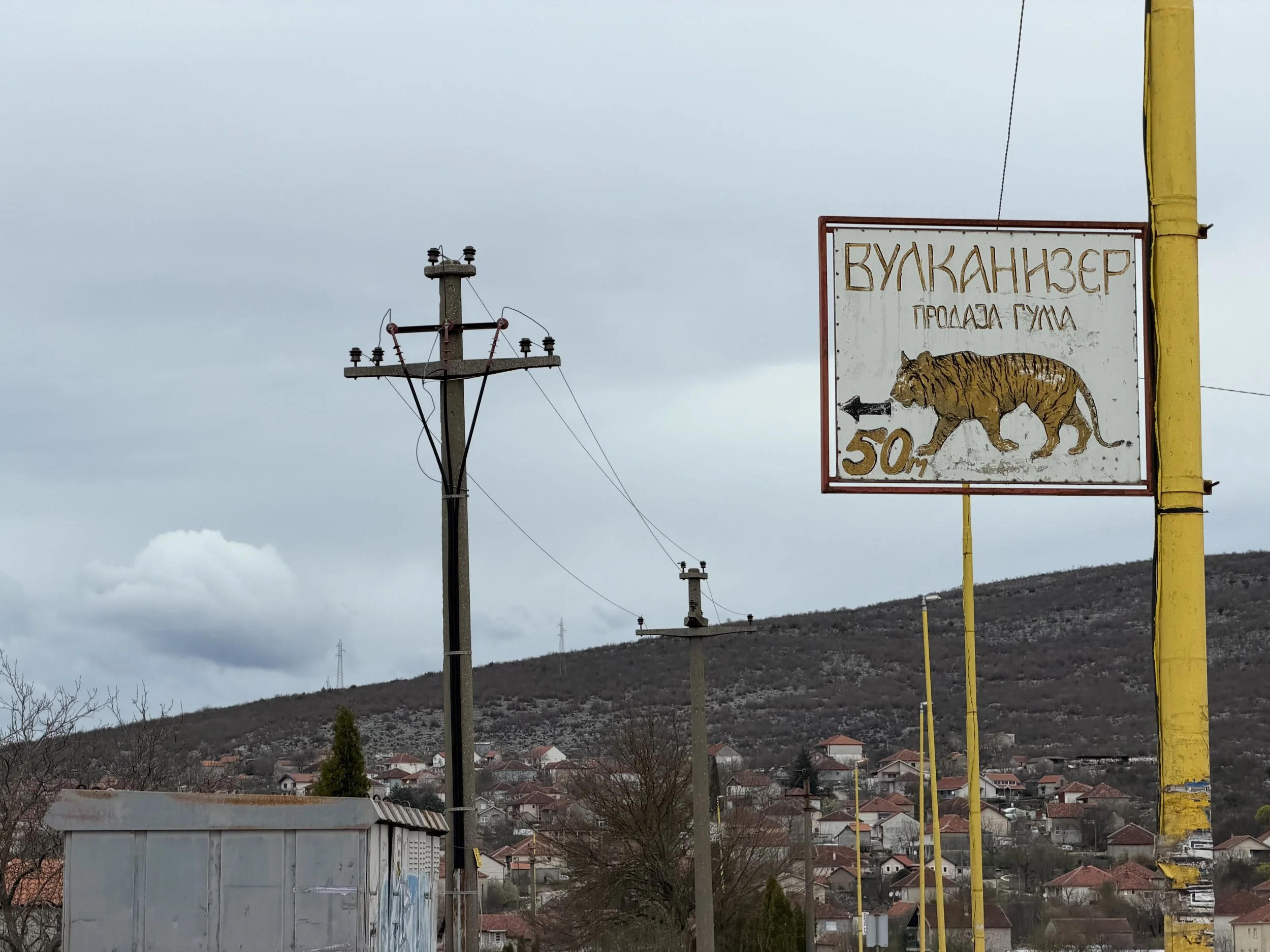
Legit in Ljubinje © John Bills
Yeah, not a lot to write about here. There aren’t any notable accommodation options in Ljubinje, which makes it hard to sink your teeth in during a visit. You shouldn’t be biting towns, obviously, but still. There are a couple of informal apartments offering bookings, but nothing that I can properly verify moving forward. The fabulous Hotel Stanica Ravno (+387 63 156 873) is just 20 minutes away to the southwest, so I’d recommend staying there instead.