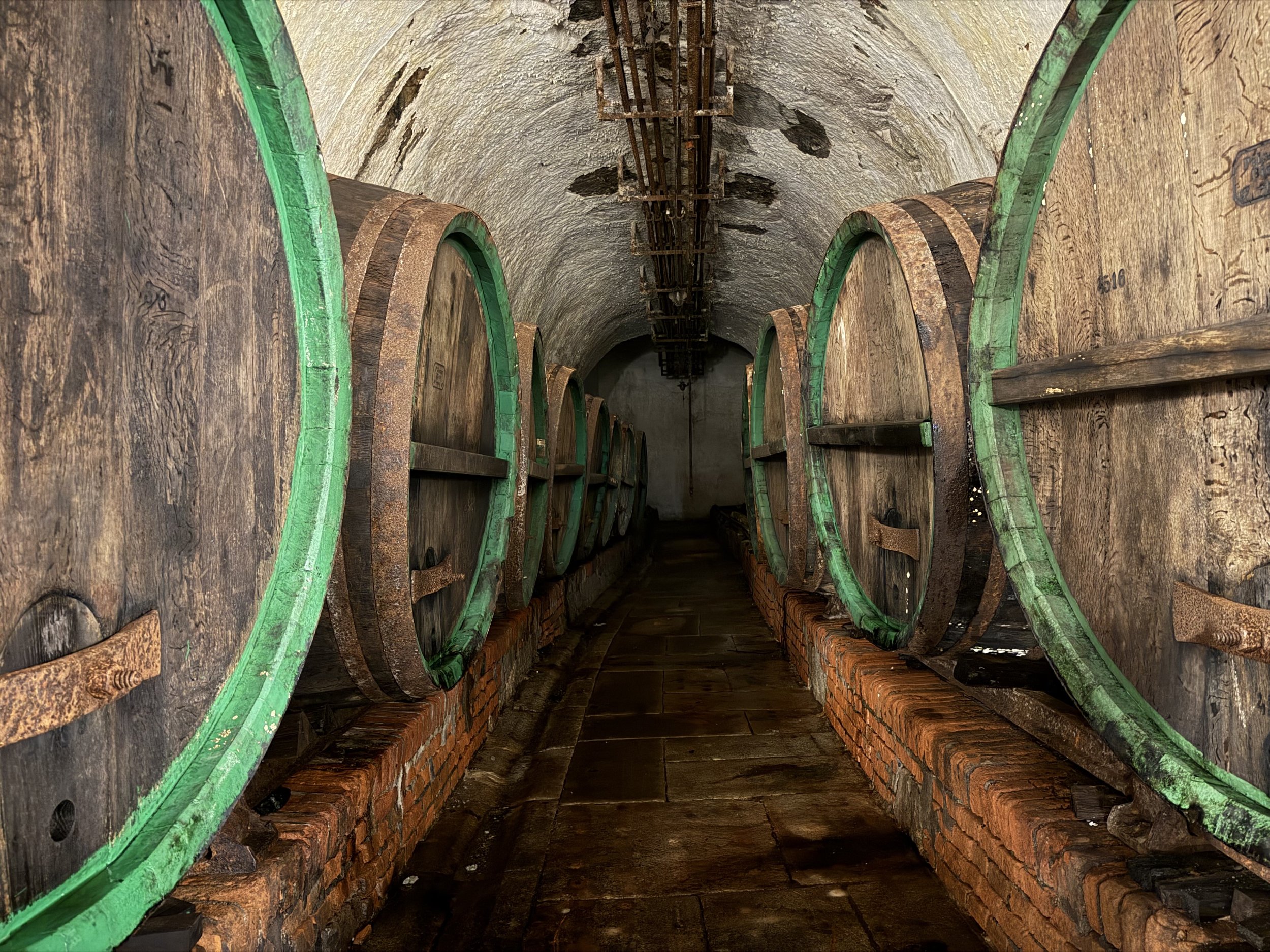
Pilsner Urquell Brewery in Plzen // © John Bills
Booze. It’s a funny old thing. It has done it all, inspired ingenuity, built fortunes, shaped cultures, fuelled creativity, built traditions, connected people, initiated communication, amplified celebrations, softened edges, and an entire litany of magic beyond my comprehension. It has also ruined lives, fractured families, and provided a remarkably efficient way to avoid thoughts that should be confronted. It can make you feel connected to the world, and it can make you feel utterly distant from everything, and booze itself does not care. If you need a companion, reward, consolation, escape, excuse, hideout, whatever, it says “yes.” That’s part of the problem, but I don’t have the capacity to tackle that subject just yet.
Besides, I had walked a considerable distance with a 15kg Horse on my back, and I needed a drink. The Czech Republic and beer are like magnet and steel, and it is no great stretch to say this is most apparent in Plzeň.
Plzeň and beer are best buddies. Yes, you can point to the issues explained in paragraph one and question the health of that relationship, and you’d have my full support, but let’s not get bogged down yet. Plzeň was founded in 1295 (it developed around an older settlement called Starý Plzenec) and flourished as an important medieval trading town, and the love of beer wasn’t far behind. Brewing privileges were initially only enjoyed by the early burghers (funny word), but they enjoyed many a brew with those who travelled the routes connecting Bohemia with Nuremberg, Regensburg, and the rest. Before long, Nova Plzeň was the third largest town in Bohemia, behind only Prague and Kutná Hora. That’s about all the history you’re getting, because it is time for a beer.
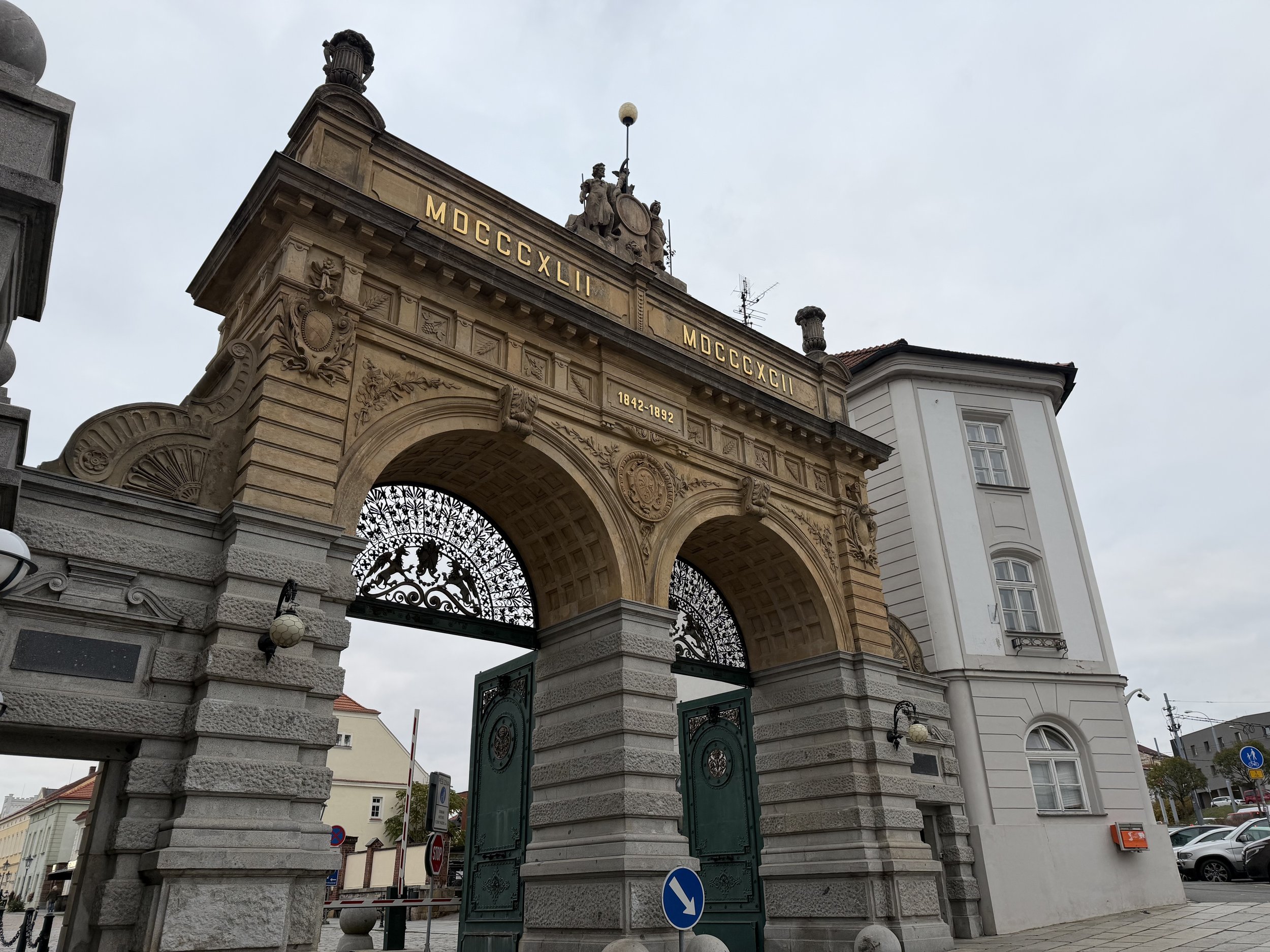
Pilsner Urquell Brewery in Plzen // © John Bills
If you’ve been on one brewery tour, you’ve been on most of them, and the nuts and bolts of Pilsner Urquell are no different. Here’s the history of how the beer came to be, here’s how we make it, here’s the bottling plant, here’s a glass to taste, thanks for coming. The Pilsner Urquell tour ticks all of these boxes, but the beer has something that no other beer can claim; the very existence of pilsner. With that in mind, the story of Pilsner Urquell becomes the story of modern beer. Before Pilsner Urquell, beer in these parts (and most parts) was presumably dreadful. It was a game of chance, where one barrel could hit the spot before the next one hit the vomit button. Saying that quality was inconsistent is being very kind, and that’s a rather liberal use of inconsistent. I mean, I assume, I’m not a bloke from the long, long ago. They have been brewing beer in Plzeň since the 13th century, and it wasn’t until the first half of the 19th century that enough was enough. That’s six centuries of bad beer.
According to legend, things came to a head (that’s a beer joke) in 1838. In that fateful year, 36 barrels of supposedly undrinkable beer were publicly poured away in the town square, an incredible statement from a populace that just wanted a good pint. The solutioon? It was time to build a proper brewery, a modern brewery, where consistency could become a reality. The result was the Bürgerbrauerei (Burghers’ Brewery), founded in 1839, but it was another three years before they were cooking with gas. That was when a Bavarian brewer called Josef Groll was recruited. On October 5 of that fateful year, Groll brewed the first batch of what would become Pilsner Urquell. The rest is history.
History I’m going to tell, of course.

Pilsner Urquell Brewery in Plzen // © John Bills
Groll’s trick was to bring together pale malt, Saaz hops from nearby Žatec, bottom-fermenting yeast, and the fabulously soft local water to brew something considerably lighter than the dark, heavy beers of the time. A golden lager was the result, and it predictably became an immediate hit. Other breweries began copying the style, it received the name pilsner, and we’re all drinking it today.
Groll was an interesting character, although that might be putting it mildly. He left Plzeň at the end of his contract in 1845, supposedly because he was pretty much impossible to work with. Born in the Bavarian town of Vilshofen in 1813 (which means he was around a decade younger than me when he arrived in Plzen, good lord), Groll was the son of a brewer and learnt the trade young, but his father didn’t exactly have glowing words for his offspring. Groll senior actually described Groll junior as “the rudest man in Bavaria,” and others paint the man as coarse, badly mannered, a poor communicator, and generally a bad time. Still, this wouldn’t be the first or the last time that a difficult man had created something spectacular. His time in Plzeň complete, Groll returned home, eventually taking over his father’s brewery before snuffing it in 1887, leaving behind a legacy more palatable than his personality. There’s a lot of conjecture in there, and much of my information comes from the Czechs, so this could well be a two-sides-of-the-story job. Don’t shoot the messenger (the messenger being me), and all that.
The original brewery registered the Pilsner Bier trademark in 1859, and the name Pilsner Urquell eventually helped distinguish the real thing from its imitators. The Urquell? It basically means “from the original source,” if you’ll allow my German to play loose.
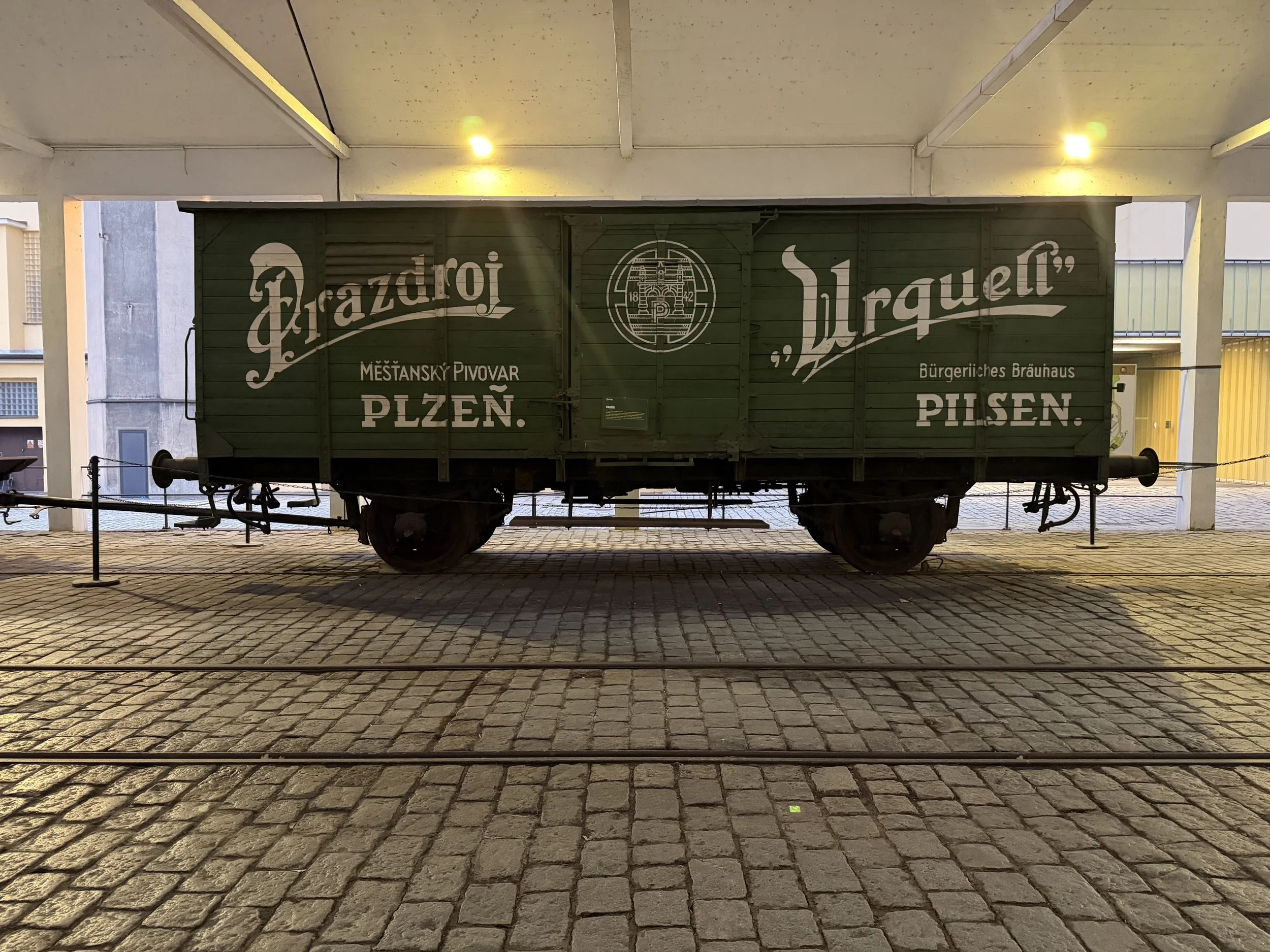
Pilsner Urquell Brewery in Plzen // © John Bills
Whatever was happening with the name, the beer itself was going places. By 1913, production had passed 1 million hectolitres annually, not that I know what a hectolitre is (100 litres, if you were wondering). The beer was sold in 34 countries, which might not sound like a lot in our roughly 200-country world, but we’re talking about 1913. There were considerably fewer states at that time. Refrigerated beer trains carried the stuff across Europe (god bless the railways), and you could even get a crisp pint of Pilsner Urquell in Australia, the literal other side of the world. Considering the town was struggling to pull a decent pint just 70 years earlier, that’s some heck of a success.
Unfortunately, the mucky fingerprints of the 20th century didn’t skip Pilsner Urquell. World War II brought requisitioned transport, dwindling exports, and an American boycott, and Allied bombing in the latter days of the war severely damaged the brewery. The neighbouring Gambrinus brewery was almost completely destroyed, and I’ll resist making a joke about whether or not the taste of Gambrinus means that was good or bad. Nationalisation came in 1945, communism followed, but not even the po-faced commies could stop the world from drinking the pioneering pivo. Fast forward to after the Velvet Revolution and the brewery was privatised, renamed Plzeňský Prazdroj in the process. Fast-forward to today, and Pilsner Urquell is still brewed in its original home, with ownership now in the hands of Japan’s Asahi Group. Japan was a particularly enthusiastic importer of Pilsner Urquell during the commie years, so there is some poetry there.
Truthfully, I didn’t learn much of this during the tour, but that is okay. We went from one stage to the next, our guide running through his script and leaving just enough space for nobody to ask questions. Nobody seemed to mind; there was a silent understanding that we were all there to tick it off and get that free sample at the end.
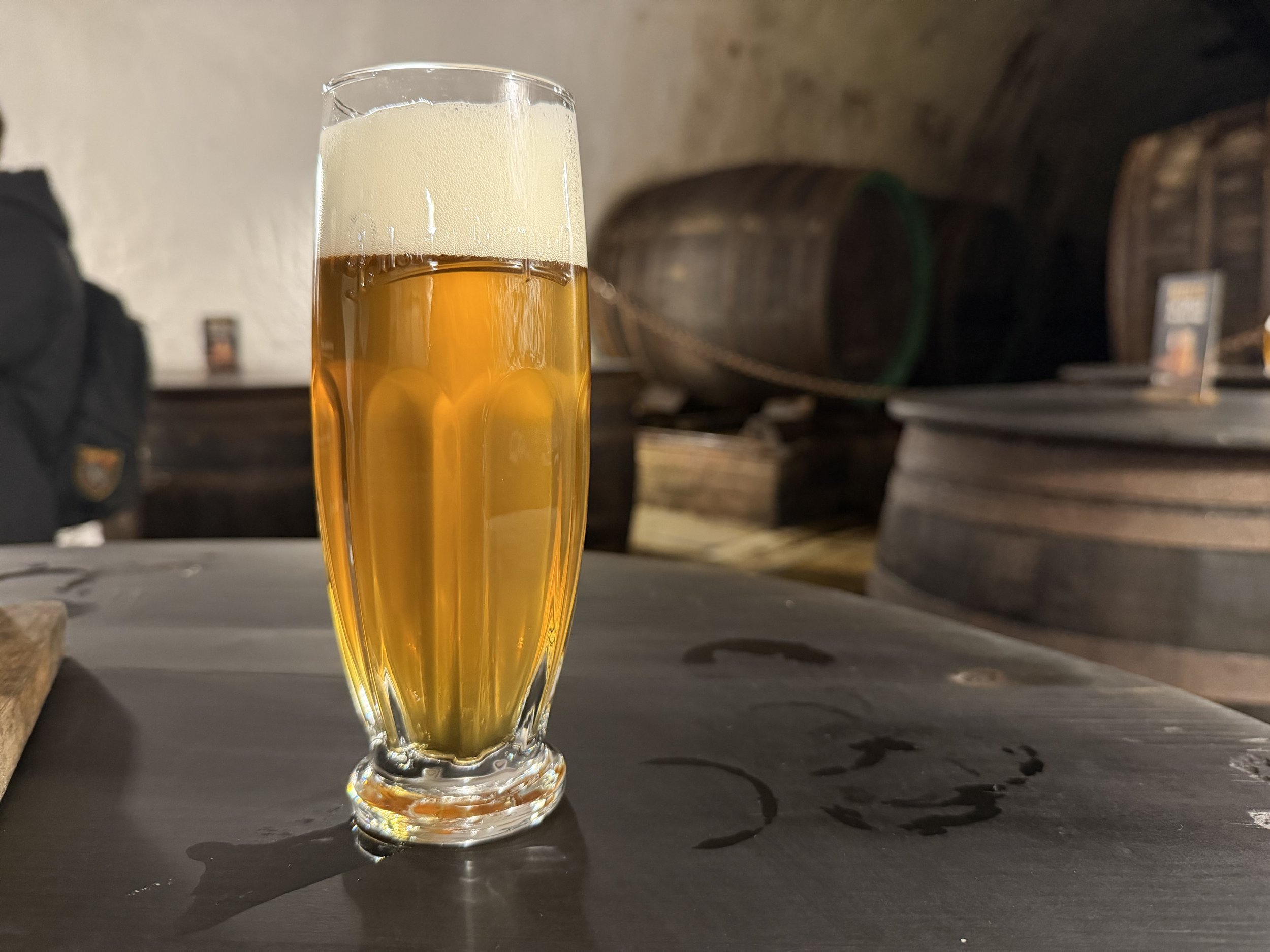
Pilsner Urquell Brewery in Plzen // © John Bills
The free sample came, and the free sample went, an admittedly delicious glass of unfiltered Pilsner Urquell, straight from the source. Glasses empty, we were shepherded into the souvenir shop, one last chance to wring a koruna or two out of the tourists before closing up for the day. I bought a bar blade (a bottle opener), as much for the warm nostalgia of Gary Brennan, John Pony, Meets, Mary, and the rest as any need to open bottles. The box-ticking continued as I stopped at the brewery’s pub for a beer before returning to the hotel.
Na Spilce is as close as you can get to drinking Pilsner Urquell at the source without climbing into a fermentation tank, but it also feels a little too modern, a little too shiny, a little too clinical. It hasn’t always been this way; the building was constructed in 1868, and it was once a spilka, that being the word for a fermentation cellar where beer was left to ferment in large wooden vats. That’ll explain the name, spilka, spilat, Na Spilce, although I don’t have the energy to go any deeper into the etymology. Just take my word for it. That run as a fermentation cellar ended with the advent of modern fermentation tanks in 1992, and the spilka became Na Spilce. Long story short, but that’s how we’re going.
As I entered the pub, the barman didn’t hesitate, simply saying “beer?” I answered in the affirmative, before asking if anyone ever ordered anything else. “Of course not, this is a fucking brewery, you know?” I do know, yes.
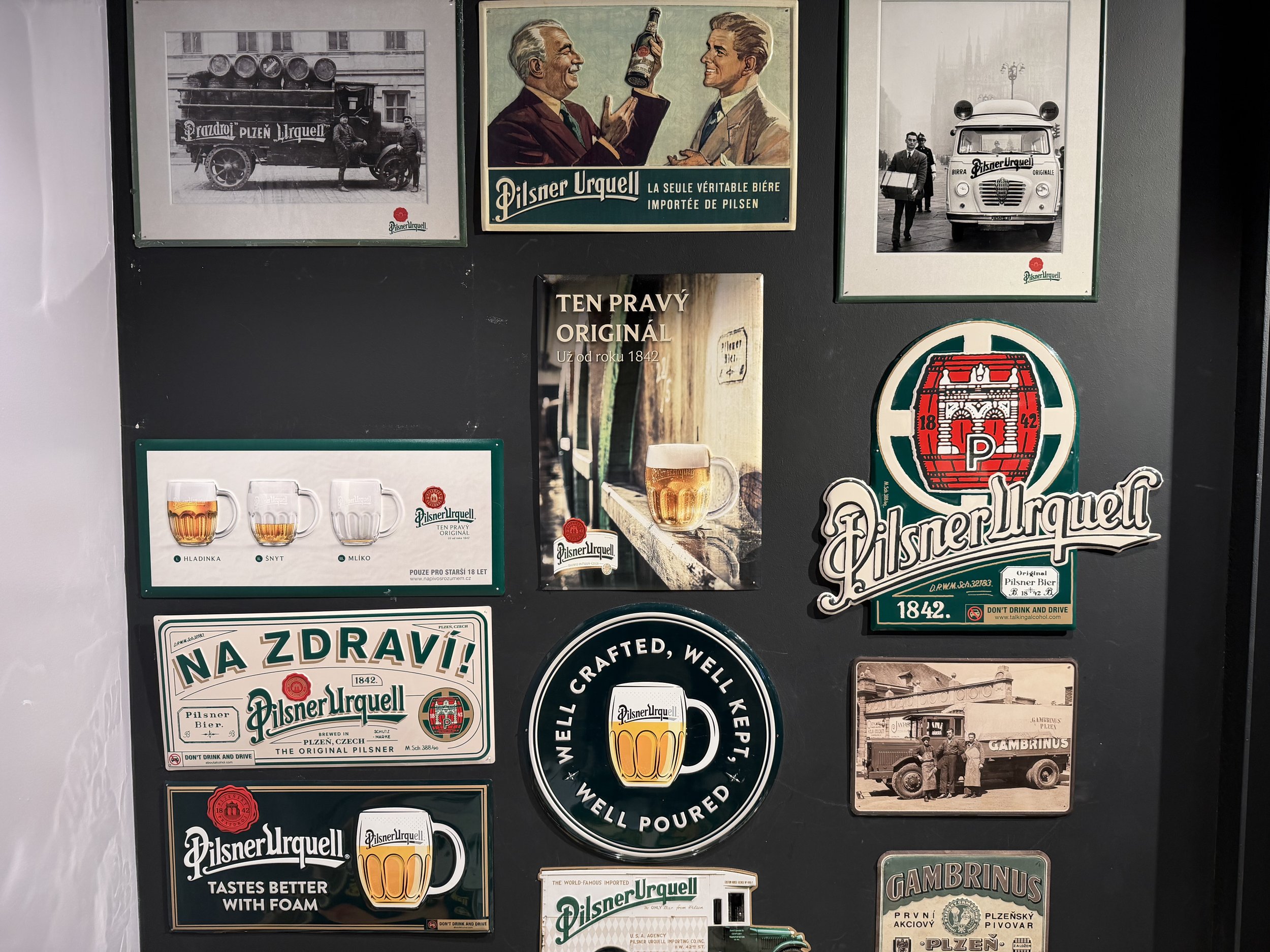
Pilsner Urquell Brewery in Plzen // © John Bills
The walk back to the hotel wasn’t a long one, but distance and thought rarely synchronise. Why do we drink? I can accept that we are drawn to drink because of the addictive characteristics of alcohol, but the question is more based in philosophy than biology. Why? I say that I enjoy sitting with a book and a quiet beer, but it isn’t as if the taste of the stuff is pleasant. I could just as easily sit with a book and a fizzy water, and repeat that enough times for it to become second nature. I could, but I don’t, and I’m almost certain I won’t. The second half of my first year of university brought the simplicity of beer into my life, and getting it to leave continues to prove difficult. Don’t invite the devil into your garden, and all that jazz. The mental argument had created a distance between Plzeň and me that I couldn’t bridge, so I simply returned to the hotel and tried to sleep.
I often think about our relationship with alcohol. It’s complex, one of the rare examples of something being accurately described as such, and the arguments in its favour are overwhelmingly compelling to the drinkers, utterly abhorrent to the dry. It’s easy to let the mind wander to what humanity could have been if we never took that first drink, but for all the clarity, there would be none of the chaos, and a little bit of the latter is part of being human. I’m babbling, as ever, because I rarely think about what humanity would be if it didn’t drink; what I actually think about is how my relationship with alcohol would have developed if I hadn’t found myself alone trying to calm my mother down after watching her daughter die. A tad different, I’d imagine. Stay selfish, Bills.
And there isn’t really a lot to add there. A somewhat abrupt ending, but I always did like There Will Be Blood.