Łódź // How Long Will It Take Miss Piggy To Catch Up With Kermit?
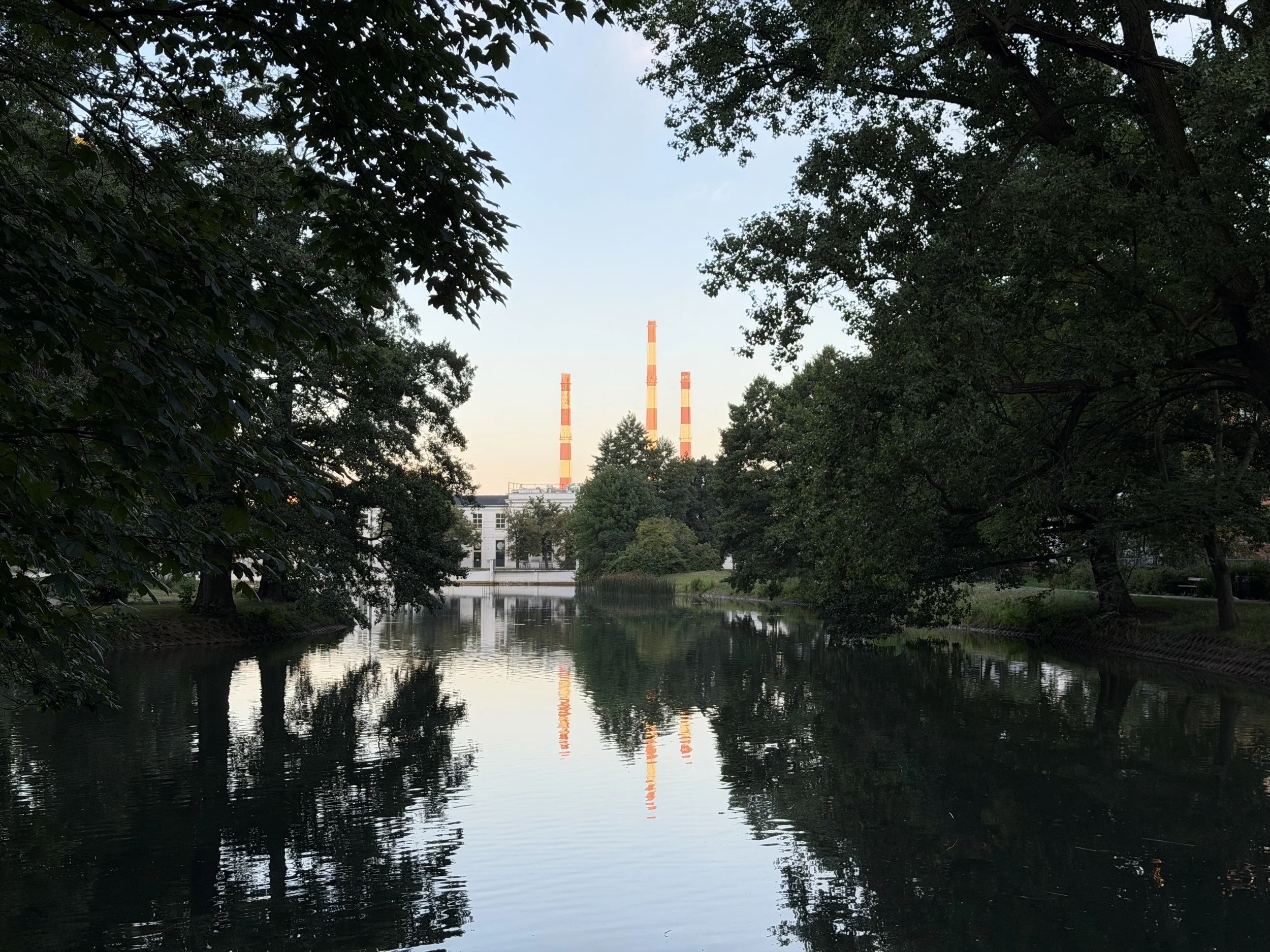
A morning view in Lodz // © John Bills
This article starts in Łódź, but truthfully, it starts in the student halls of St. Julie’s in Aigburth, Liverpool. I lived in the first building as you entered the grounds, on the second floor. Bizarrely, there was a girl on the floor below who also had the surname “Bills,” though this was never a strong enough hook to begin any sort of meaningful conversation. I spent my first year of university on that second floor, starting friendships with strangers, most of whom have faded into obscurity. Geordie Ben, Joel (Paul), Helena, Victoria, you are all missed. Bryony, you too.
I became enamoured of the idea of cultivating knowledge, primarily because it seemed like the sort of thing you do at university. You meet people with vaguely similar creative tastes, and you discover a world of new bands, new books, and new movies. Unfortunately, St. Julie’s offered slim pickings on that front, so I took it upon myself to become that person, in the hope that someone would come forward and require it themselves. This being 2006, it meant a Lovefilm subscription. I made a list, checked it twice, and waited for the DVDs to arrive. One of these was Dekalog, the 1989 Polish series of 10 short films directed by Krzysztof Kieślowski.
Am I remembering this correctly? I might have come across the Dekalog in college, come to think about it. My memory is hazy. I can’t really remember when I first decided to watch these films, only that at some point I was convinced that they were the sort of thing I should watch. Watch the Dekalog. Listen to Sonic Youth. Read Bukowski. Have opinions. All these years later, I understand the logic, but the majority of Sonic Youth’s output sounds abstract in a lazy sense, Bukowski was a misogynist who influenced a generation of writers in the worst way, and opinions are a vapid way to form a personality. Yes, that is intentional. Bukowski couldn’t.
Kieślowski wouldn’t let me down.
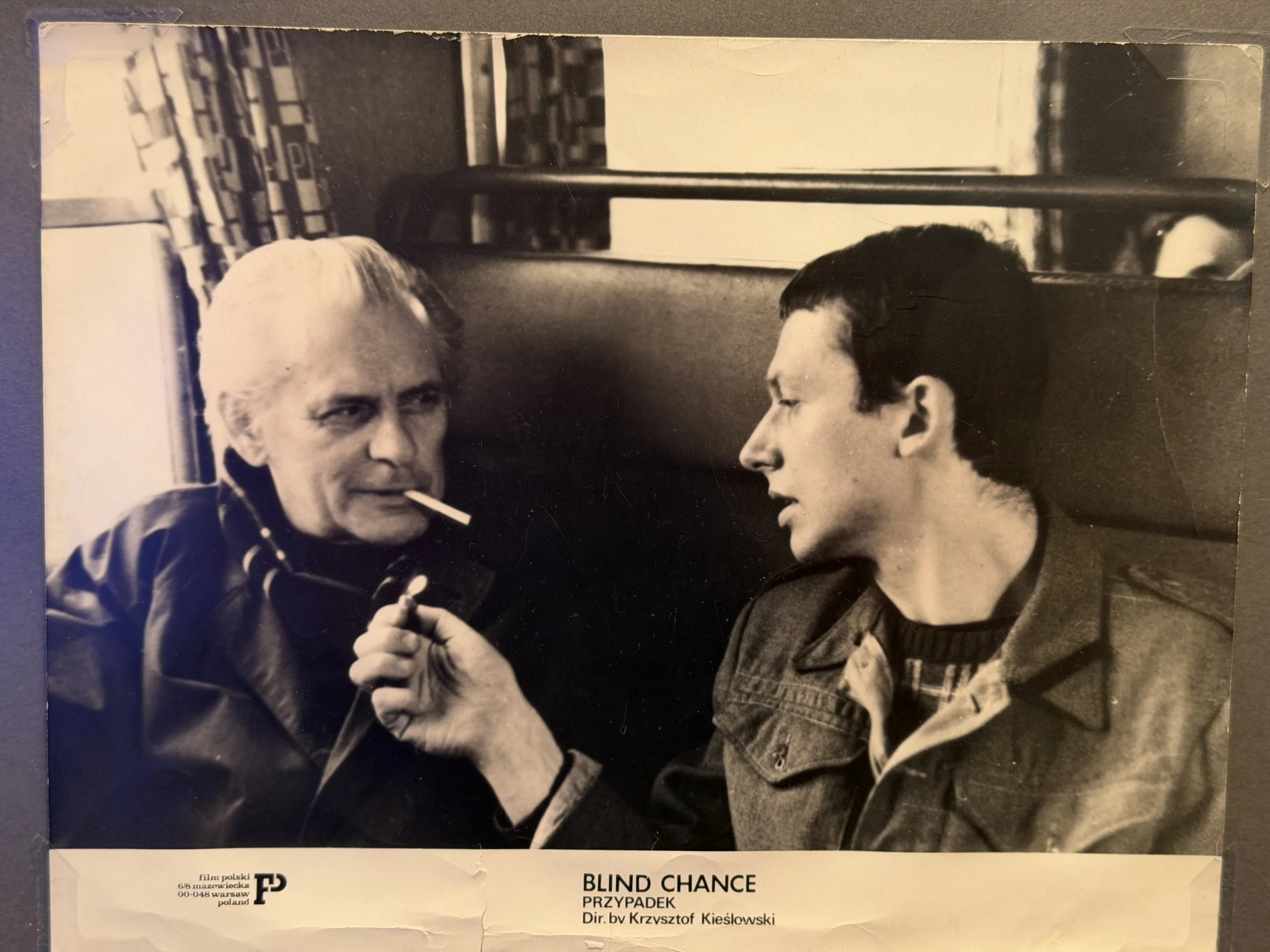
A still from the filming of Kieslowski’s Blind Chance // © John Bills
It wasn’t clear how this would get me from Łódź Widzew train station to my hotel. The station was located 6 kilometres east of the city, and while the thought of a 90-minute walk isn’t entirely off-putting to me, the blistering heat and exhaustion of one-night city stays made it a non-starter. I got a taxi, being an adult and all that, but the journey felt interminable as we stopped at every single traffic light between Widzew and the hotel. I was running out of museum time, so I quickly checked in and left almost immediately to find the Museum of the City of Łódź.
Our creator is nothing if not a joker, so it wasn’t a huge shock to find the museum at the end of one of Europe's longest commercial streets. I made it, but I didn’t make it with enough energy to make anything of it.
And once again, we decide against that juicy, juicy low-hanging fruit. I made it, but I didn’t make it with enough energy to make anything of it.
The history of Łódź deserves more attention than it will get, but the museum primarily seemed to focus on the lives of the wealthy, with rooms laid out to show how others lived back in the day. The nuts and bolts of the city itself were left to a somewhat poorly organised exhibition in the basement. I didn’t have time to linger (opening hours claimed another victim), but I stayed long enough for the strap of my mini Horse to get stuck in the locker directly below mine. For once, an idiotic situation I found myself in was not of my own creation.
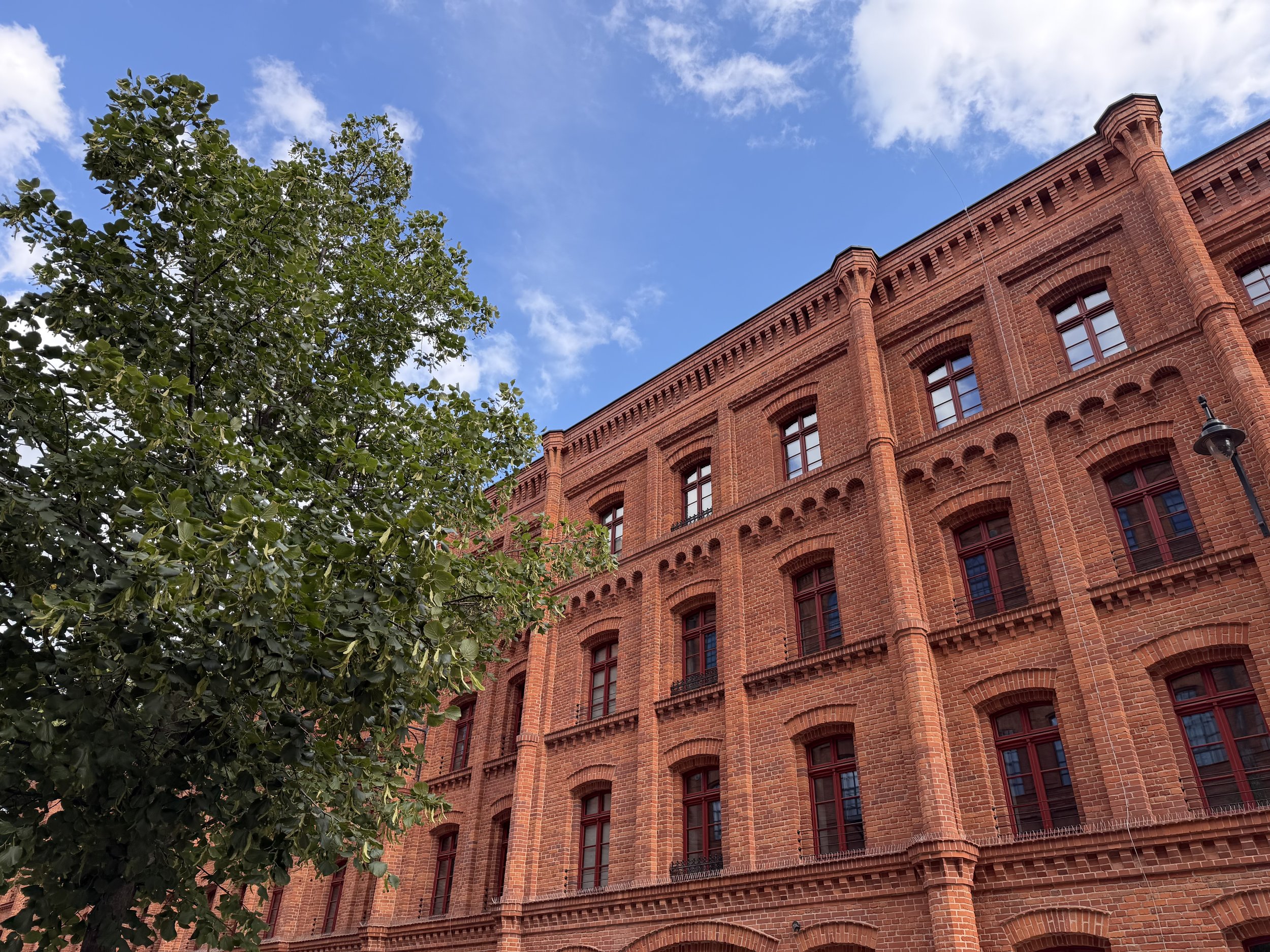
Manufaktura in Lodz // © John Bills
The bright red bricks of Manufaktura stood next to the museum. A sprawling factory complex reimagined as a shopping and entertainment centre, Manufaktura has come a long way from the 19th-century ambitions of textile magnate Izrael Poznánski, whose factories employed thousands of workers. Its industrial life ended in the 1990s, but it reopened in 2006 as the behemoth we see today. Restaurants and shops have replaced looms and canteens, but there is a thread that can be traced from the industrial bones of the city to its borderline-inspiring commitment to itself. If you build the right foundations, you can always twist them into something that better fits the changing circumstances of time. You need those foundations.
But even then, foundations can crack. In Dekalog One, Krzysztof’s commitment to scientific reasoning is seemingly infallible. Logic trumps all, right? Krzysztof and his son, Pawel, use his computer to calculate whether the ice on a nearby lake can support a young child skating. The computer eventually gives the green light, calculating that the ice is thick enough, but the prediction proves disastrous. The foundations were ideal, but the world still crumbled. You can prepare and absorb as much of the world around you as possible, but knowing things and knowing how to live are different skills, and neither offers much protection in the face of 8 billion realities jostling for position.
In Dekalog Six, Tomek watches an older woman from his apartment, across a courtyard, and builds an imaginary relationship through observation. They eventually interact, and the reality of it all is far more painful and complicated than the fantasy, but it isn’t just a simple case of Tomek misunderstanding Magda. It is a look at meaning and familiarity, regardless of how little that meaning and familiarity correspond to reality. How much of this is who we are, and how much of it is perception? What we say we want isn’t always what we want. What’s the Lenman lyric? You’ve been lying about your feelings for so long that you’ve forgotten who you are. That’s the one. I have spent so much time considering who I should be that I no longer have any clue who I might be.
The Dekalog is full of these questions, whether it is Dorota’s struggle to make a huge decision with limited information in Dekalog Two, the complex relationship between Elzbieta, Zofia, good intentions, and consequence in Dekalog Eight, the unexpected changes inspired by unanticipated events in Dekalog Ten, and so on. Every film in the series takes an achingly gorgeous approach to ordinary life, its decisions, judgments, mysteries, uncertainties, and the rest. No matter who you try to become, you can only ever become you. Working that out is the challenging part.
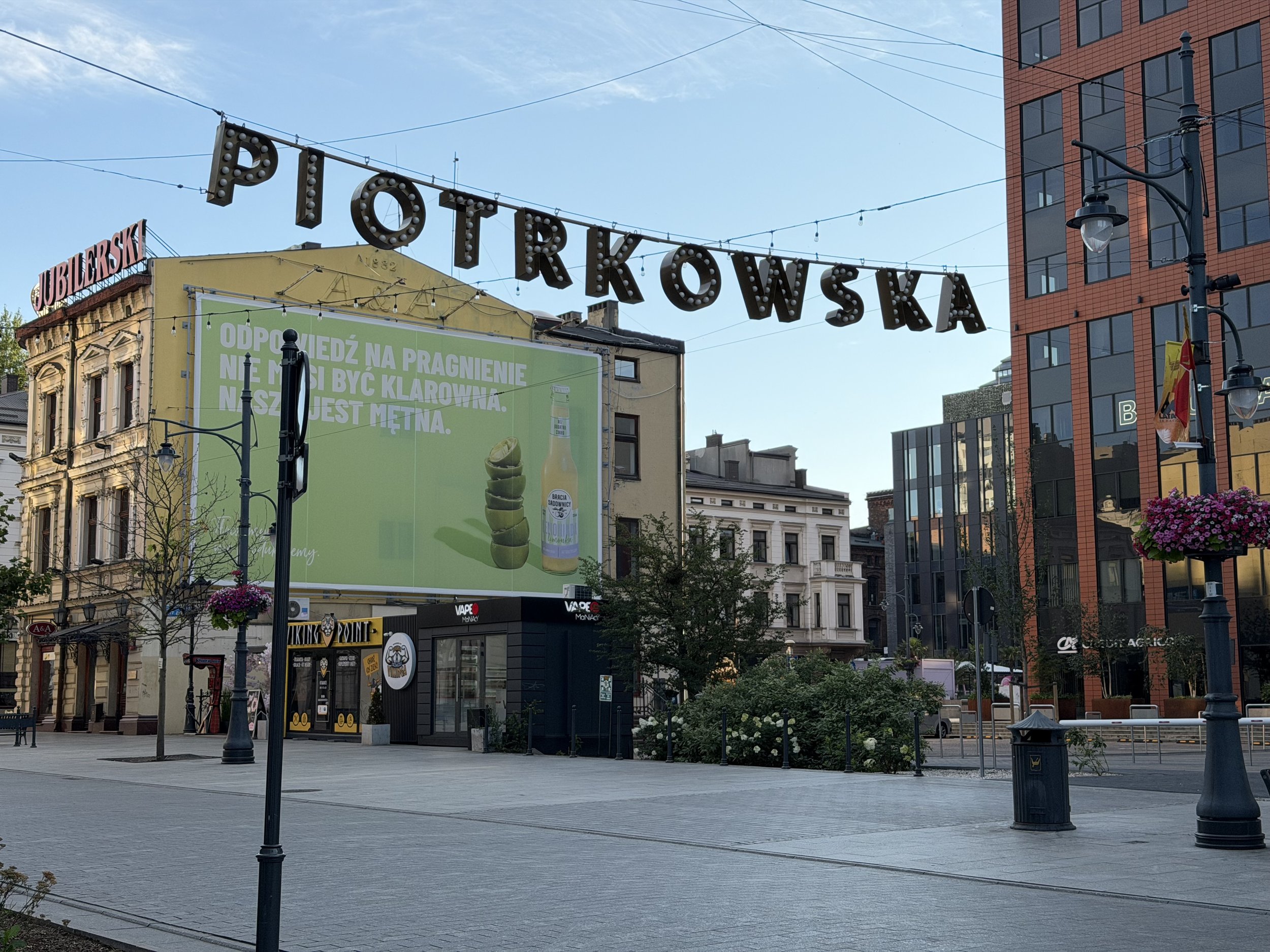
Morning Lodz // © John Bills
As the sun lazily rose over Łódź the next morning, I headed out for a lap of the centre. The streets were dormant, the traffic of yesterday a hazy memory, and a light fog filled the air of Poland’s fourth-largest city. I followed a road named after Henryk Sienkiewicz, the Nobel Prize-winning novelist known for epic historical fiction, whose Quo Vadis did a solid job of making history feel like destiny. I stopped briefly in Edward Abramowski Park, named for the philosopher who thought society could be transformed from the ground up, through cooperatives and mutual aid. Before long I was in another park, this one named after Władysław Reymont, another Nobel Prize winner who wrote about rural life across the seasons. It was me, the ducks, a curious snail sculpture, and the uncomplicated promise of another day. I changed course and headed back towards the hotel, stopping to consider the city’s cathedral, murals, street art, and early-morning optimism before returning for breakfast. A few hours of work later, I ventured out once more, this time toward the Museum of Cinematography. I didn’t have much time before the train to Toruń, but this wasn’t to be missed.
Because there are cities that make films, and cities that make people who make films. Łódź falls firmly in the latter, and it all goes back to 1948, when a group of artists and theorists decided that Polish cinema needed to develop a new generation of filmmakers. Shockingly enough, this turned out to be a fabulous idea, and the Łódź Film School came into being. It grew into a centre of filmmaking in the country, giving birth to new generations of creatives who fed off an atmosphere of intellectual ferment, artistic experimentation, and an awful lot of opinions. Sonic Youth would have loved it, Bukowski would have pretended to hate it, but most importantly, Kieślowski lived it. The same can be said for Andrzej Wajda, Jerzy Skolimowski, and countless others. It gave us the fabled Cinema of Moral Anxiety, a movement focused more on the psychology of ordinary life than grand cinematic gestures. The Museum of Cinematography told the story of all of this and more, tracing the transformation of Łódź from a city of textiles to one that gave curious people the tools to build worlds.
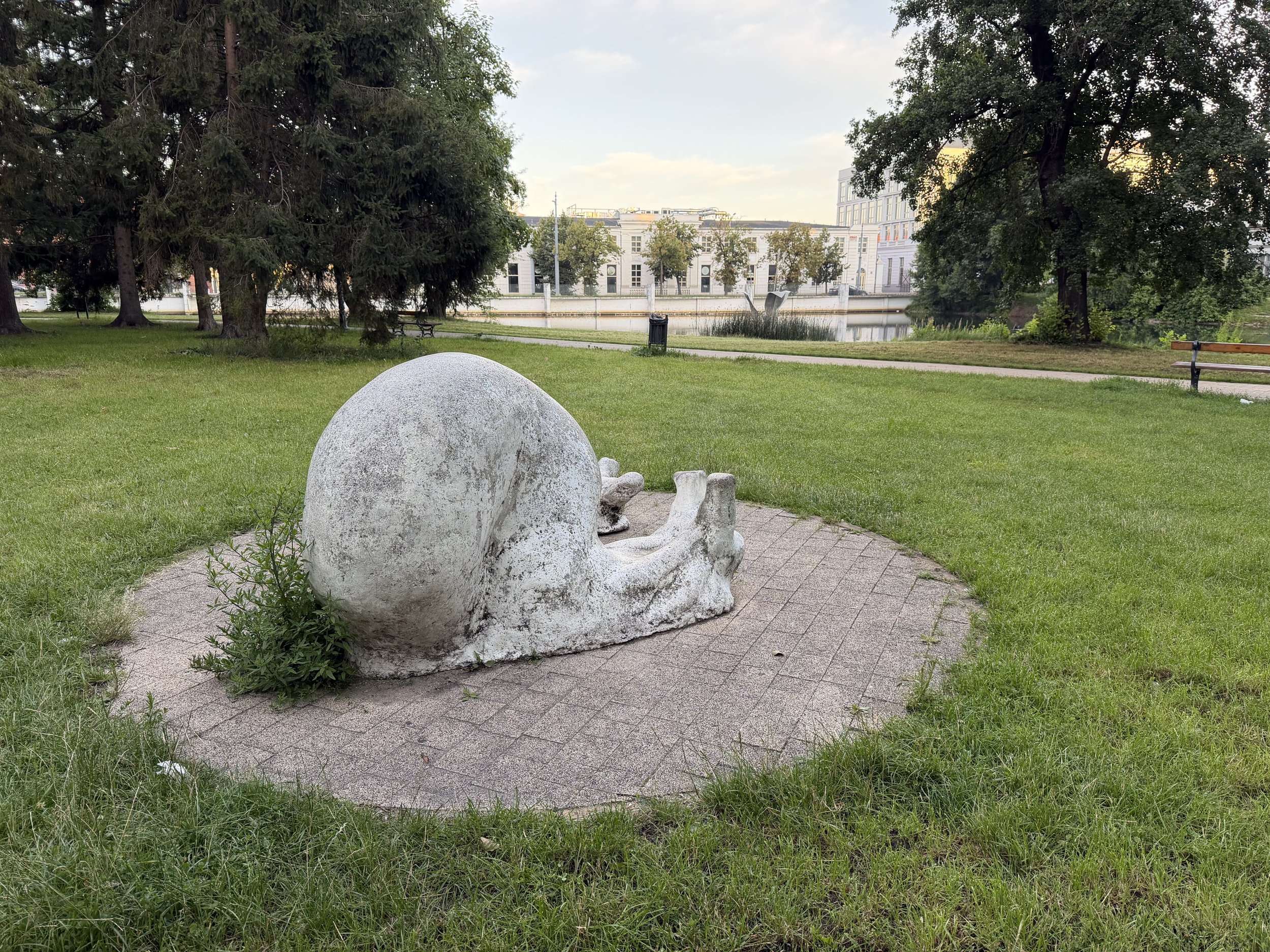
A snail sculpture in Lodz // © John Bills
I suppose that was the point of it all. When I sat down to watch the films of Kieślowski, listen to the albums of Sonic Youth, or roll my eyes through the books of Bukowski, I was trying to educate myself to build something resembling a person that I liked. There was a genuine curiosity in there, a desire to improve. I don’t think I should be too hard on him. He was trying, at least.
But he failed. I listened to every Sonic Youth album and read every Bukowski book, but an attempt to develop into a wise man brought only the callous indignation of self-pity. I thought about the world so much that the very concept of an opinion was meaningless. I cared too much, to the point where there was no depth to any of the feelings. I have learnt an awful lot about the world, but have no idea how to participate in it, and I think that is because I believed that understanding the world would make me better equipped to exist in it. It did not. The ingredients were ideal, but what good is that if both slices of bread are covered in mould? I knew the right thing to say, but I was already on a tram, and you had already given up.
But Łódź was beautiful in the dawn, and that had to be worth something. In another life, I would have made a lot of sense here. When I breathe, I’m excellent. I hear we had a good time, I hear I was a right laugh, I would have liked me a lot. I needed to get back to the damn train station, but I’d work it out. Everything can be worked out.