STOLAC
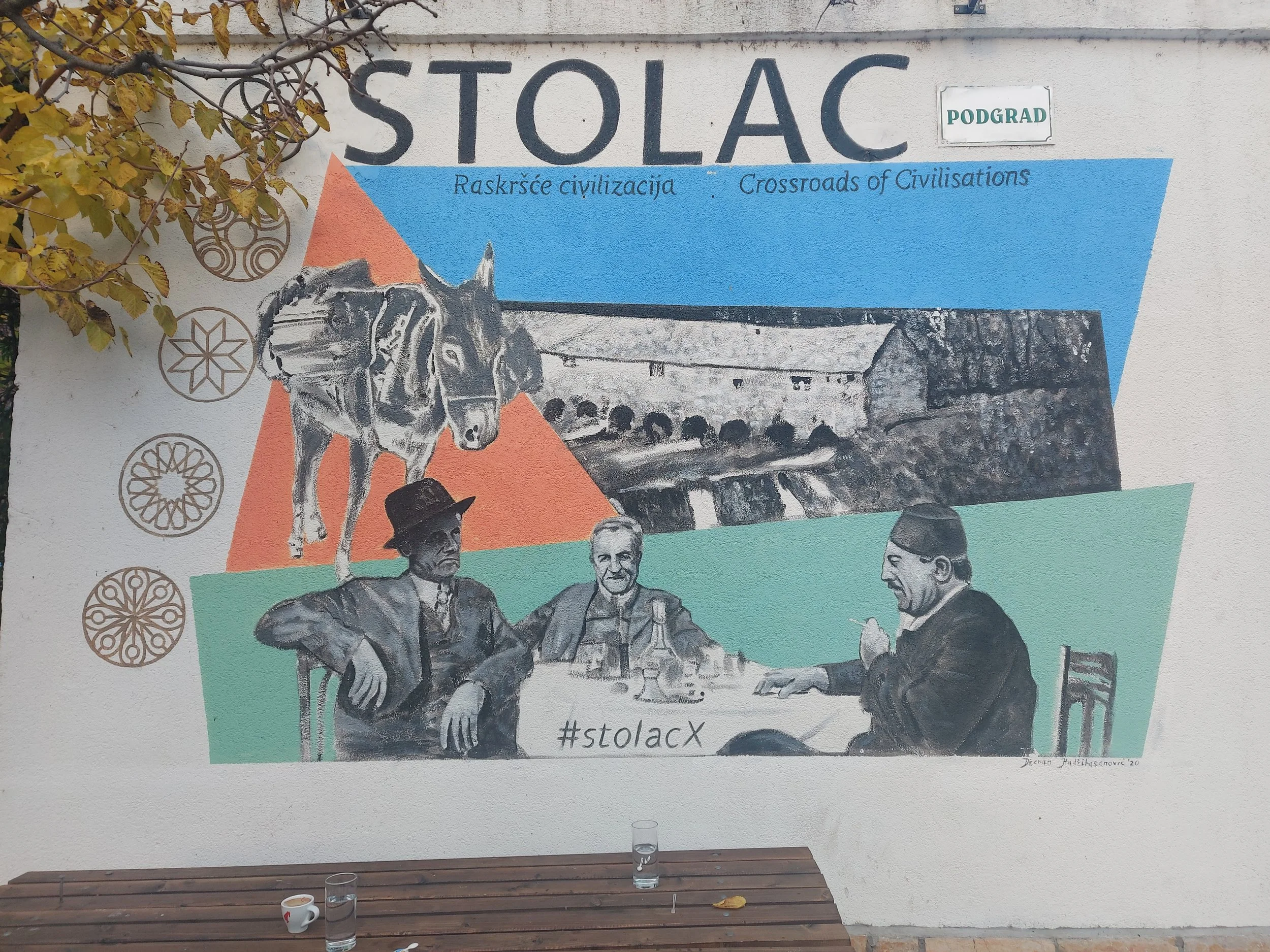
A mural in Stolac © John Bills
Holy moly, what a place. Make no mistake about it, Stolac is a top-five town in Bosnia and Herzegovina, no matter which way you slice that particular cake. We’ll start with history, because, you know, everything is history, and the sparkling heritage of BiH is very much alive in these parts. After all, this is one of the oldest continually inhabited cities in the country, a place where people have made their lives by taking advantage of the natural environment. The climate is delightful (aside from the brutal summer, obviously), and the abundance of water and shelter has made it an obvious resting point for folks long ago, from prehistoric times to the present day.
Stolac is a hotbed of stećci action (a strange phrase), making it an important stop for anyone looking to explore the curious world of Bosnia’s medieval tombstones. In the town itself, the Bregava River runs the show, framing everything in a tender grace, a river that shows off with crystal-clear water flowing under winsome stone bridges. Stolac tugs at the heartstrings or breathes life into the organ, depending on your mood that day. Sure, the bus station is dead, but who am I to complain? This is one of the most beautiful towns in Bosnia and Herzegovina, after all.
TRANSPORT
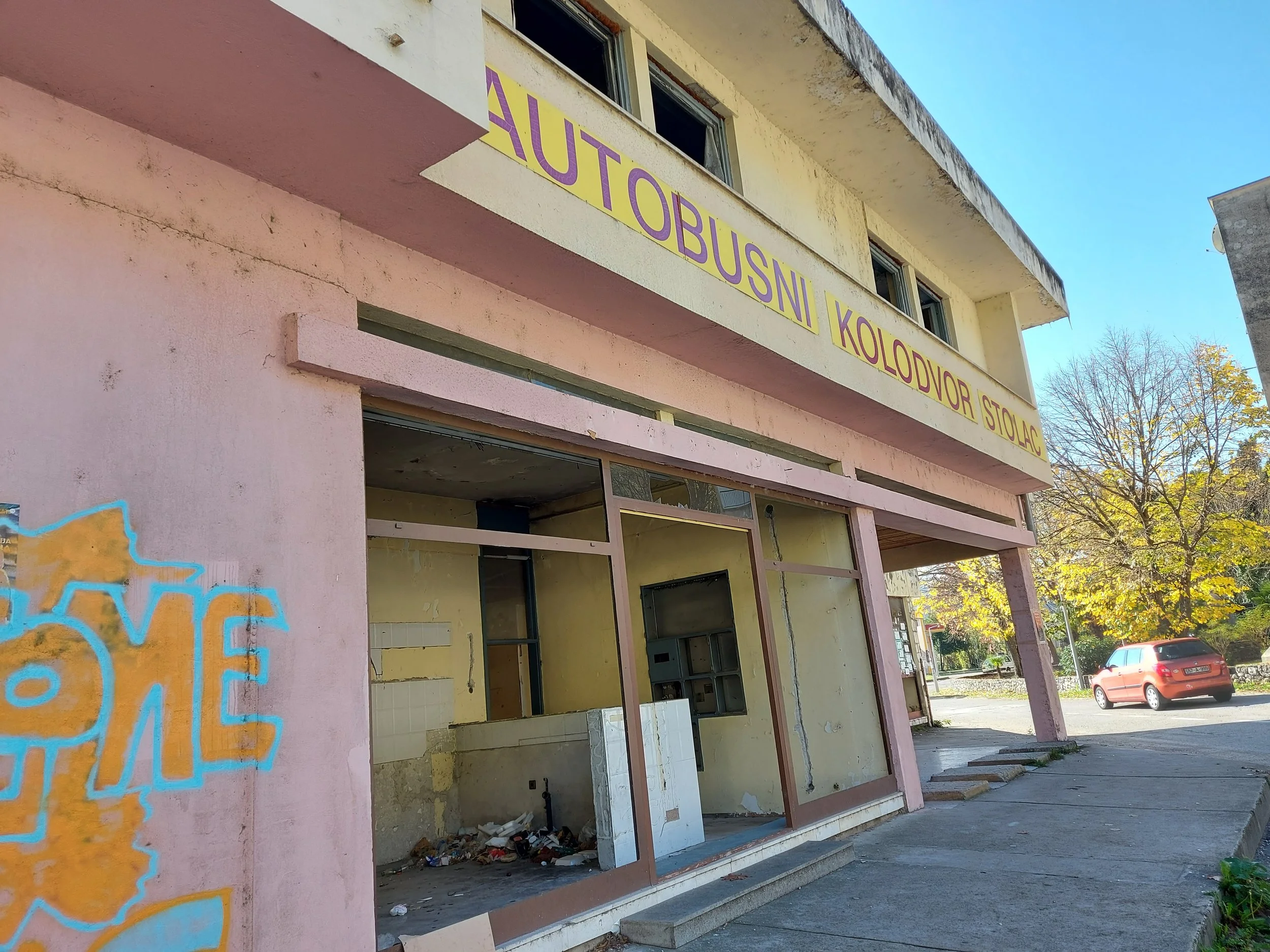
Bus station in Stolac © John Bills
I don’t want to rag on Stolac bus station too much because something obviously happened there. The building is a burnt-out husk, home to questionable graffiti, heaps of garbage and maybe the odd stray dog or two. The river flows behind it, making for a quite jarring juxtaposition. Daily buses are to Mostar, Jablanica, Trebinje, Sarajevo, Banja Luka and Zenica, although everything is a little disorganised and unreliable. Hotel Stolac is directly opposite the station.
WHAT TO SEE AND DO
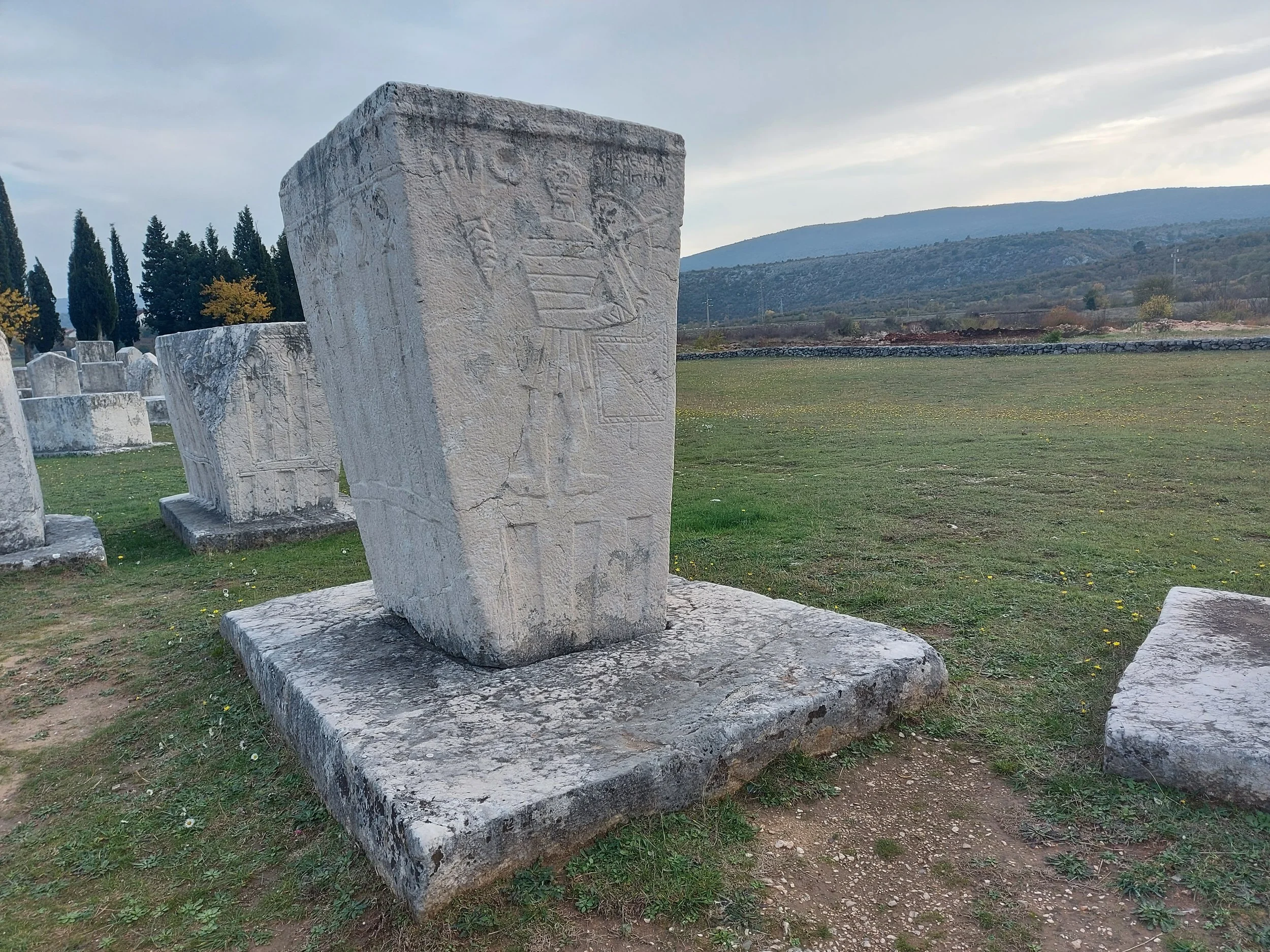
Radimlja necropolis in Stolac © John Bills
Radimlja (Nekropola Radimlja)
You’ll see plenty of talk in Bosnia and Herzegovina about stećci, the magnificent medieval tombstones found throughout the country. The Radimlja necropolis just outside Stolac is stećci nirvana, if stećci nirvana is a thing. 3km outside of town (a straight line walk along the road), Radimlja isn’t huge, but the 135 tombstones it houses have left a massive mark on Bosnia and Herzegovina’s cultural landscape. There used to be more stećci here, but the damn Austrians built a road through the middle of the necropolis, which put a spanner in the works. Well, a road, not a spanner, but you get the idea. The majority of tombstones at this UNESCO-protected site date to the late 15th and 16th centuries, with the big-handed dudes on the so-called Voivode Stećci the most famous. +387 36 819 043
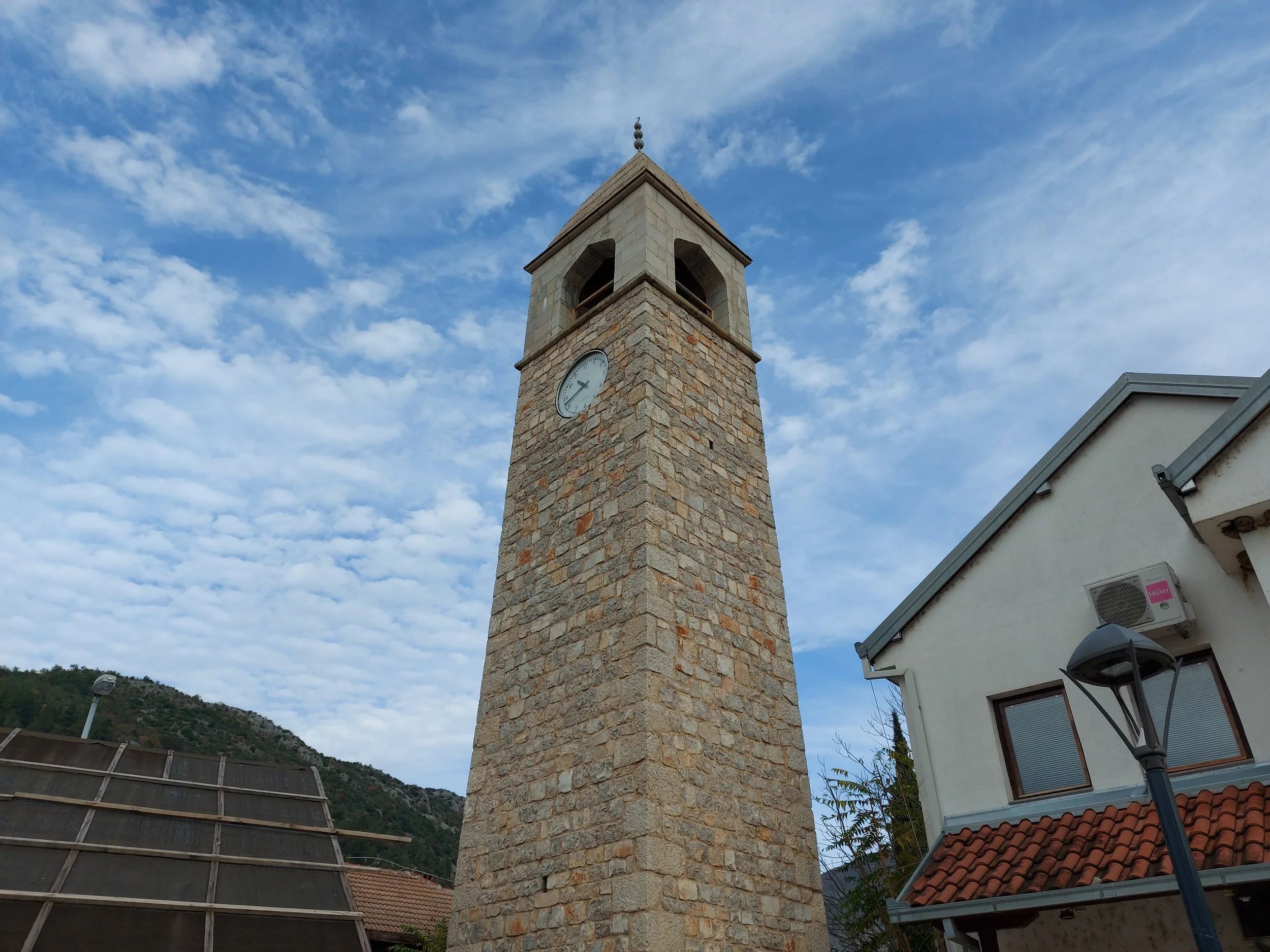
Clock Tower in Stolac © John Bills
Čaršija
Once the centre of life in Stolac, the Čaršija still retains social importance here. The Čaršija is where folks go for their morning coffee, to catch up on the latest gossip, to see what everyone is up to and prepare for the day ahead. The Čaršija Mosque is the centre of this centre, a 1519 construction whose minaret towers above all in town, challenged only by the clock tower, while the various rooms of the Han opposite are as busy as ever. The Čaršija developed during the Ottoman period as a place where people came to hear the news, good or bad, and it still plays this role today.
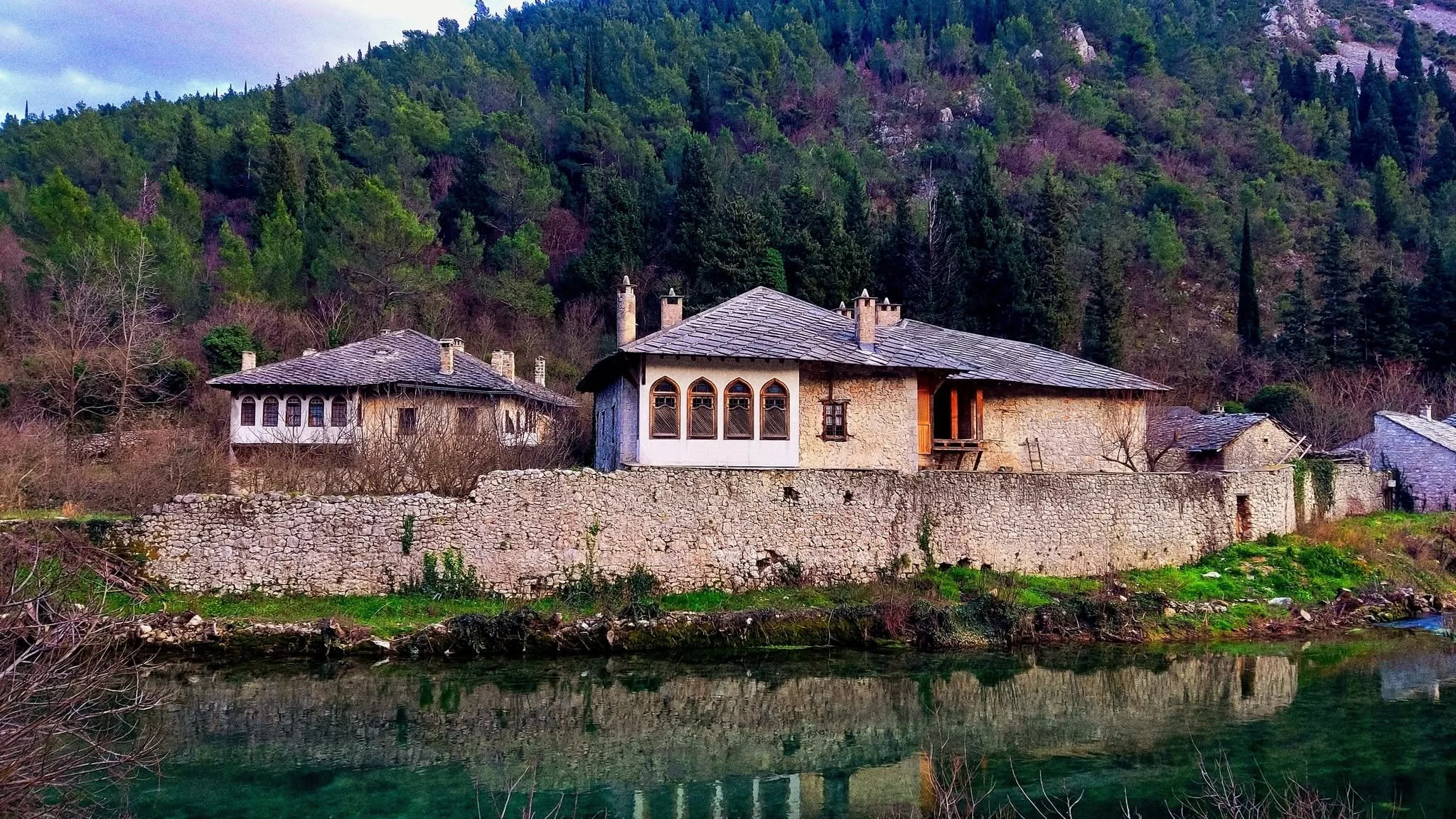
Begovina in Stolac © Begovina - Stolac // Facebook
Begovina
When it comes to Islamic urban living in Herzegovina, the Begovina complex in Stolac is a real high point. Constructed in the middle of the 19th century to fulfil the urban requirements of local governor Ali-paša Rizvanbegović, the complex was divided between family houses and structures with community purposes, from guest inns to religious schools, all as the Bregava River flowed lazily nearby. The complex was specifically designed to intertwine with the surroundings, and its courtyards are a triumph of this. Unfortunately, the complex was badly burned in 1993 and has only been partially restored, but visitors are welcome to visit and see its current state. If you can get past the extremely aggressive dogs, of course. Banovinska bb
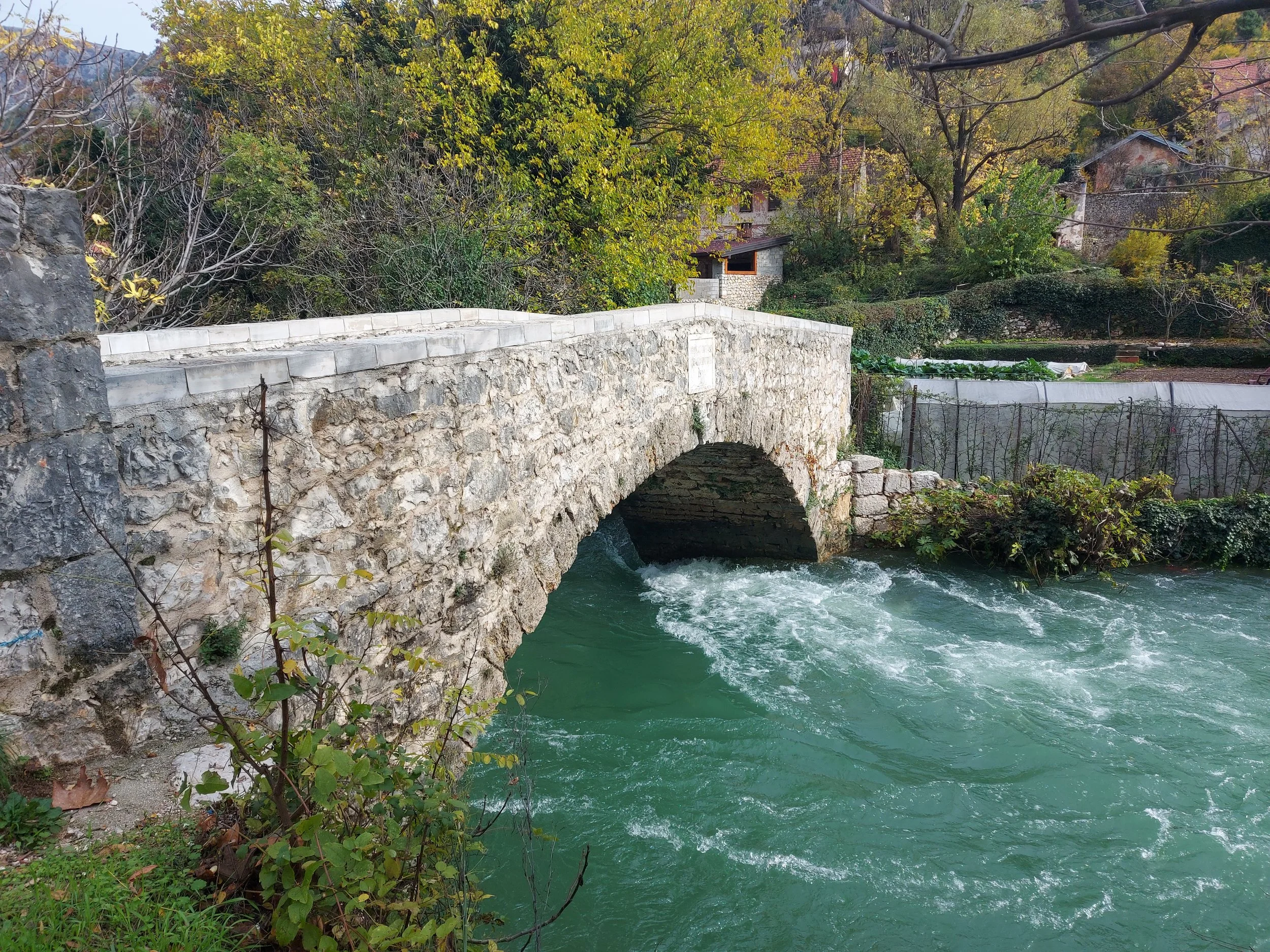
Sara’s Bridge in Stolac © John Bills
Sara’s Bridge (Sarin Most)
Constructed in 1896, Sara’s Bridge is yet another Balkan example of how terrible fathers can be when religion is involved, at least in terms of legends. As the story goes, Sara Kašiković fell in love with a man called Salko, but her father didn’t approve of Salko’s religion, so Sara was forced to marry another man. The marriage was deeply unhappy, of course, and Sara never stopped loving Salko. She constructed this private bridge as something of an homage to her love, and it remains a popular romantic spot in Stolac today. Dads, do better.
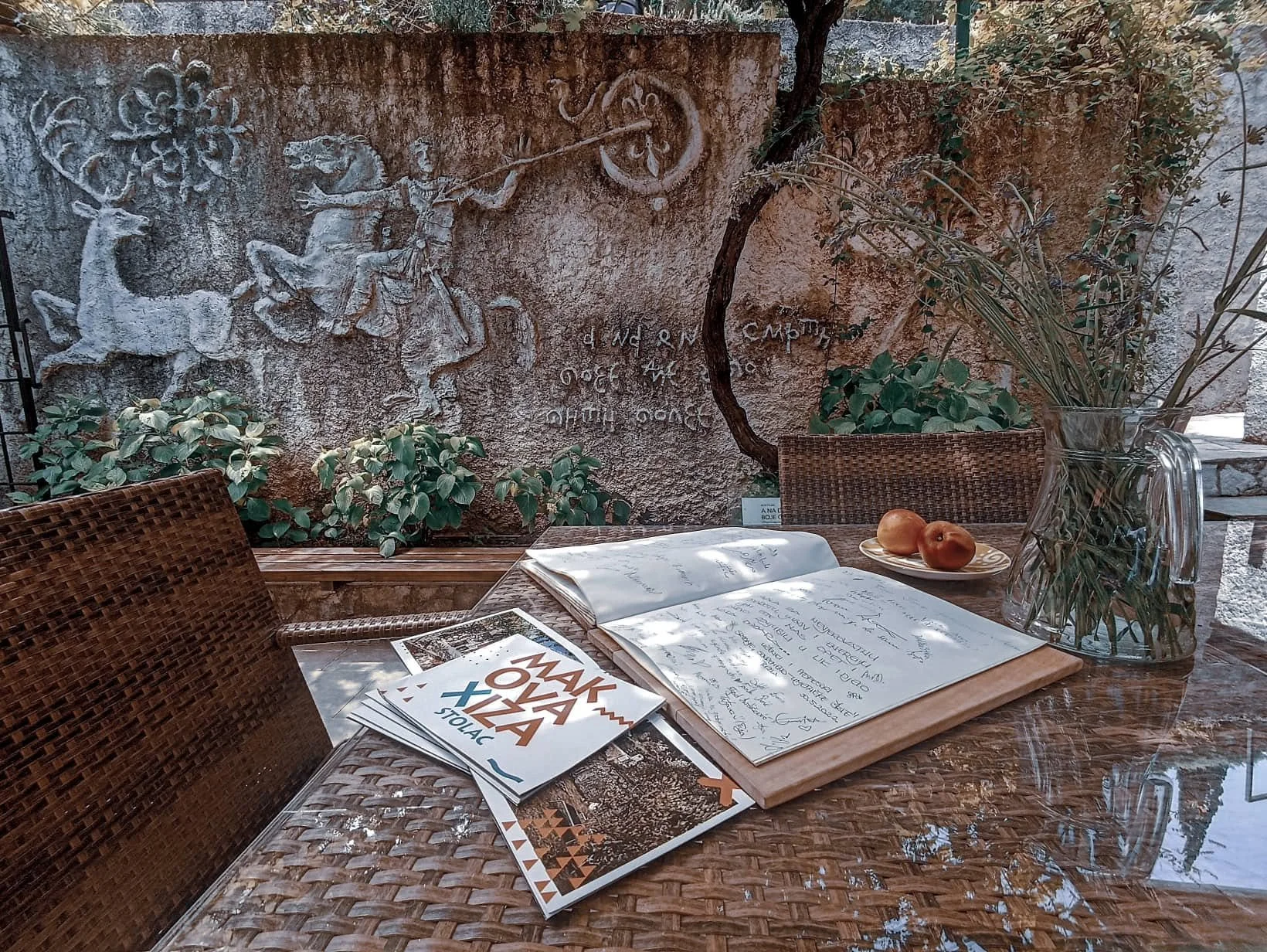
Mak House in Stolac © Fondacija Mak Dizdar // Facebook
Mak House (Makova Hiža)
Mak Dizdar is a real top-tier name in the annals of Bosnia and Herzegovina’s literary oeuvre, and Stolac has become something of a pilgrimage spot for Mak enthusiasts. I’m going to call them MakManiacs, for the record. Dizdar was born in Stolac in 1917, and despite spending most of his life and career in Sarajevo, he never lost his love for home. Established in 1997, the Mak House is a museum and gallery dedicated to his life and work, with plenty of stećak art included for good measure. Be sure to call ahead of your visit, as the house is rarely open. Uzinovići, +387 62 423 694
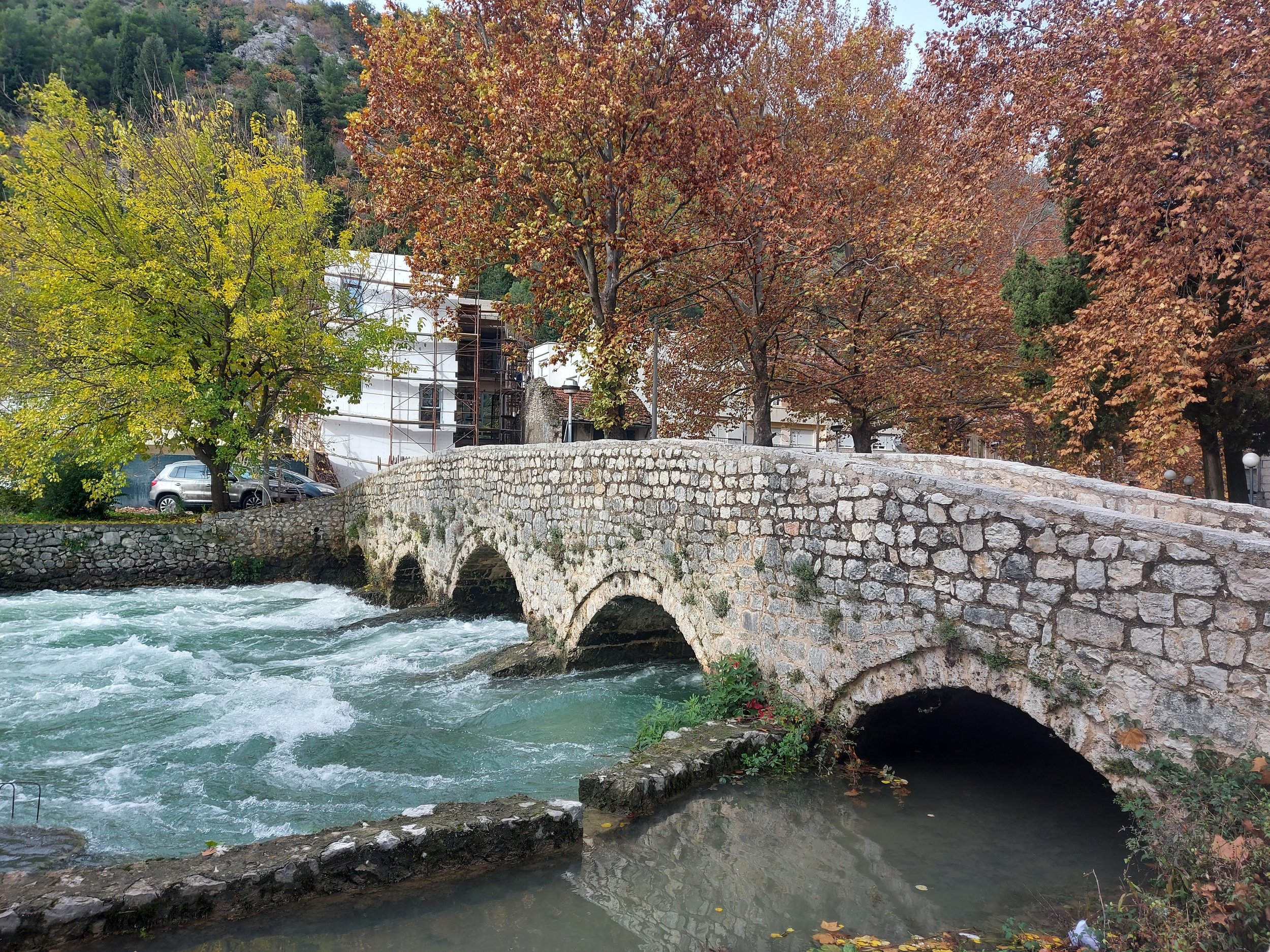
Bridge of Spite in Stolac © John Bills
Bridge of Spite (Inat Ćuprija)
The Bridge of Spite! Spite seems like an unreliable material from which to build a bridge, but who am I to question the 17th-century urban engineers of Stolac? The Inat Ćuprija is the oldest bridge in town, built at the beginning of the 17th century and steeped in myths and legends. One arch sits on the shore while the other plunges into the Bregava River, a quirk that came about because the designer wanted to spite those in power. That’ll learn ‘em! Revolt takes many forms. The bridge still stands today, with a mosque, a hammam, and a mill nearby.
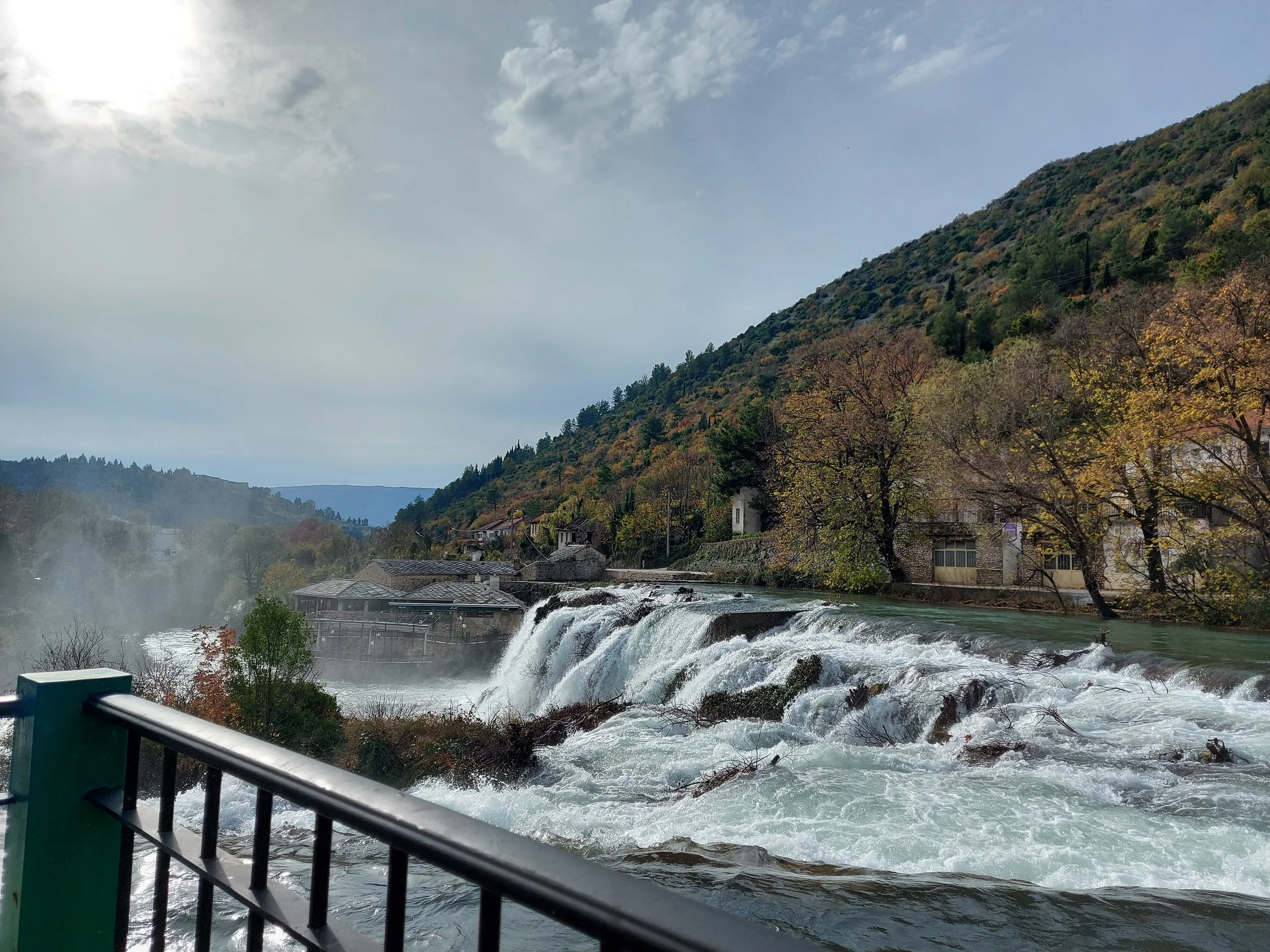
Provalije Waterfall in Stolac © John Bills
Provalije Waterfall (Vodopad Provalije)
Stolac is a town of water, a place where the Bregava River does more than simply idle through urban development. There are waterfalls everywhere (don’t take that literally), with the Pjene and Istup falls offering a spot of seclusion for those with the energy to nip out of the centre. Lazier folk (like myself) will find plenty to enjoy at the so-called Stolac Niagara, better known as the Provalije Waterfall, a thunderous cascade just a short walk from the čaršija. Waterfalls speak for themselves, so I won’t waste much space here. There is a small beach for relaxation, and the falls are at their most magnificent in spring and autumn. Stop at NOTA across the water for one of the most scenic coffee (or pizza) opportunities in Herzegovina. Ošanjići
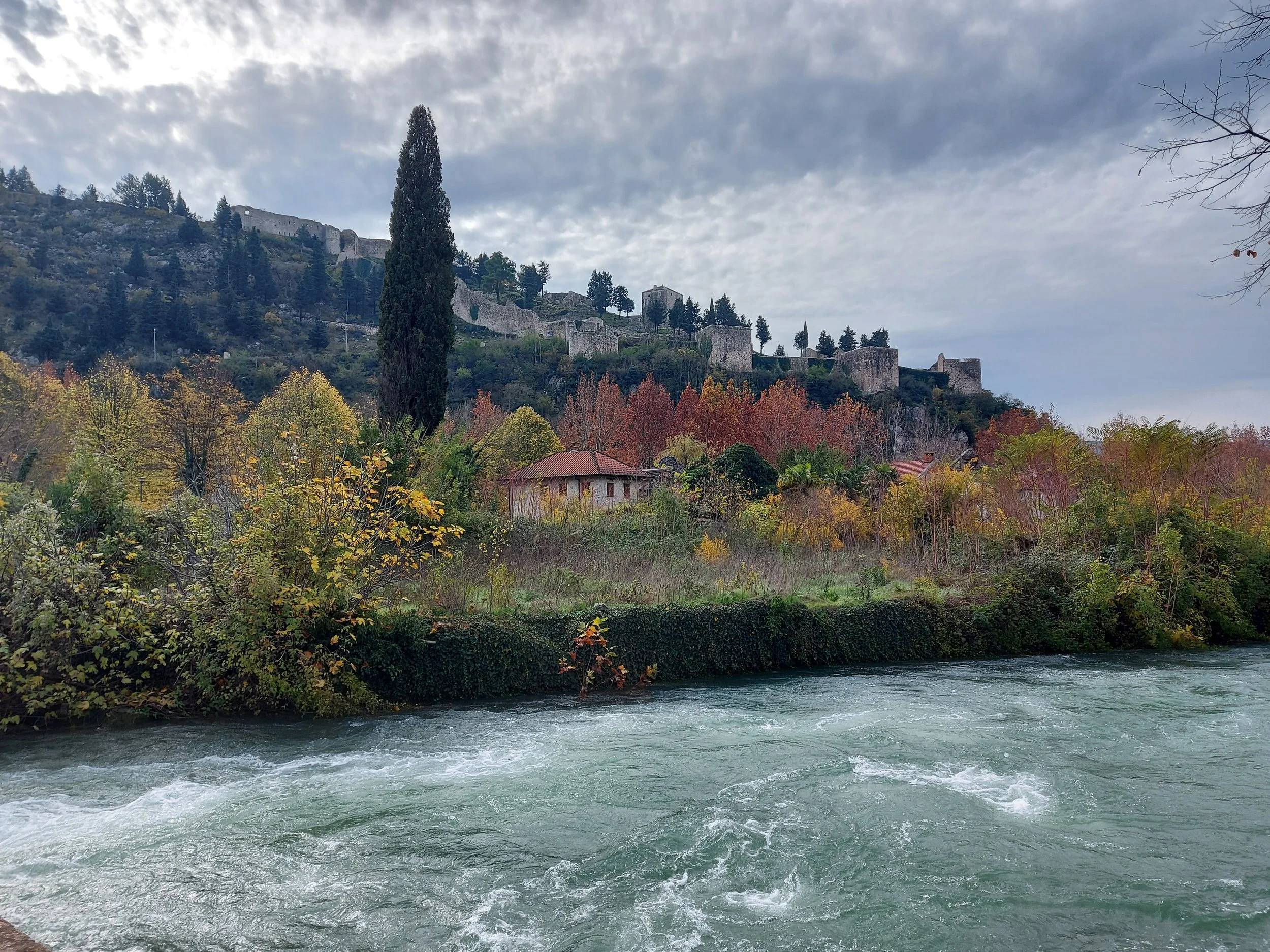
View of Vidoški Fortress across the Bregava River © John Bills
Vidoški Fortress (Vidoški Grad)
Some call it Vidoški, others call it the Old Town of Stolac, some even call it that damn fortress up on the hill over there (me), but the facts remain facts, as facts tend to do. The damn Old Fortress of Vidoški was first mentioned in 1444, but probably existed for a fair whack of time before that, and eventually developed into the largest fortified town in Herzegovina, with the Ottoman period bringing the bulk of the building. Vidoški (named after the river, which was originally called the Vidoštica) was a vital stop on trade routes through the region, and the fortified town performed all the expected functions and ticked all of the boxes you’d expect. It once had 13 defence towers, but it was as much about life as it was about preventing death. Today, it remains one of the best-preserved fortified towns in the country, standing elegantly over Stolac. You can walk there from the centre of Stolac, by the way, but it is pretty darn steep.
Badanj Cave (Pećina Badanj)
If you’re looking for the oldest artistic monument in Bosnia and Herzegovina, get your buns to the small village of Borojevići, located 6km west of Stolac. Here, we find Badanj Cave, an open show cave in the Bregava River canyon, open for all to come and see (I’d suggest checking in with the tourist office in Stolac before heading this way, for safety reasons). In 1976, a rock engraving was discovered that seemed to depict a horse being attacked by arrows. Unfortunate for the horse, but fortunate for us, and the engraving was subsequently dated to somewhere between 14,000 and 18,000 years ago. Quite the range, I’m sure you’ll agree, but leeway is required in such circles. The engraving is quite badly damaged (on account of being incredibly old, I’d say), but it is a truly incredible piece of artistic and human history.
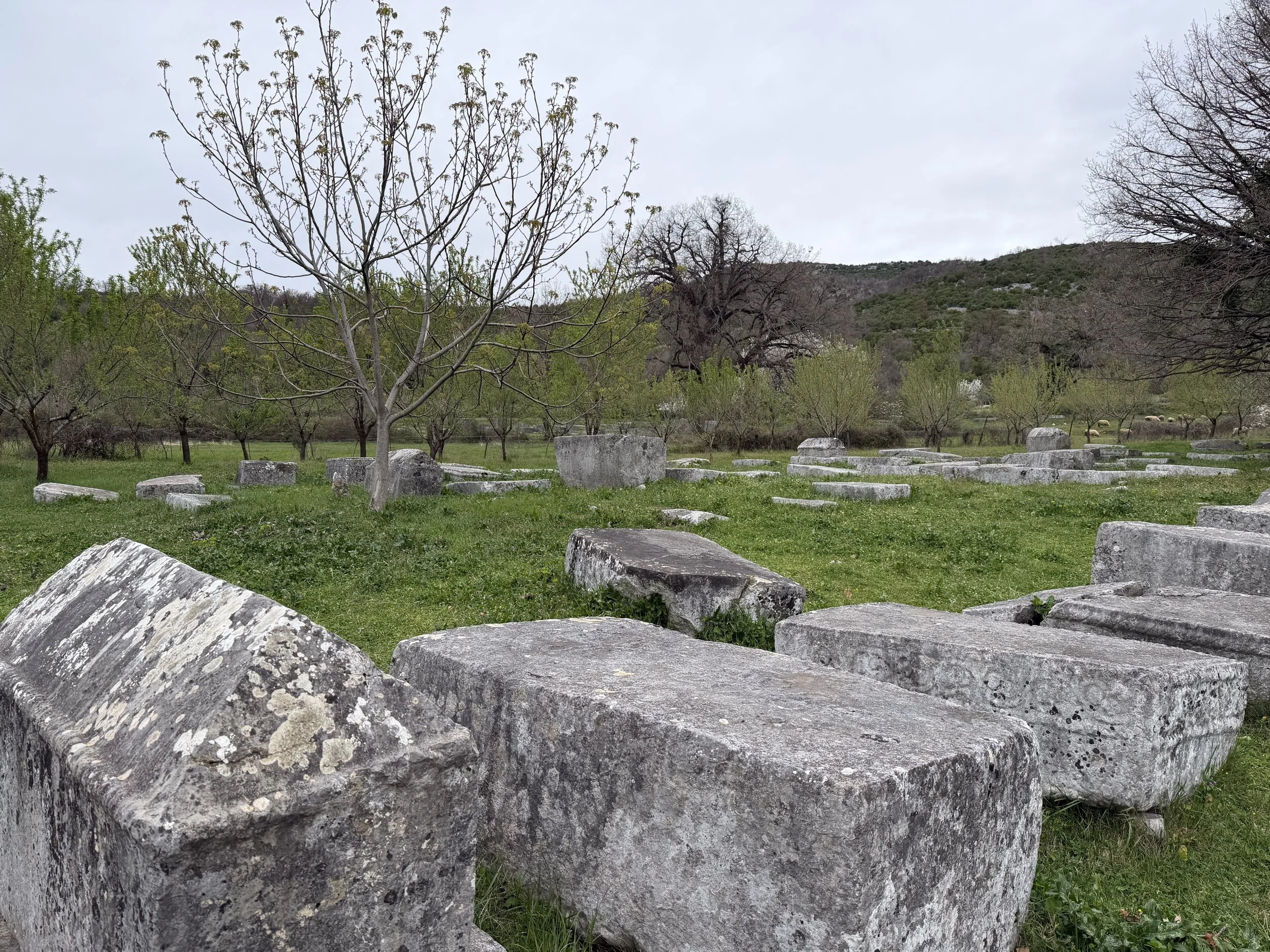
Boljuni Necropolis near Stolac © John Bills
Boljuni Necropolis (Nekropola Boljuni)
Radimlja gets most of the attention, but there are plenty of other stećci necropolises waiting to be appreciated. One of the main ones sits in a tiny hamlet just outside the city, on the grounds of a private farm, protected by a slow-to-react but rather angry dog. The Boljuni necropolis is 12km southwest of Stolac and consists of two separate spaces for the near-270 tombstones, many of which are decorated. Whether you can get up close to the tombstones depends on whether the farmer has left the gate open. Good luck on that front, but those circumstances mean the stećci are in excellent condition and are likely to remain so. The scenery is spectacular, as you might expect. Radmilja is impressive, but Boljuni feels much more natural for a stećci necropolis, if you ask me.
BREWS, BOOZE, AND BITES
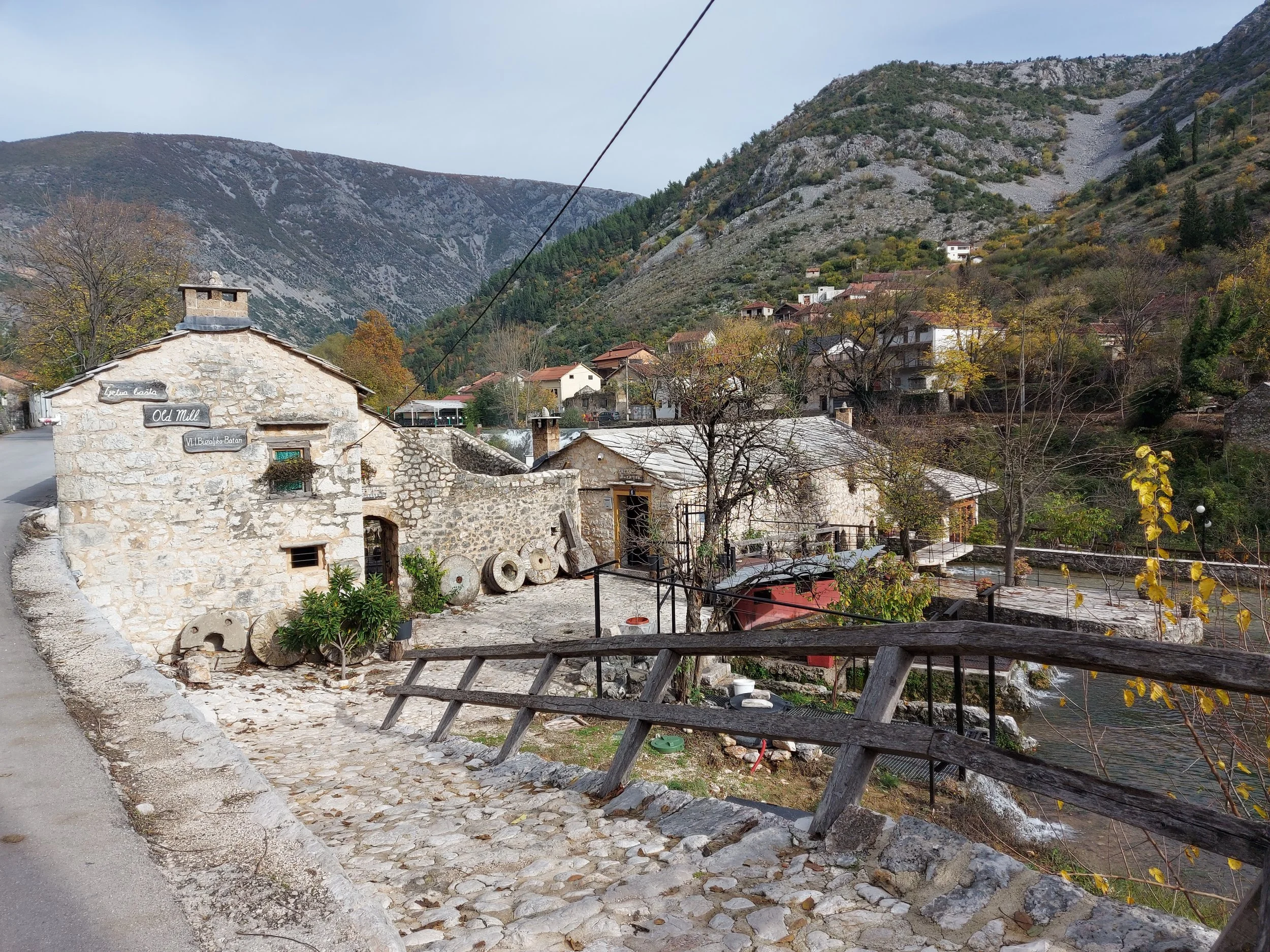
Old Mill in Stolac © John Bills
There used to be a fantastic restaurant along the river as you enter Stolac, but a recent visit suggests it has been lost to the whims of time. Still, there are plenty of food and drink options in and around town, many of which make full use of the beautiful Bregava. The old čaršija has plenty of options, with Restoran Han (Čaršija, +387 66 703 042) your best bet on the food front. However, the real value is in getting close to the water, so head out to the gorgeous (albeit twice-named) Mlinica Old Mill (Kranjčevića, +387 36 853 264) for traditional meals or across the other side of the water to NOTA (Banovinka, +387 63 159 514) for pizza. If you’re after a coffee, stop by Amigos (Stjepana Radića, +387 36 854 235).
SLEEPING
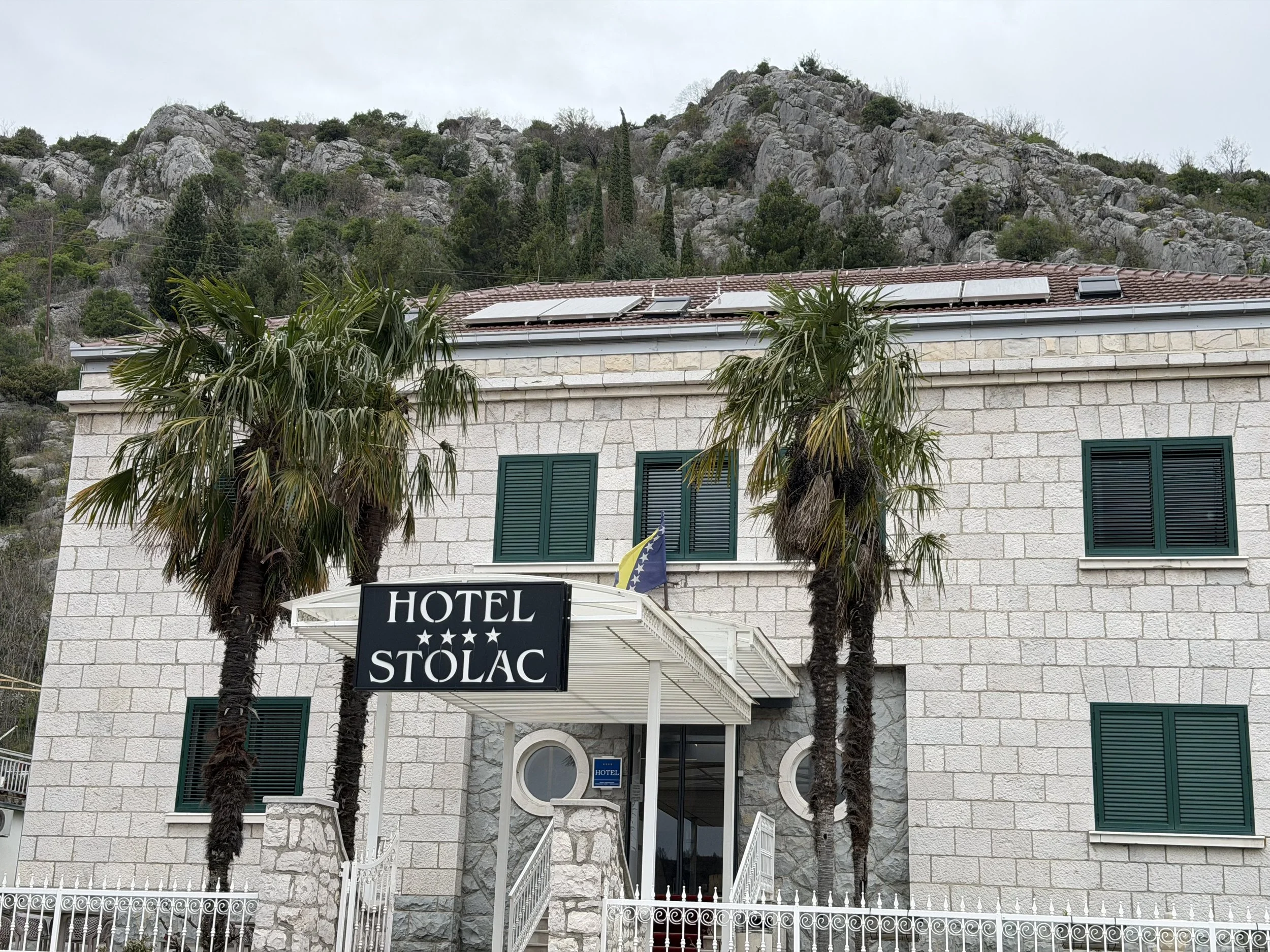
Hotel Stolac © John Bills
The creatively named Hotel Stolac (Autobuska stanica, +387 36 506 567) is your best bet for accommodation in Stolac, with a prime location across the road from what remains of the bus station. The staff is excellent, the rooms are sizeable, the beds are comfortable, and that’s about all you need for a fabulous night’s snoozing. For something a little more traditional, book a room at the gorgeous Mehmedbašića Kuća (Kraljice Katarine 22, +387 62 575 455), where an old-fashioned (by which I mean Ottoman-era) BiH experience awaits.