RAVNO
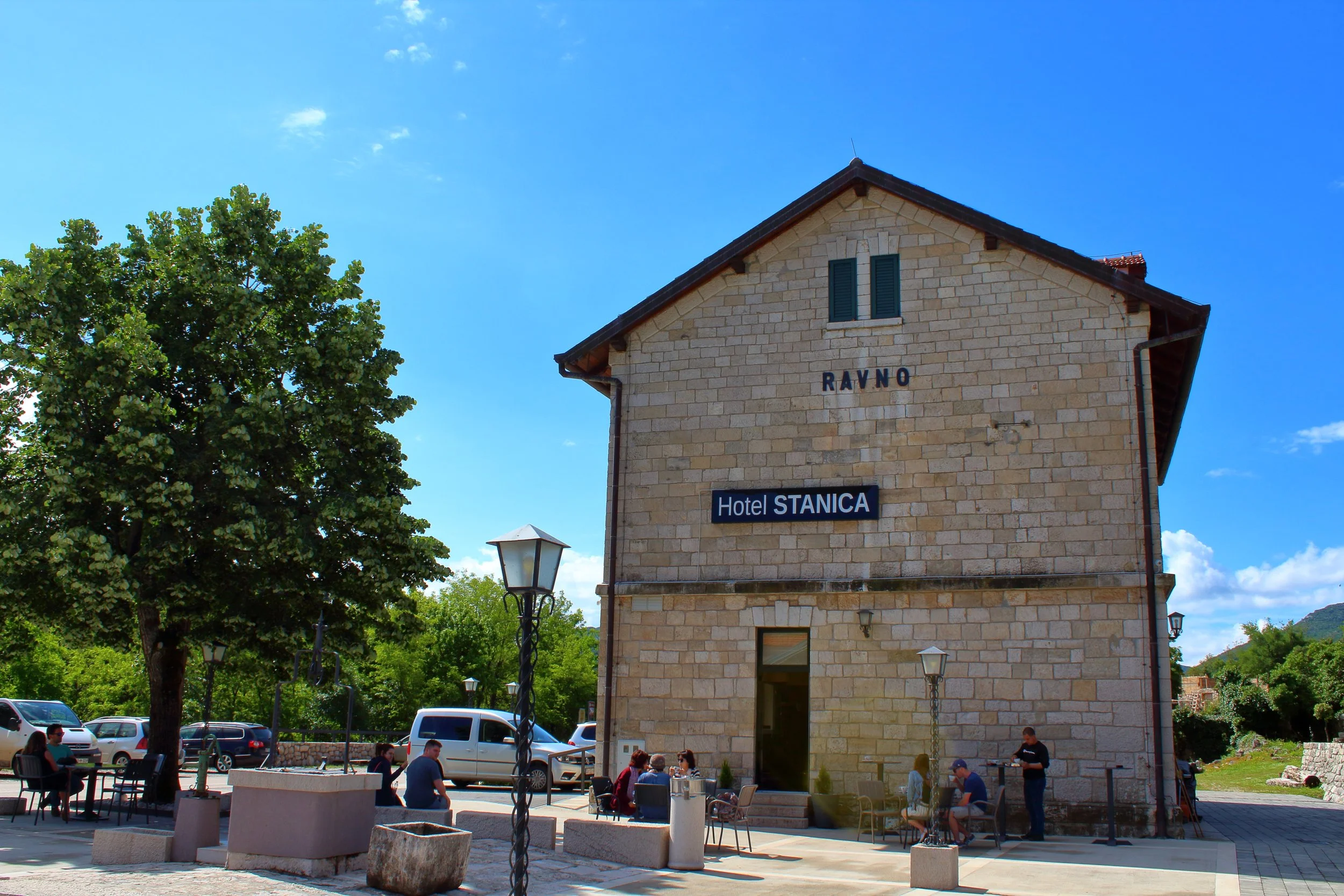
Hotel Stanica in Ravno © Mariangela Cruz // Shutterstock
Ravno is a municipality that punches way above its weight on the tourism front. For a start, the renovated charms of Hotel Stanica provide a fabulous spot to rest your head, with a gorgeous wine cellar and comfortable beds making for every bit as excellent a duo as you might assume. The village is surrounded by exquisite nature, from the breathtaking expanse of Popovo Polje to the dramatic mountains that, yes, look a lot like pyramids. What is it with BiH and pyramids? We won’t start that, primarily because we’ve got ourselves a Ravno to celebrate.
Landscape is everything in Ravno, and I’d be confident saying that has been true since the beginning of time. Medieval trade routes made use of the territory, the Ottomans and Austro-Hungarians kept the commerce flowing, and Yugoslavia wasn’t about to stop that. The most recent war brought its own violence, but Ravno today is a quietly shimmering place of intrigue and splendour. There’s wine, caves, monasteries, wild mint, lavender, bridges, olives, and all the rest, making for a municipality that surprises and stimulates in equal measure.
TRANSPORT
Popovo Polje © John Bills
If you’re looking to visit Ravno by bus, you'd better get praying. There are no buses headed this way, unfortunately, although you might see a local bus nipping around from time to time. You’ll also see chartered buses struggling up and down the roads, ferrying groups from around the continent to Vjetrenica and beyond. If you’ve got a car, Ravno is accessible from pretty much everywhere in the region. The drive from Mostar takes an hour and 20 minutes along the M6, heading through Buna and Stolac along the way. If you’re coming from the south, Trebinje to Ravno is a 45-minute drive with the added bonus of traversing the Ravanjska Ćuprija as you approach Ravno. Neum and Dubrovnik are also within an hour or so of Ravno. However, the most popular way to visit Ravno is on two wheels along the Ćiro Trail. Scroll down for more information on that marvel.
WHAT TO SEE AND DO
Interior of Vjetrenica Cave © ollirig // Shutterstock
Vjetrenica Cave (Špilja Vjetrenica)
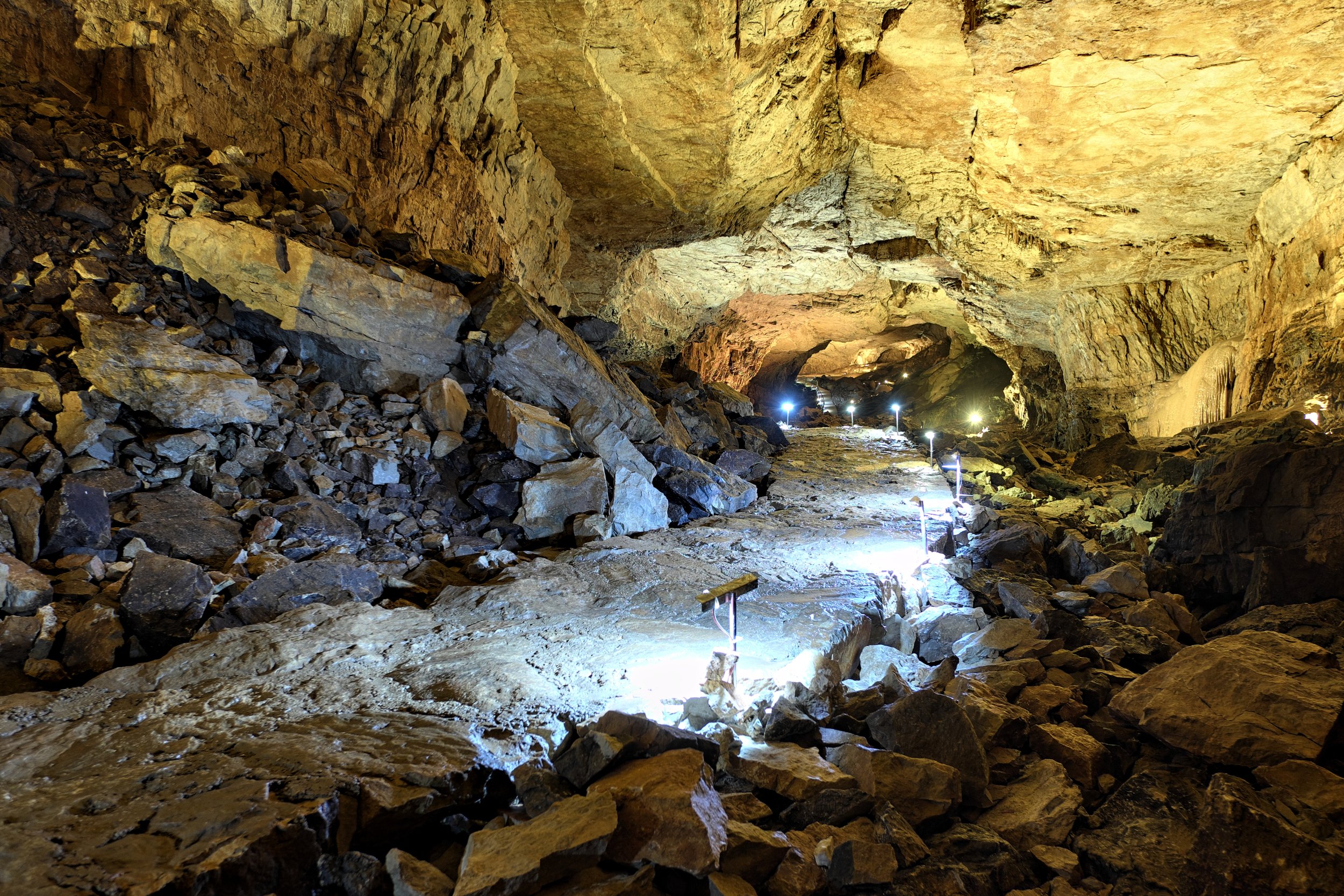
There are heaps of caves in Bosnia and Herzegovina, but Vjetrenica is undoubtedly the king of the castle. King of the cave? The big cheese, you get the point. This is the largest cave in the country, but arguably more impressive is its status as the most biodiverse cave on the planet, with more than 200 different species known to be doing their thing in its darkness. The cave was even mentioned by ol’ Pliny the Elder back in 77 AD, he of Natural History fame, but it wasn’t until the 19th century that exploration of the cave kicked into high gear, It was a Czech guy (an archaeologist and speleologist) called Karel Absolon who performed the most extensive exploration, doing so between 1912 and 1914, and the development of technology allowed more and more of Vjetrenica to be revealed. Today, some 7,014 metres have been explored, and visitors are in for a real treat. The cave is open daily from 9 in the morning (10 between October and March), and while entry is a little steep (25km for foreigners, 18km for Bosnians), it also feels a little ridiculous to complain about that. This is the most biodiverse cave in the world. They are charging you a tenner. A ticket to Walt Disney Postojna costs twice that. And if that wasn’t enough, “Vjetrenica” basically means “blowhole,” and you’ll appreciate those gusts during the boiling summer. Zavala, +387 36 891 034
Vjetrenica Cave Museum © John Bills
Vjetrenica Cave Museum
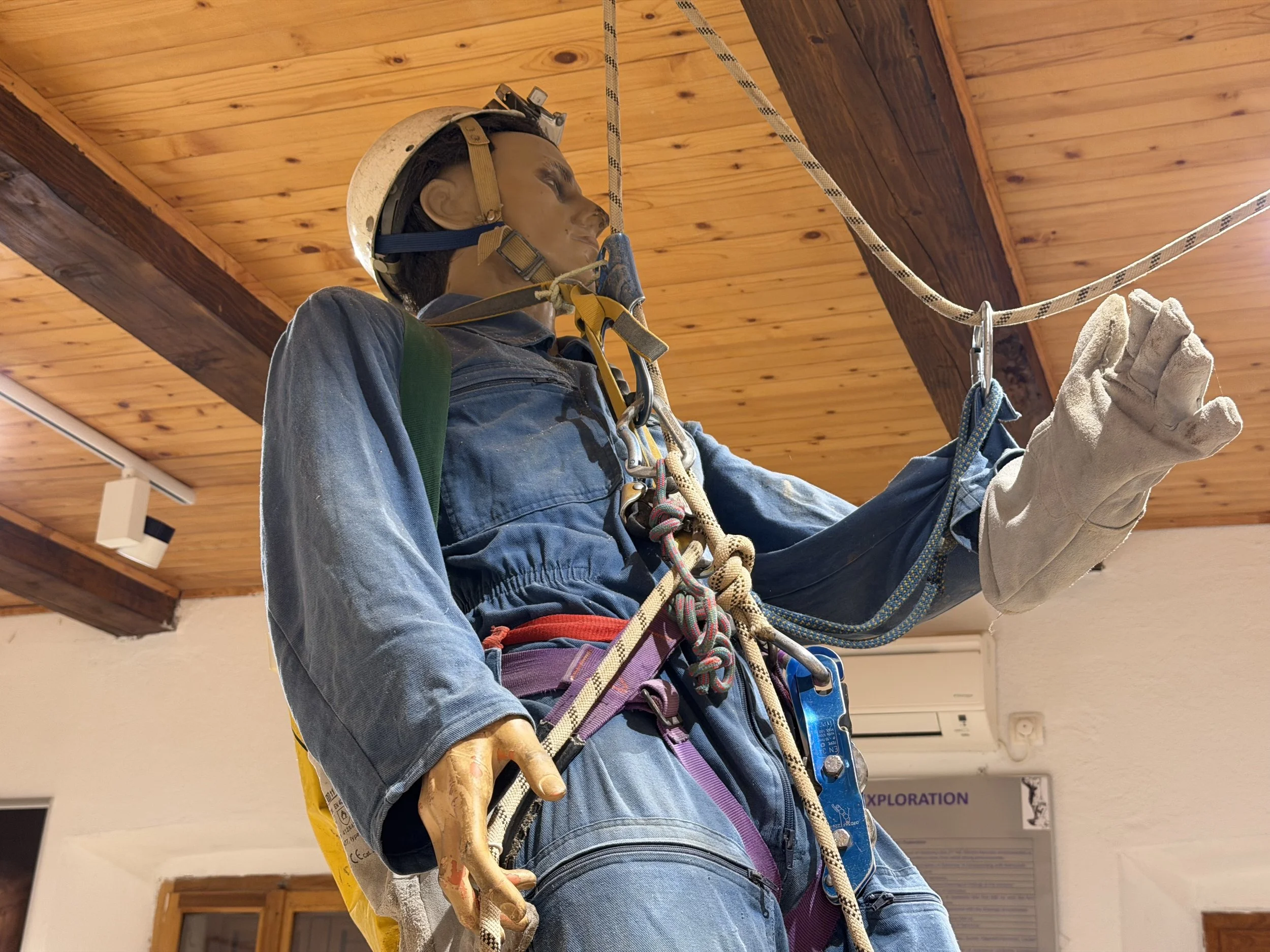
If you pay an extra euro (2 BAM) when purchasing your ticket for Vjetrenica Cave, you’ll gain access to the nearby museum, a small but perfectly formed spot packed with historical information about the caves. The information boards include English-language texts covering everything from archaeology to biology and beyond, with maps showing the extent of the magical world hiding beneath Popovo Polje. There is also a small souvenir shop on the bottom floor. For only a euro, it is well worth a look. Zavala, +387 36 891 034
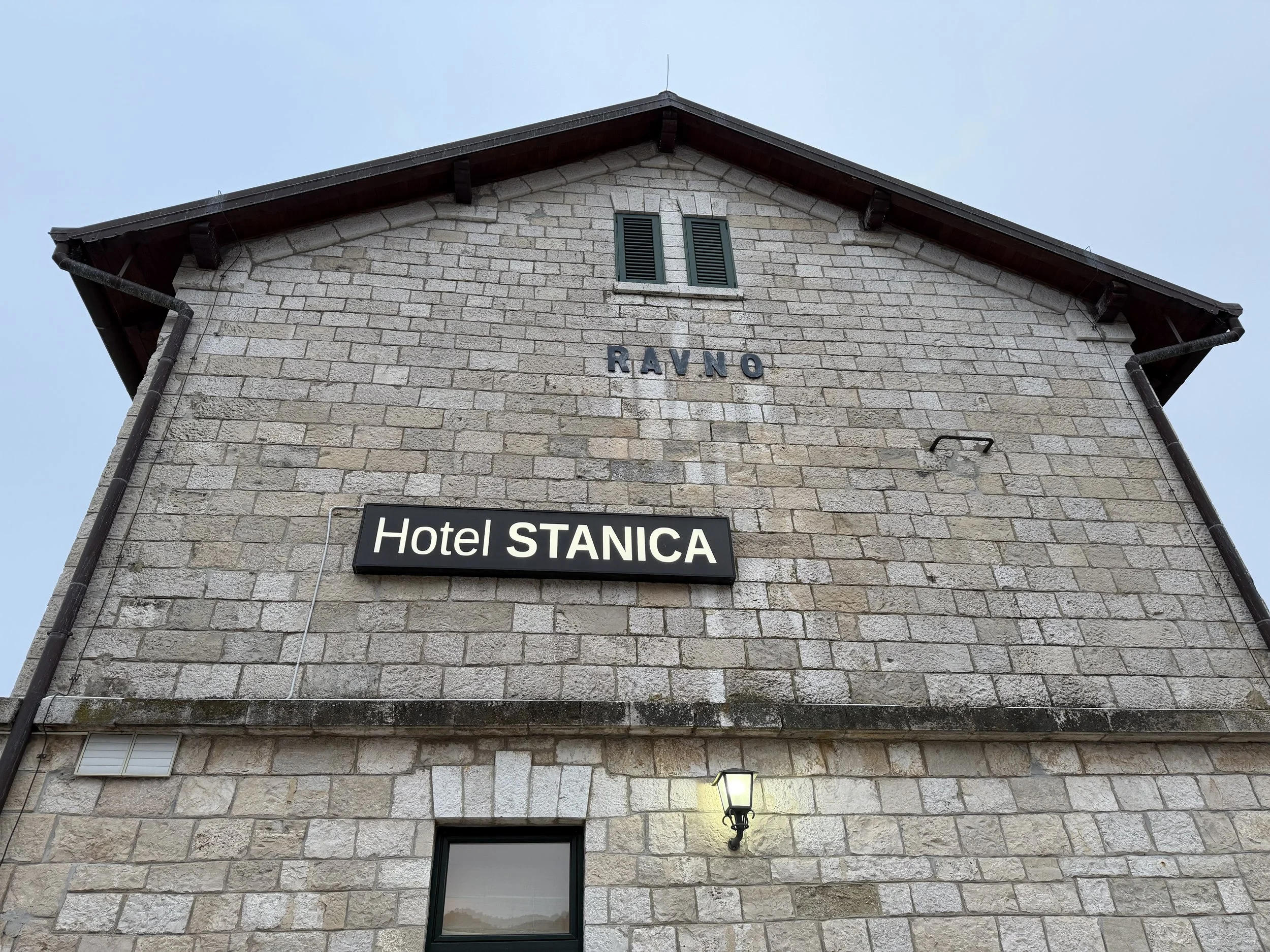
Hotel Stanica in Ravno © John Bills
Stanica
You’re going to hear plenty about Ravno’s old train station in this guide, and for good reason. This is arguably the jewel in Ravno’s crown, its primary historical attraction, finest accommodation option, and best restaurant, all in one. The station was once a stop on the railway that ran between Dubrovnik and Vienna, only to fall to the whims of time as the region abandoned the joys of the iron rooster. Time passed, as it always must, but love and care returned to Stanica Ravno in the early 2010s, and the station was restored to its former glory in 2016. Well, not to its former glory, but to an altogether different type of charm, incorporating aspects of its previous life into a modern boutique hotel with a tremendous wine cellar, gorgeous setting, and countless stories to tell. The station has since become one of the most beloved stops on the Ćiro Trail and an absolute must for anyone passing through. Two thumbs up, all the way up. +387 63 156 873
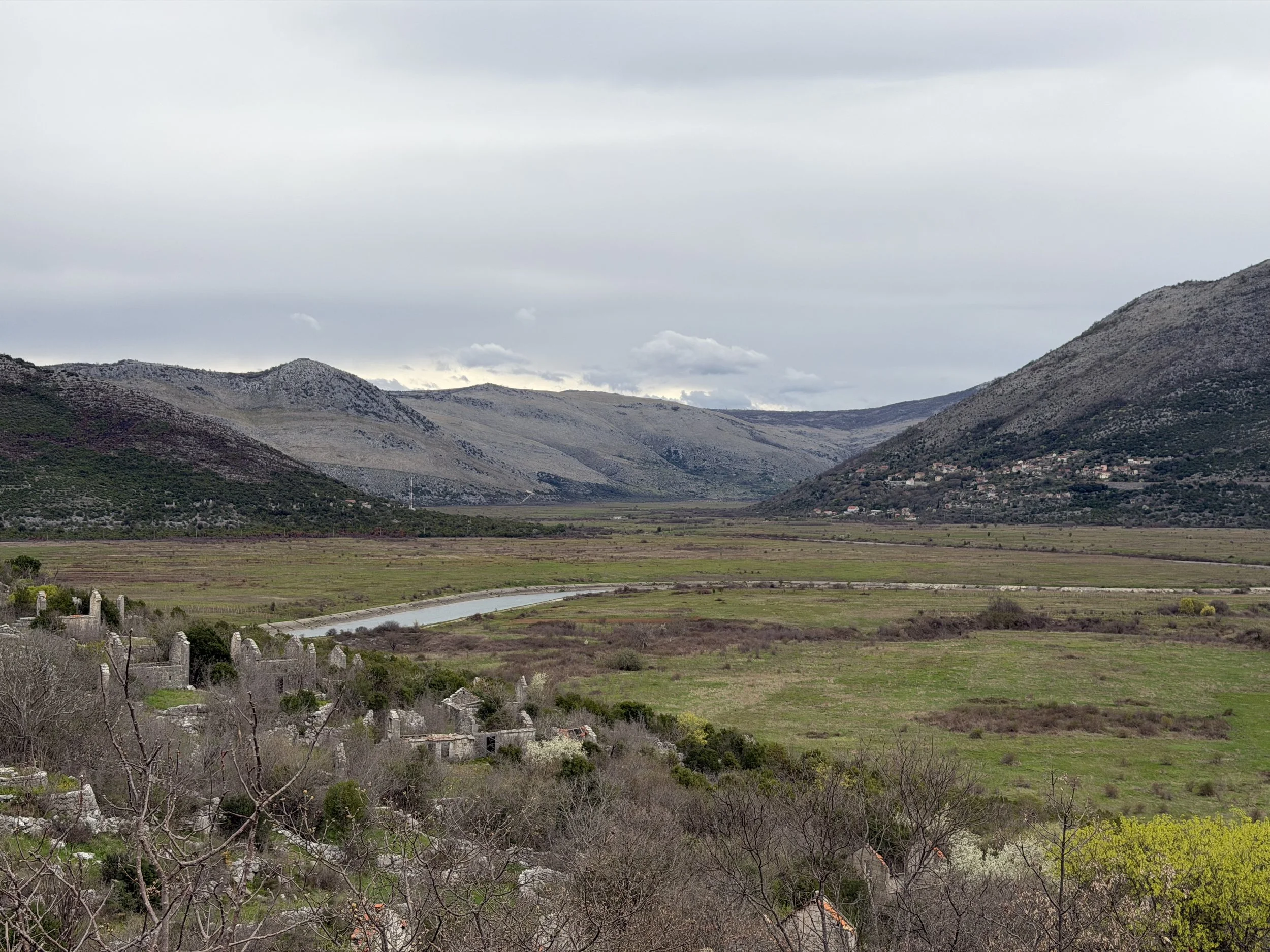
Popovo Polje © John Bills
Popovo Polje
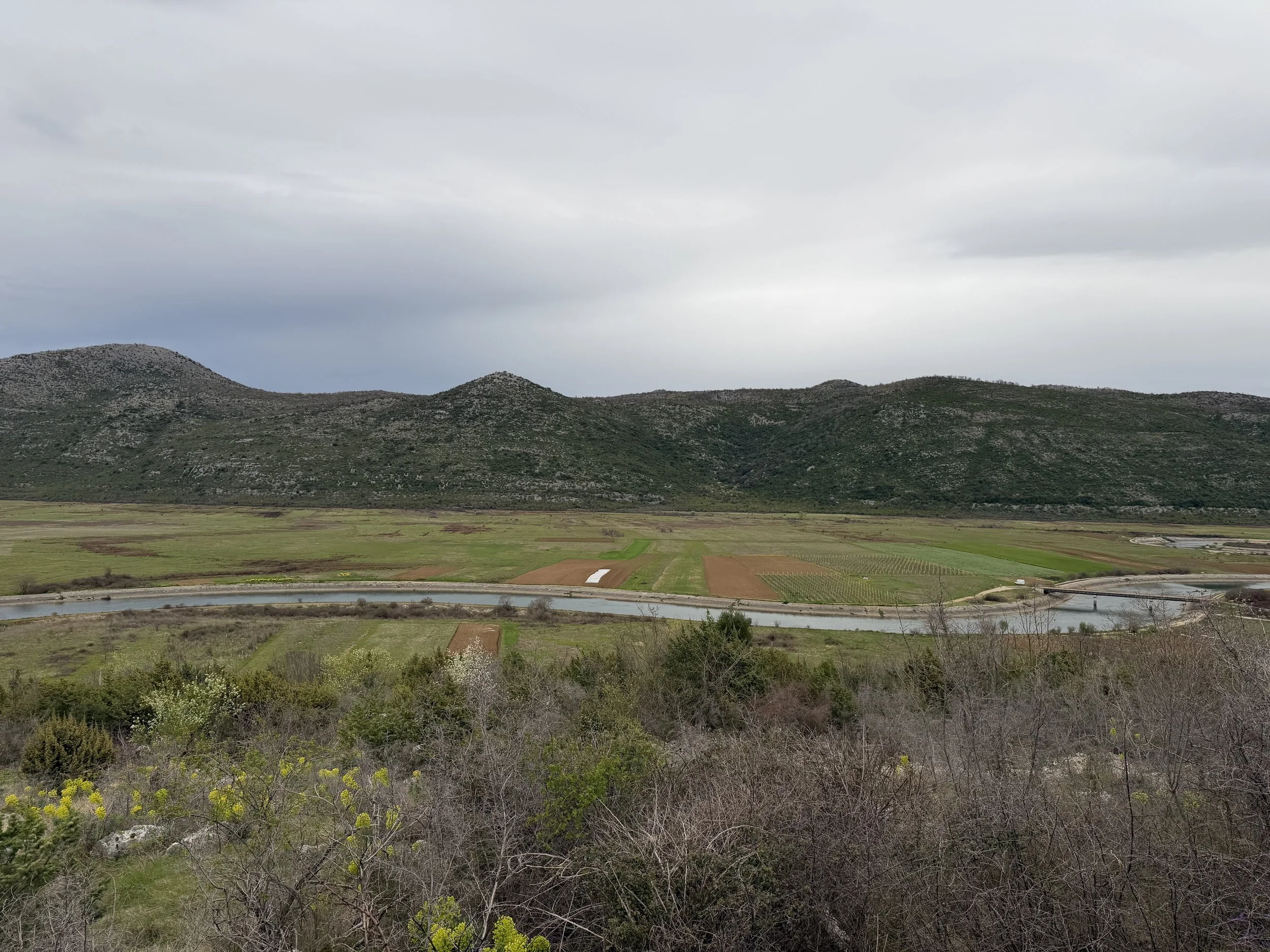
There are fields, and then there are fields. I sure hope italics get the point across. Popovo Polje is right up there with the most famous fields in Bosnia and Herzegovina, a sweeping splendour covering around 2.3 square miles of landscape that straddles the divide between the dramatic and the serene. Yes, that is possible, and Popovo Polje achieves this unicorn. The Trebišnjica River flows through it, sinking now and then, only to reappear further down the line. Did you know that the Trebišnjica is the largest sinking river in the world? You do now. You’ll also find Vjetrenica Cave and Zavala Monastery here, if you need more reasons to visit. This big ol’ beaut is located 13 miles northwest of Ravno.
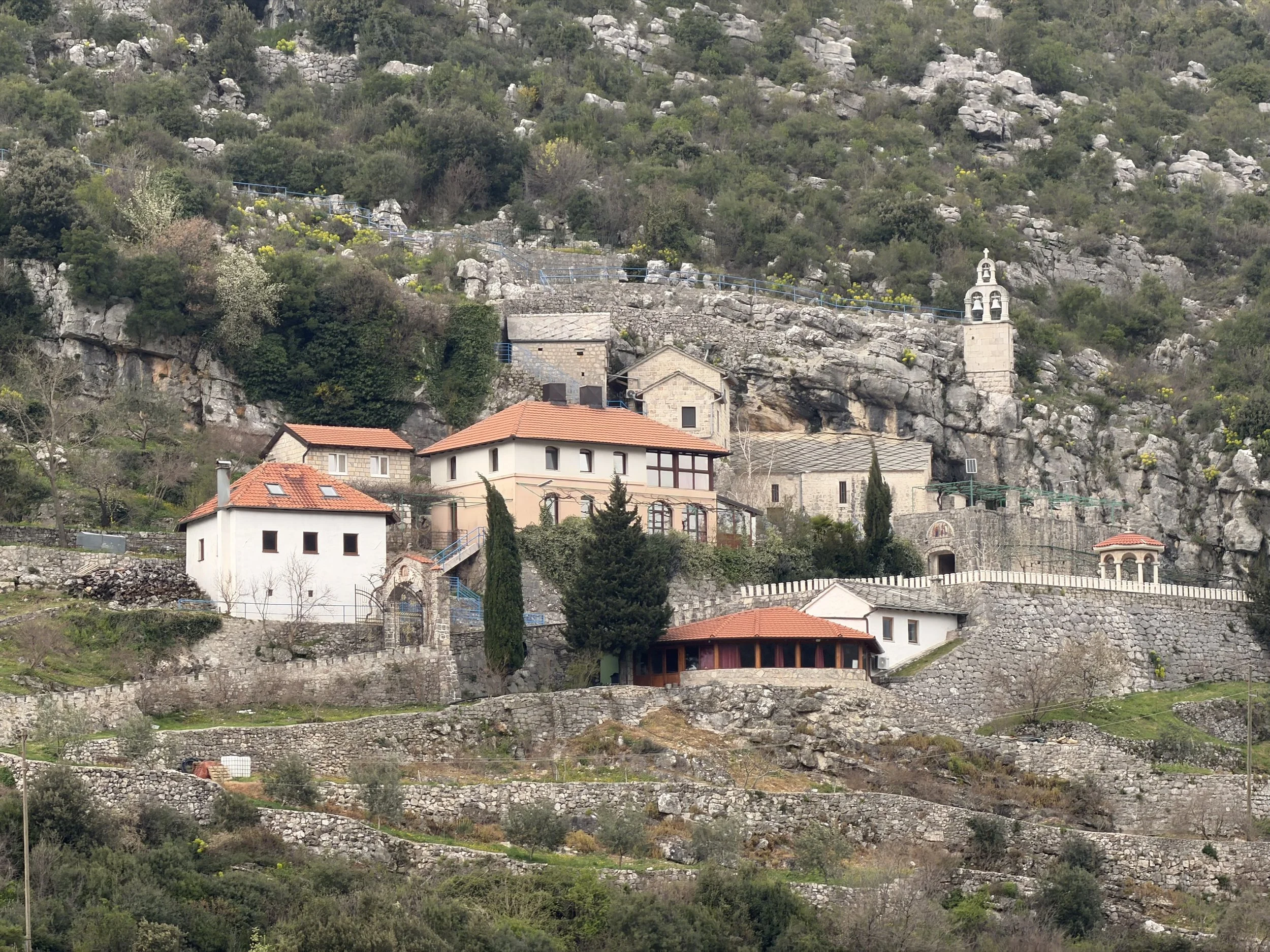
Zavala Monastery © John Bills
Zavala Monastery (Manastir Zavala)
This really is a beaut. Shimmering peacefully on the side of a hill above the expansive Popovo Polje, Zavala Monastery is an oasis of calm hidden within a larger one, which doesn’t make a whole lot of sense, but it is what it is. This Serbian Orthodox monastery was first mentioned in the early 16th century, and while it experienced the tumult and violence that plagued this region over the centuries, those days seem far away in the modern age. A short walk leads to the monastery gates, where a small tunnel opens onto the monastery proper, an impossibly idyllic spiritual spot defined by tranquillity. You can pick up excellent wild mint for tea here, but the quest for calm should be your first port of call. Zavala is a truly sumptuous spot. Zavala
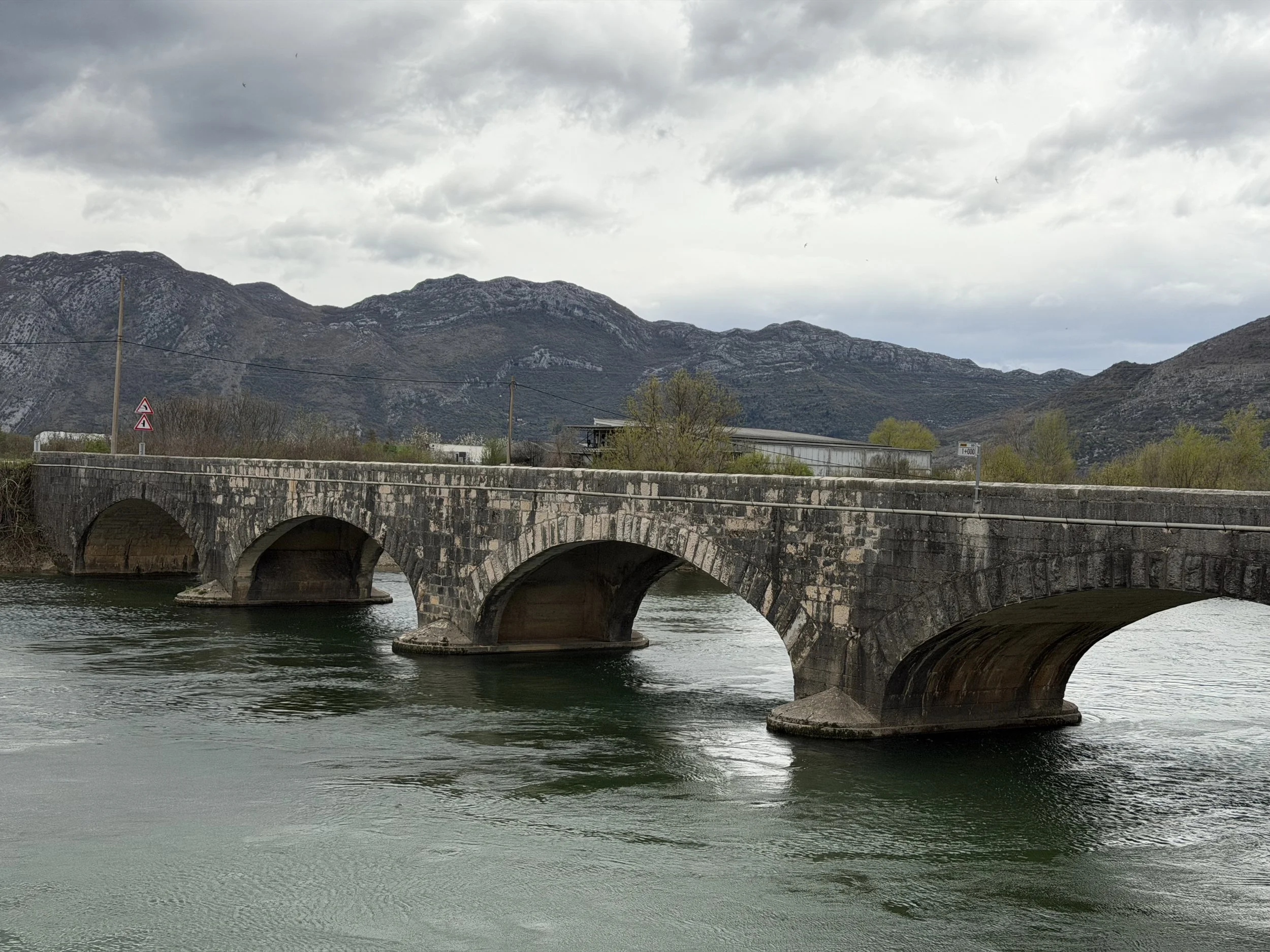
Ravanjska Bridge © John Bills
Ravanjska Bridge (Ravanjska ćuprija)
Hidden in plain sight, the Ravanjska Bridge is another in the long line of beautiful bridges in this part of the world. The bridge glides over the Trebišnjica River and is surrounded by vineyards and lavender, making for one of the region’s most spectacular sights as the growing season approaches its apex. To get there, follow the R428 north out of Ravno, towards the village of Strujići. The panoramic vistas as you approach the bridge are incredible.
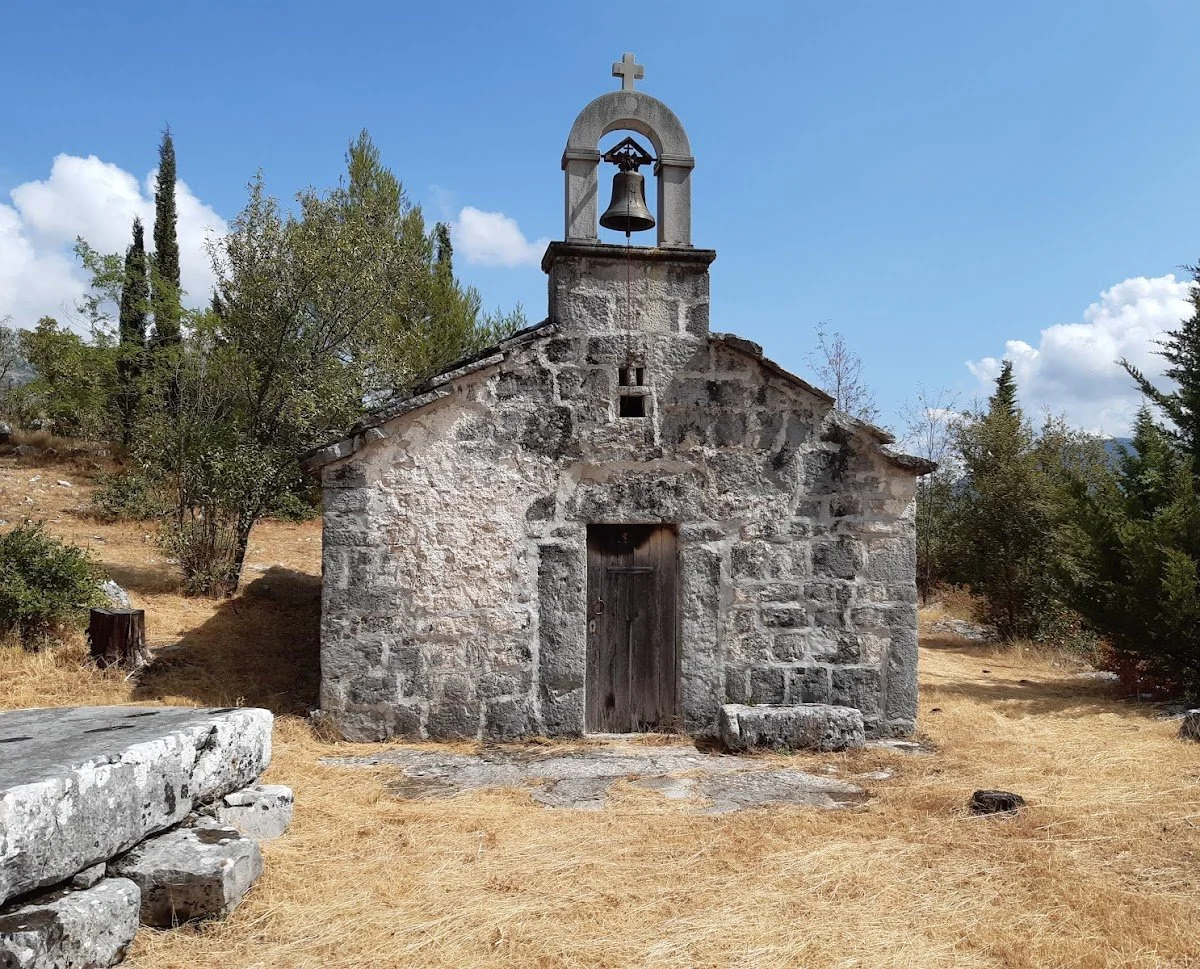
Church of St. Mitra © Gabrijel Prusina // Google
Church of St. Mithra (Crkva sveta Mitra)
You’ll need to do a little bit of walking, but there’s nothing wrong with that. A short walk from Hotel Stanica is the 14th-century Church of St. Mithra, a quaint, single-nave stone church that has survived centuries of tumult to tell its tale. Surrounded by trees and oozing serenity (not the best visual, I’ll admit), the church is joined by a couple of stećci for the full Herzegovina experience.
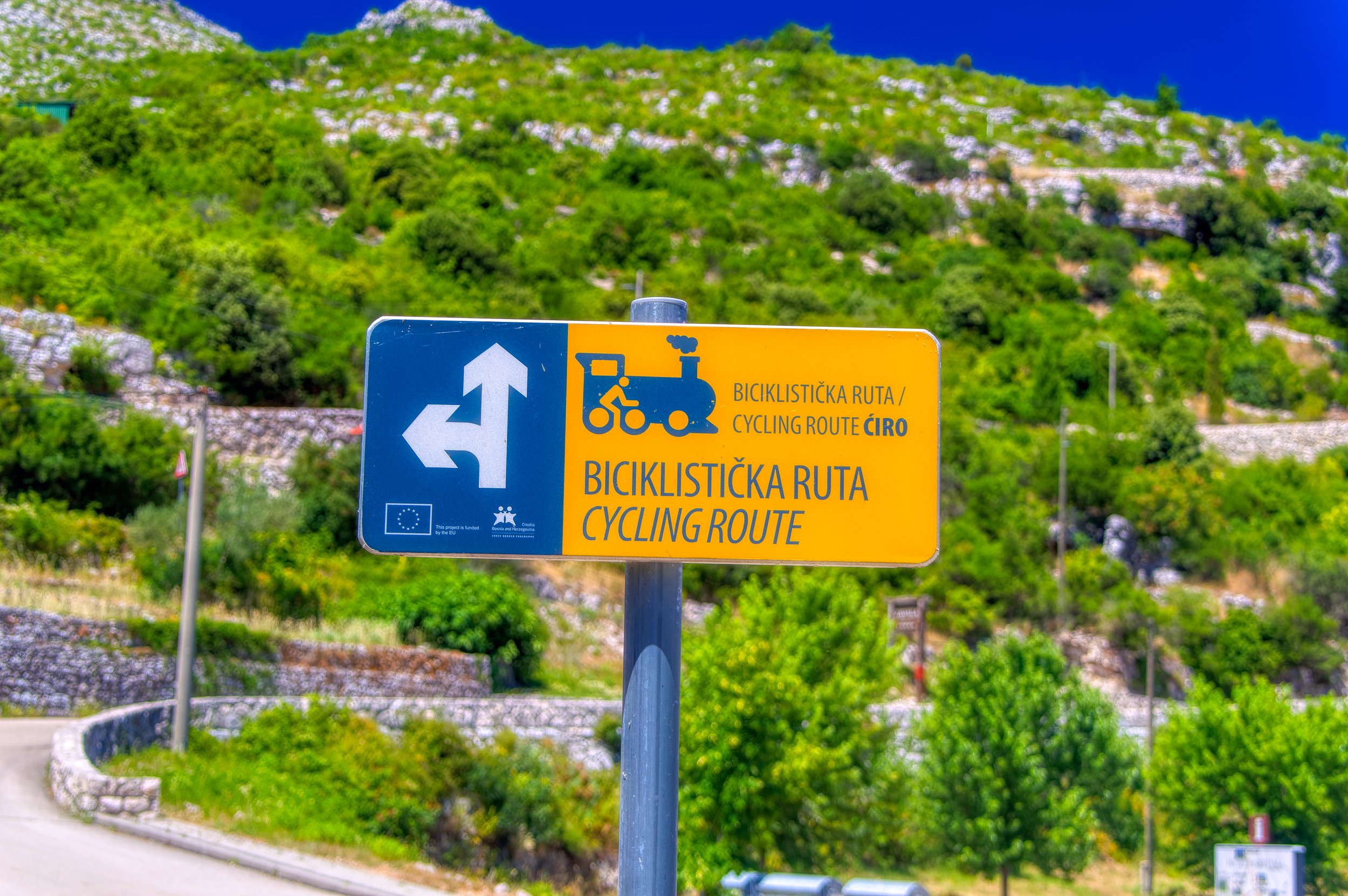
A sign for the Ćiro Trail © Goran Vrhovac // Shutterstock
Ćiro Trail
The fabulous Ćiro Trail covers many municipalities, but I’m throwing it in the Ravno portion of this here behemoth, and for good reason. In fact, there is an immediate error there, as this isn’t just one trail, but a collection of routes taking you through the fascinating history of rail travel in this beautiful part of the world. The story begins with the arrival of the Austro-Hungarians towards the end of the 20th century and the dual monarchy’s obsession with making BiH a “model colony.” Of course, this had little to do with improving the lives of locals and everything to do with resource extraction and military defence, which meant trains. A network of narrow-gauge railways was constructed, connecting villages with the sea (for the most part). The trains are long gone, but many of the stations remain, and you can now follow a cycling trail between these delights. The scenery is the real winner, no matter which trail you take. For more information, head to the official website, which is packed with useful information. If you’re unsure, join a tour and embrace the magic with others. ciro@herzegovinabike.ba, +387 63 400 260
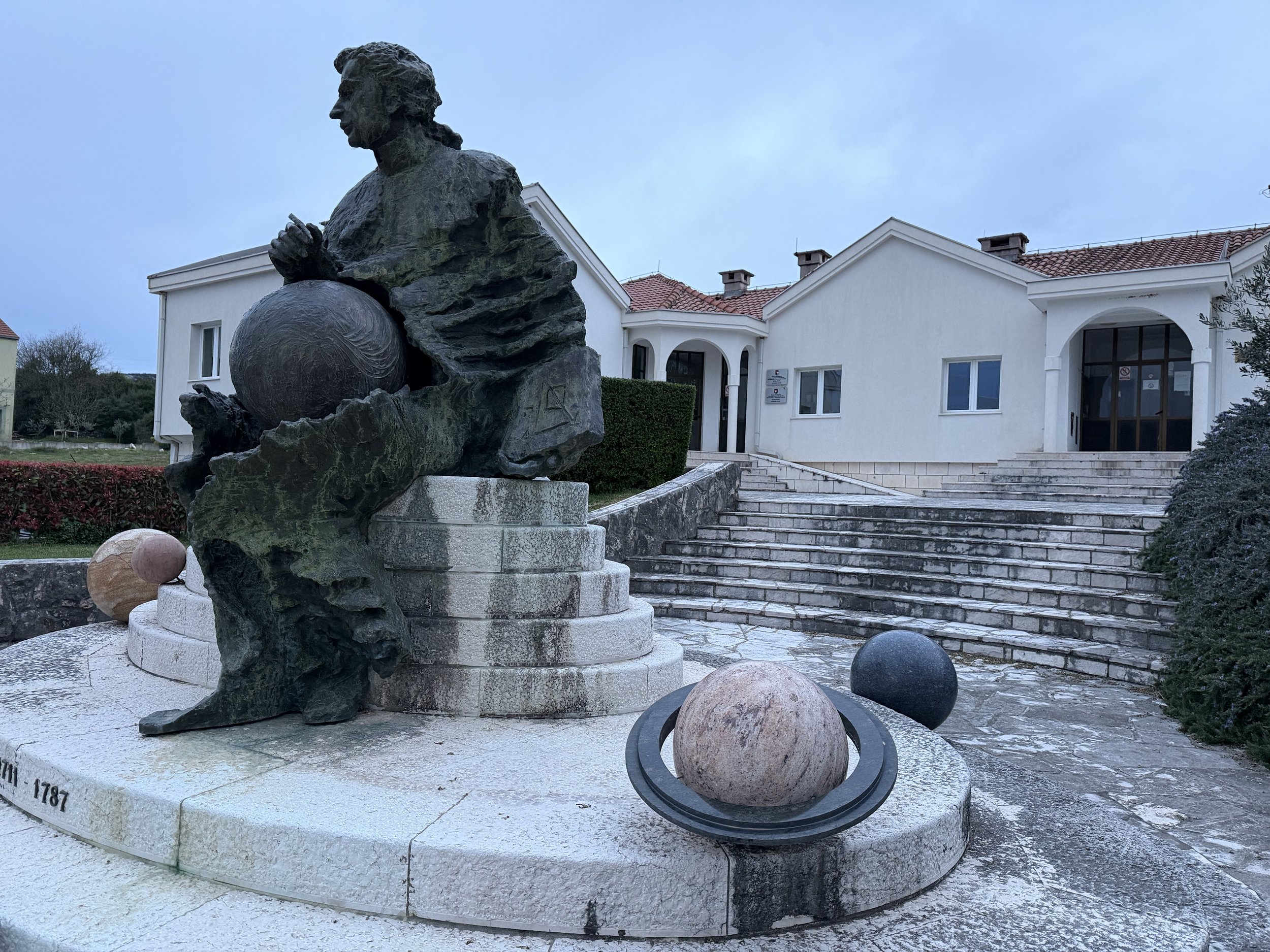
Rudjer Bošković Monument in Ravno © John Bills
Rudjer Bošković Monument
This monument is flippin’ awesome. Born in Dubrovnik, Ruđer Bošković was an 18th-century clever clogs who dipped his fingers into many pies (wait, what), covering everything from physics to astronomy via law, poetry, painting, philosophy, maths, religion, and more. A polymath, that’s for sure. Bošković is said to be the founder of practical astronomy, and it is his fascination with the skies that gets top billing with this monument in front of the municipal office in Ravno. Bošković sits pensively with pen in hand and sun in lap, as the eight planets arrange themselves around him. So, if ol’ Roger was from Dubrovnik, why is there a statue in Ravno? You see, his daddy was from a nearby village, the tiny settlement of Orahov Do. Trg Ruđera Boškovića
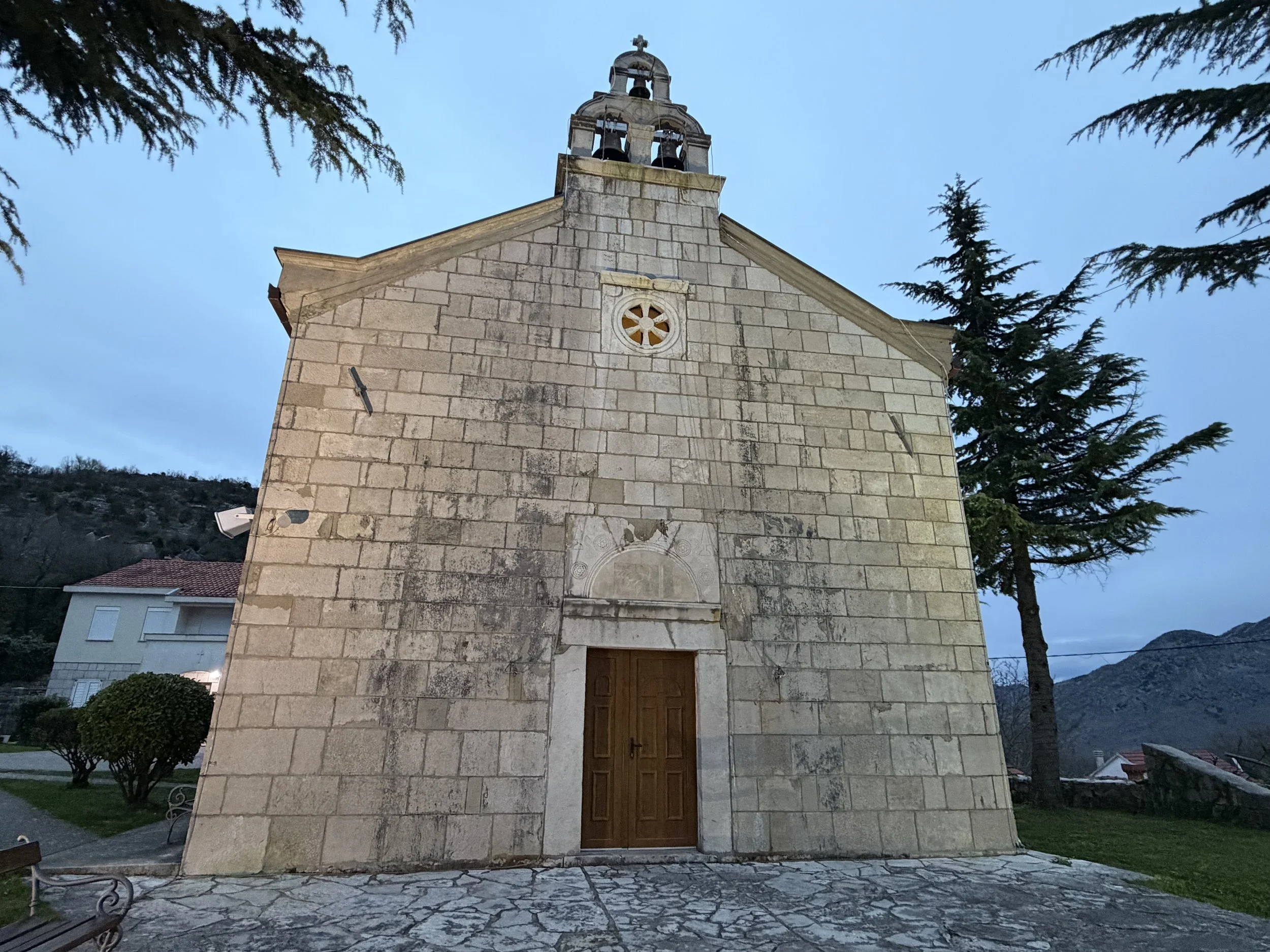
Central church in Ravno © John Bills
Church of the Nativity of the Blessed Virgin Mary (Crkva Rođenja Blažene Djevice Marije)
There’s no shortage of history to go with the lengthy name of the charming church. The church was constructed in the 16th century, in the 1570s no less, which coincides with the first mention of Ravno as a distinct town. Coincidence? I think not, but I will leave you to make up your own mind. Of course, it didn’t look like this in the 1570s, and the church has been renovated heaps of times over the centuries, most recently in 1996 after being seriously damaged by the JNA as they attacked the area around Dubrovnik. The church is an integral part of life in Ravno, but pay close attention to the markings above the door and the Bosančica tablet on the inside wall.
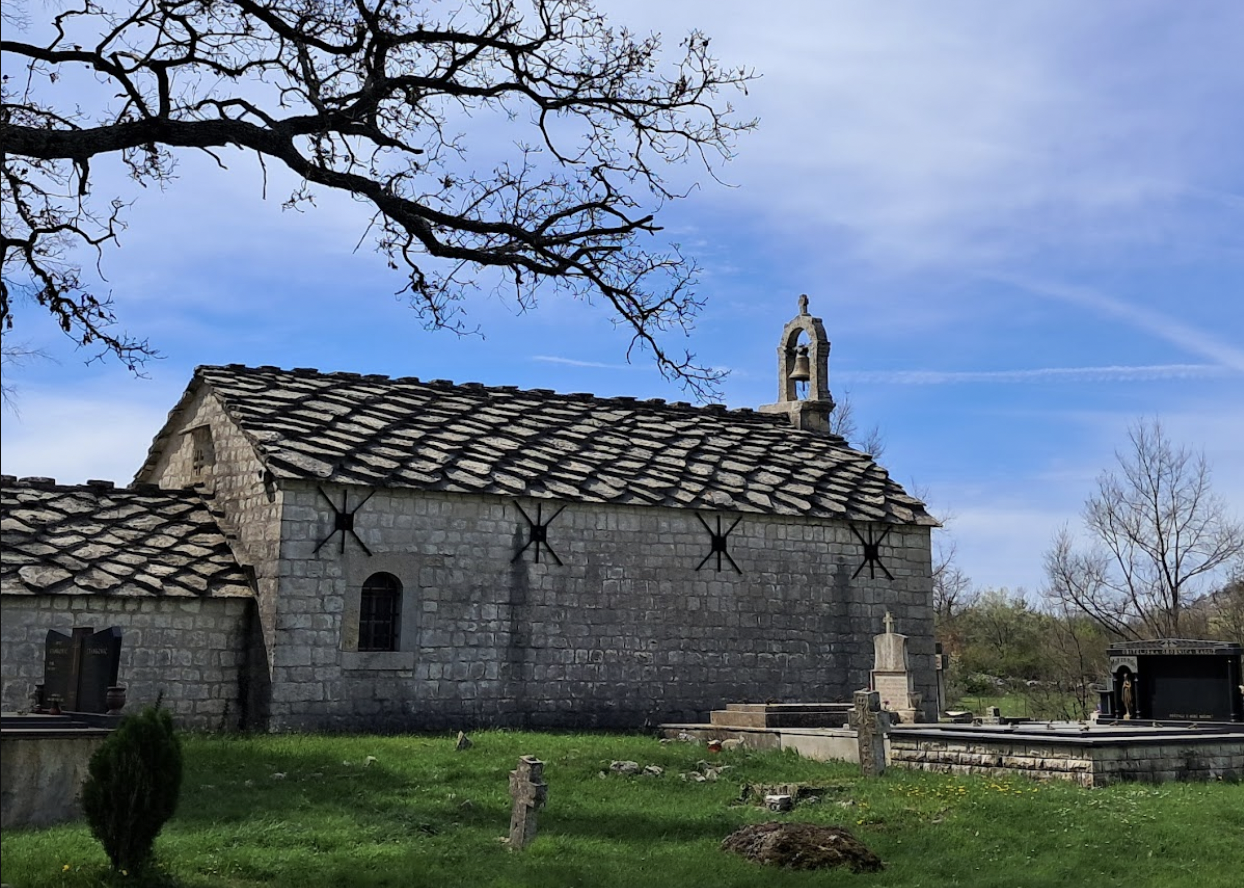
Church of St. Roch © Ante Bender // Google
Church of St. Roch
Smack-bang on the border with Croatia (not literally, but a mile or so), the impossibly quaint Church of St. Roch is a picturesque structure in a most picturesque setting. It is a classic single-nave church with a gabled roof, but pay close attention to the quality of the stone. Now, I’m not going to bore you with conversations about stone, but this is a little insight into the value and importance of large stone from this part of the world. Throw in some oak stairs and a delightfully decorative oak door, and you’ve got yourself one of the most winsome little churches in Bosnia and Herzegovina. There is a little cemetery for the dead, which probably goes without saying. Trebimlja
BREWS, BOOZE, AND BITES
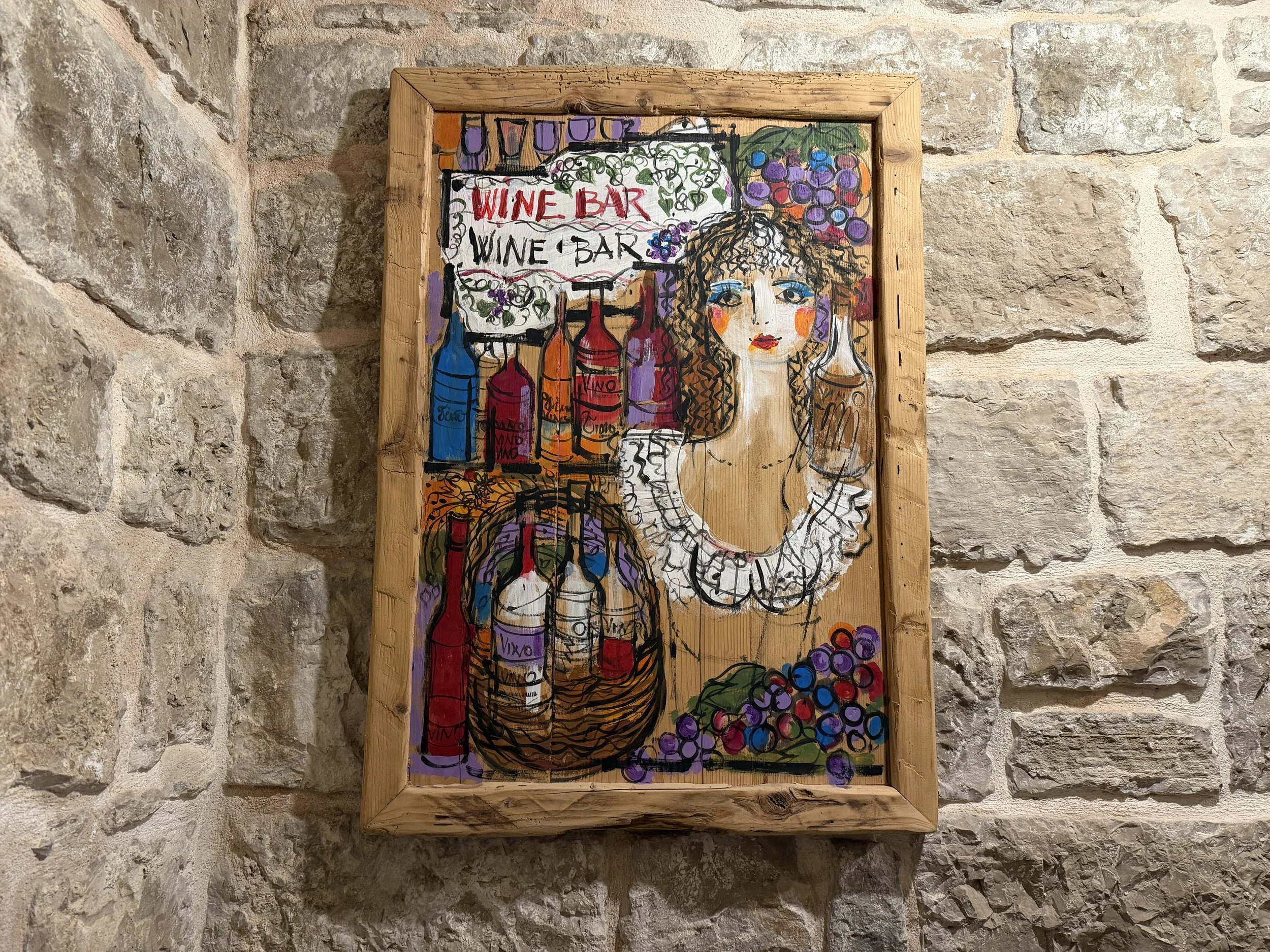
Wine Bar sign at Hotel Stanica in Ravno © John Bills
The real broken record approach is about to begin, because Hotel Stanica (+387 63 156 873) is your best bet for food and drink in Ravno. Located in the town itself, the restored train station serves excellent local dishes throughout the day, along with strong coffee, wines, and beer. The wine cellar stocks the finest wines from Herzegovina and is a popular place for planned gatherings and long nights. If you’re staying at the station and wouldn’t mind an alternative option, Gostionica Zavala (Zavala, +387 63 350 218) is a charming restaurant next to Vjetrenica and Zavala Monastery, serving traditional food in an achingly peaceful setting. Konoba Oblat (+387 63 383 350) sits a stone’s throw from Hotel Stanica, giving you another option during the season. It did look incredibly closed when I was last in town, however.
SLEEPING
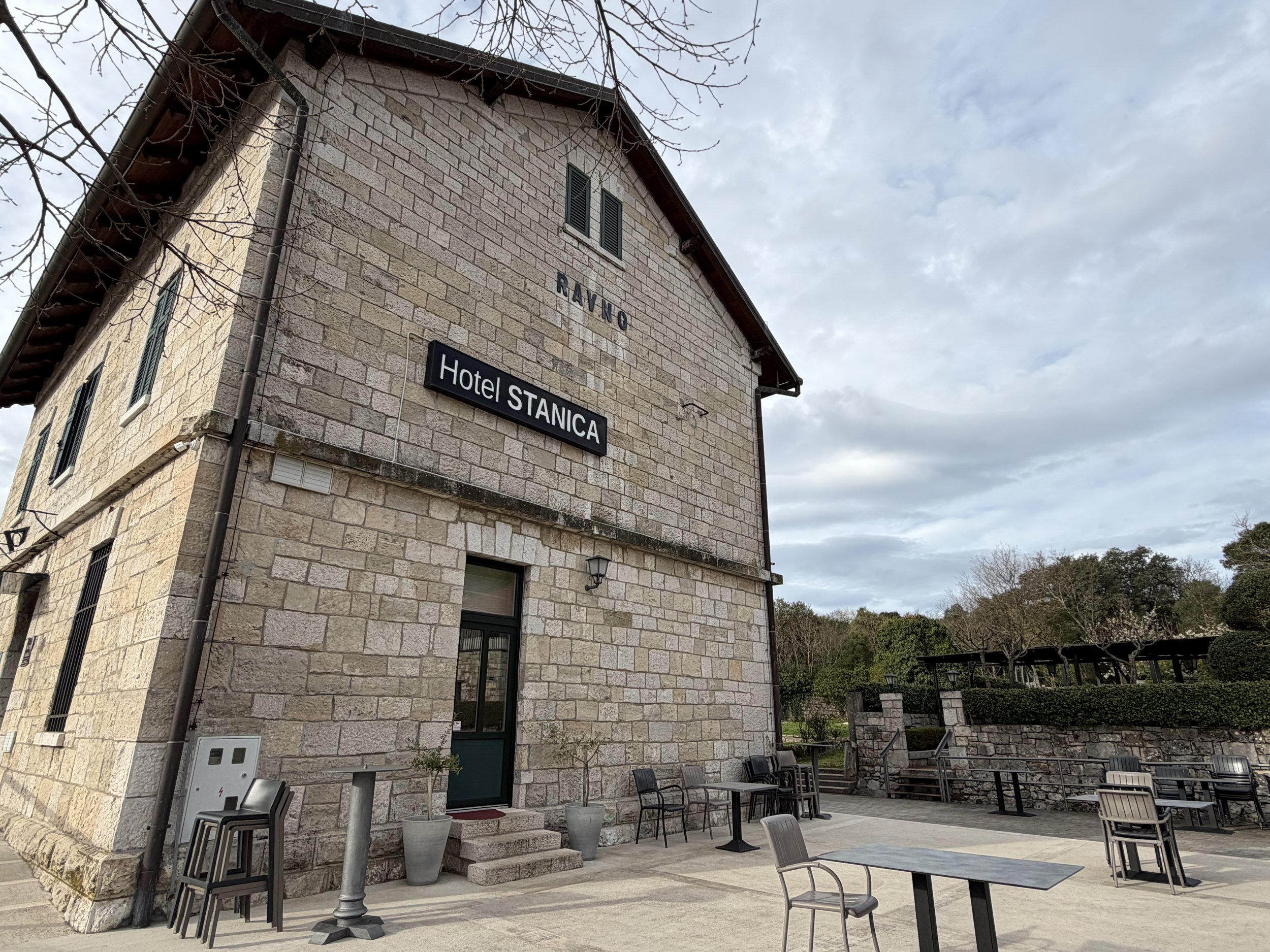
Hotel Stanica © John Bills
Prepare to be shocked, but Hotel Stanica (+387 63 156 873) is the way to go. There are five rooms and two suites at this stunner, complete with comfortable beds and gorgeous views. Believe it or not, I actually had my best night's sleep in BiH ever in this place, according to my Fitbit. It isn’t every day that you get a Sleep Score of 92, you know? There is also an outdoor swimming pool available during the season, and there are always plans to upgrade the hotel’s facilities. There are also rooms available at Gostionica Zavala (Zavala, +387 63 350 218), offering peace and character in equal measure. You’ll see signs for the delightfully anonymous Rural Household around Ravno, but I can’t really vouch for that. Sounds nice, though.