Ugljevik // A Cigar and the Time To Use It
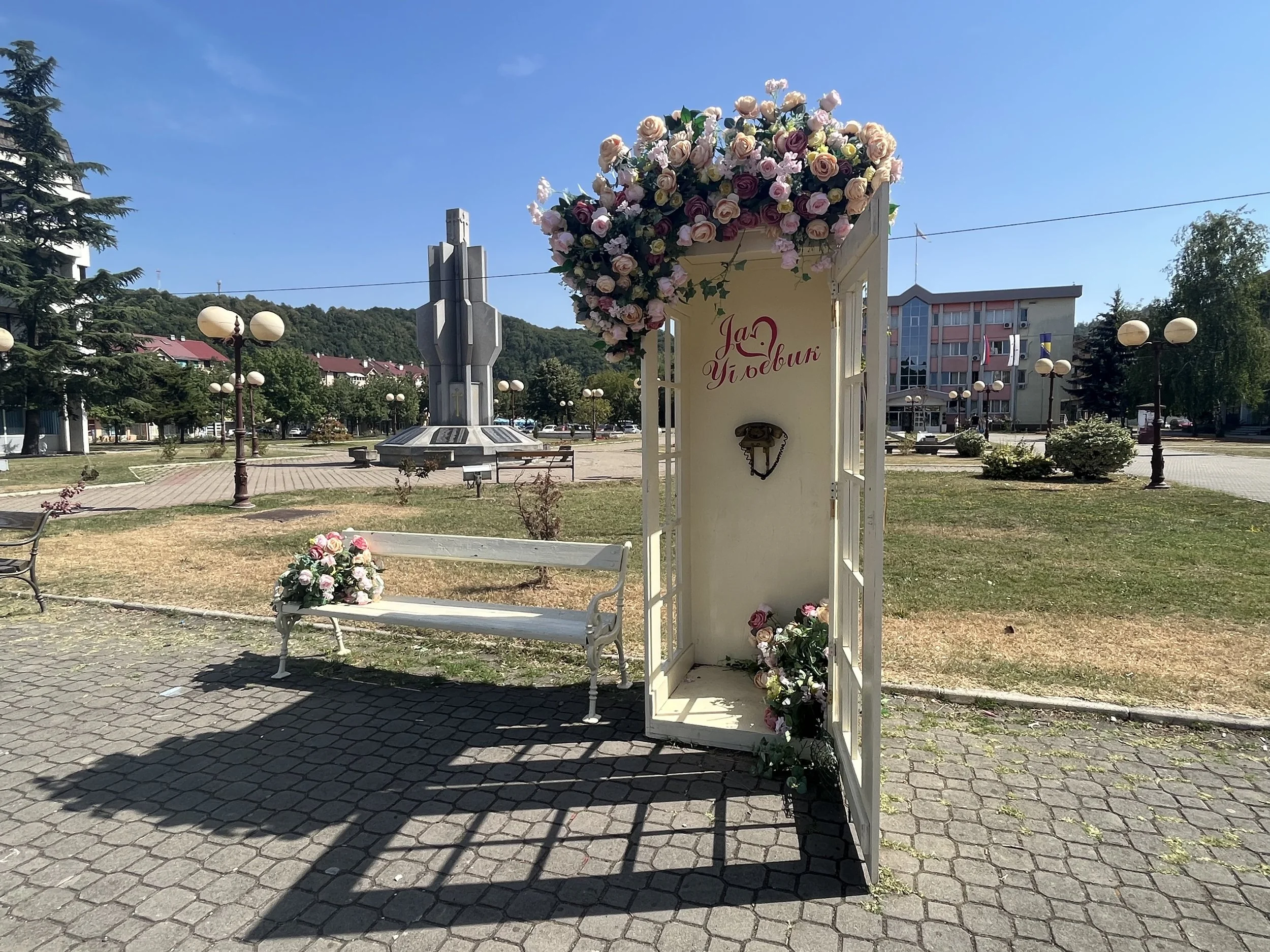
A monument in the centre of Ugljevik © John Bills
While the travel writer’s addiction to loudly observing contradictions is more than a little trite, allow me to indulge nonetheless. If you’re going to insist on believing that you are a charlatan, you might as well play the role. If the cap fits, right? The contradiction in question? A simple one. Most people travel in the summer. It is peak time for holidays and adventures, and it almost always leads to higher prices and crowded destinations. That isn’t exactly the case in Ugljevik, but I’ll get to that.
The contradictory element here is that summer is when the weather is at its hottest. Yes, John, that much is obvious; where’s the issue? Well, dear reader, the issue is that when the heat is brutal, it is nigh on impossible to find any enjoyment in anything other than vegetating in an air-conditioned room. There is very little joy to be gained from travel in the summer, yet we persist with planning our jollies for those sweltering months.
My memory is fuzzy, but I believe the temperature in Ugljevik was something like 36 degrees Anders Celsius, around 97 degrees Daniel Gabriel Fahrenheit for imperial readers. I may be a degree or two off, but that isn’t important. What matters is that it was hot. Very hot. The sort of hot that makes you squint no matter what direction catches your gaze. A heat that invites involuntary sighs. A heat that makes breathing tiresome.
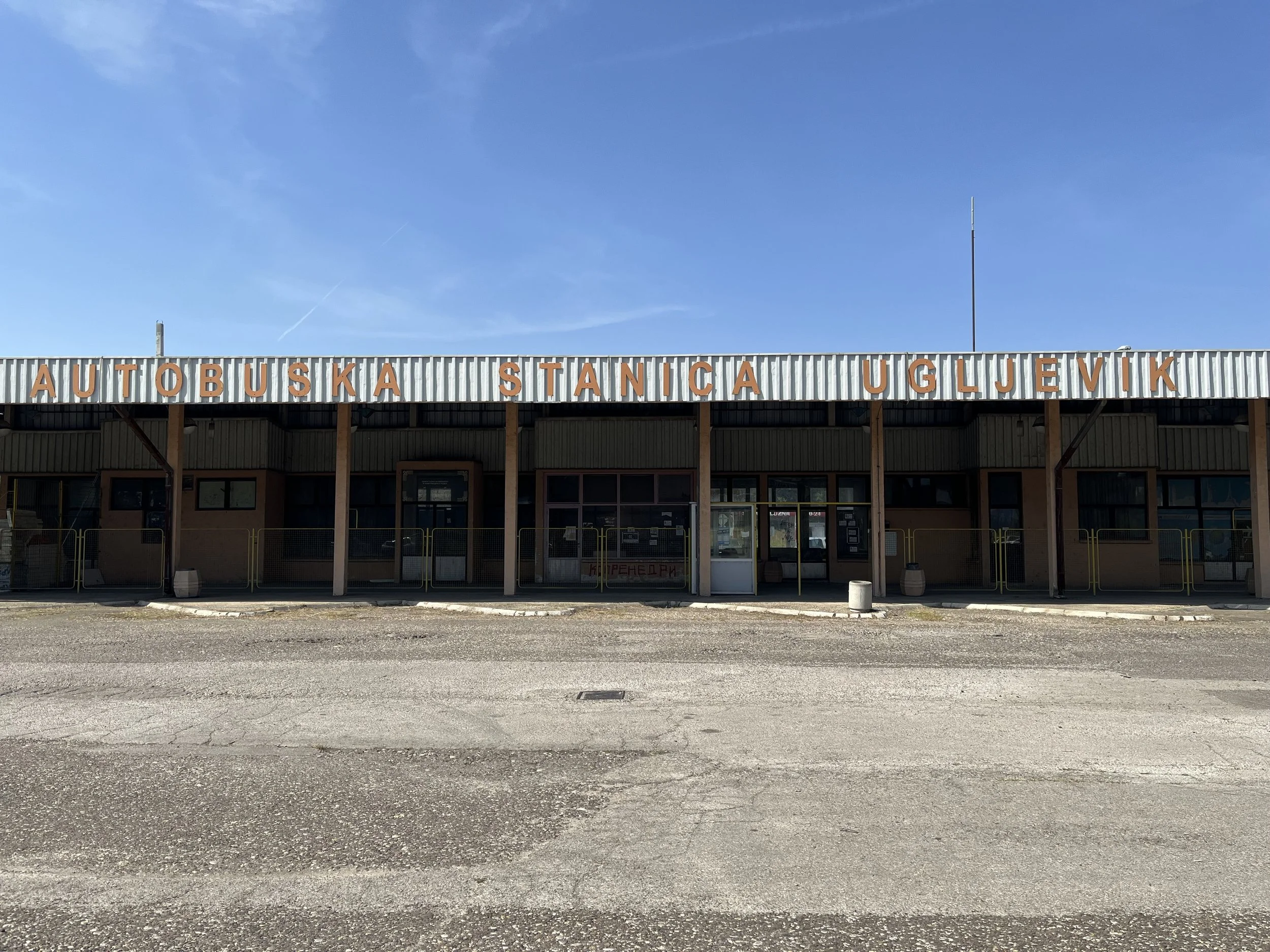
Ugljevik bus station © John Bills
And yes, I was in Ugljevik. The bus from Tuzla had dropped me off outside the bus station, as Ugljevik’s stanica is no longer functioning. Not the best start, but one I was expecting. The station still stands, a confounding colour combination heralding its status and serving as a metaphor for its current state. Orange on white is a strange choice at the best times, and Ugljevik was not experiencing the best of times. This little town in the northeast of Bosnia and Herzegovina has its stories to tell, but it can be forgiven for being a little tired of telling them.
In truth, there are two Ugljeviks. One lingers in memory, contained in photographs tucked away, one that still shimmers in conversations that begin with “before.” The other Ugljevik, the one that most know, well, that rises from the plain a few kilometres away. It was built not because the first had failed, but because the earth beneath it concealed something with more monetary value than streets, seeds, and houses. Even then, the story begins well before either personality took shape. People have lived here since forever (yes, like almost everywhere else in this magical country), and the usual rulers left their mark on a populace looking for peace. Occupiers came, and occupiers went, but the rural settlement remained, swaying to the rhythms of fields, forests, and the nearby slopes of Mount Majevica.
Where everyone from the Romans to the Ottomans failed, coal succeeded. Rich lignite deposits were discovered beneath the surrounding hills, and the settlement was transformed in the 20th century as mines, industry, and workers descended on the town from across Yugoslavia. Coal is king in these parts, and you see that from the name: Ugljevik, from ugalj (coal) or ugljen (charcoal). Before long, the town’s identity was increasingly tied to the black seams beneath its feet. A more modern settlement was constructed closer to the mines, giving us the Ugljevik we know and love today. Most towns have two wolves hidden within them; it’s just more apparent in Ugljevik than most.
It was also hot, brutally hot, so I wasn’t particularly enthused about the idea of wandering around. The centre of town was spacious, as much because of urban planning as a lack of activity. The power plant on the edge of town has flitted between open and closed for a variety of reasons that are beyond my comprehension, despite the presence of coal in my black Welsh heart. Ugljevik was not a hub of activity, let’s just say that.
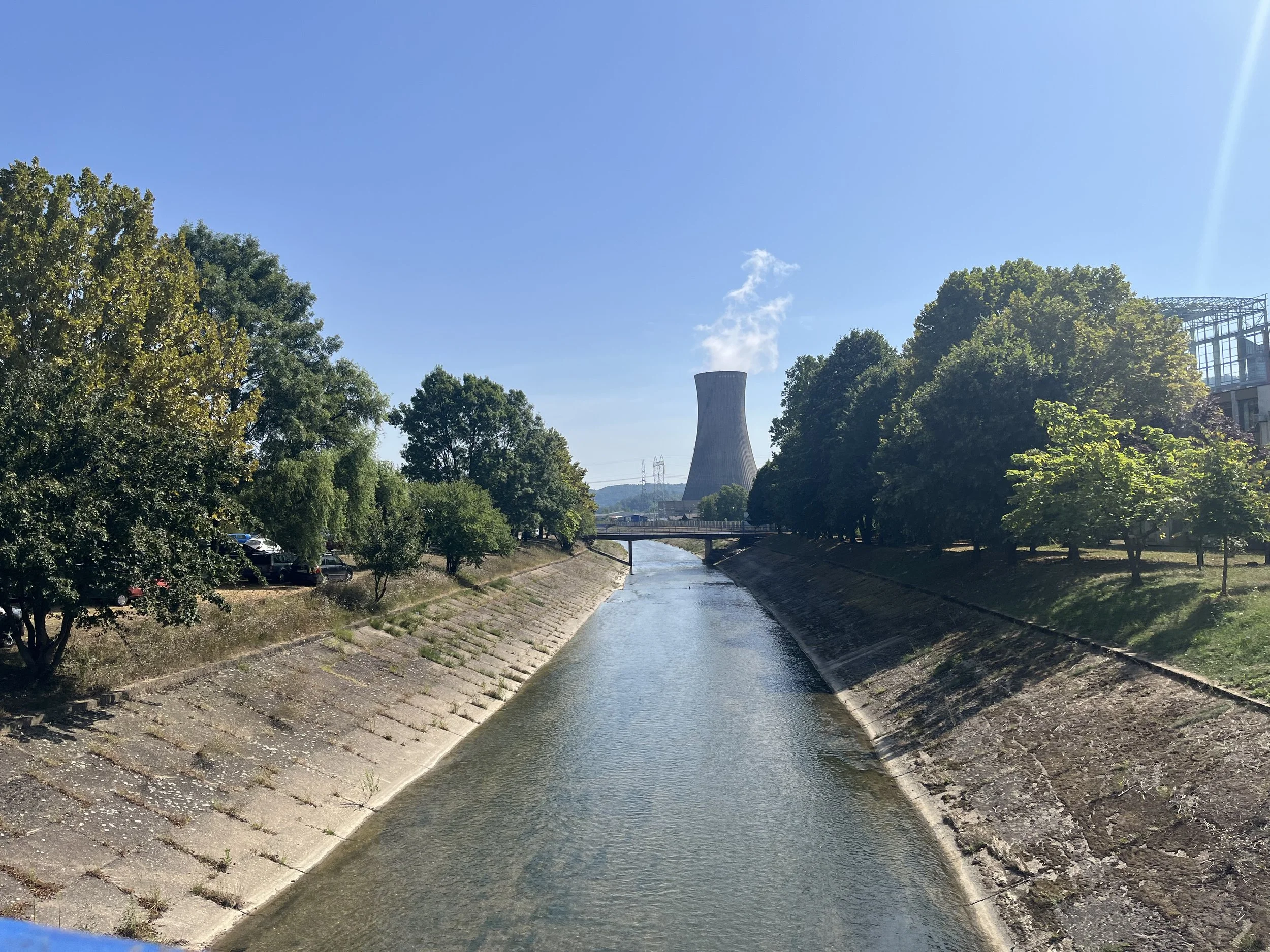
A view of the Ugljevik power plant © John Bills
I wasn’t about to become my own hub of activity in the heat, so I popped over to the tourist information centre to make the most of shade, at least for a moment. I was greeted by a trio of charmers, which is always a good way to arrive. I explained my story as best I could (my Bosnian is ropey at the best of times, and summer only exacerbates this ropeyness), and was invited to sit down and have a chat about the magic of Ugljevik.
By that I mean I was offered a rakija. I accepted. When in Rome, you should do as the Romans do. When in a Bosnian tourist information centre, you should accept the rakija.
Not 30 minutes later, I was in a car with the trio, embarking on an impromptu tour of Ugljevik and its surroundings. We started at the power plant (let’s not bury the lede), and while the imposing aesthetics incited the usual wonder from my industrial heart, there was more to this than hulking cooling towers.
The Church of St Alexander Nevsky stands near the power plant, but it feels like it has drifted into Ugljevik from another landscape. The church was constructed in 1996 by Russian soldiers stationed here as part of the peacekeeping mission following the end of the most recent conflict. It was transferred to the Serbian Orthodox Church in 1999, and elevated to monastery status in 2020. A building raised by visitors who were expected to leave has become one of the town’s most distinctive landmarks, its timber walls and onion dome a pleasing contrast with the concrete and coal nearby.
We headed out of town, taking the road south into nature, where a brief stop at the impossibly scenic Vodenica Stankić further confirmed my belief that heaven is a wooden cabin by the river in Bosnia and Herzegovina. Give me my friends, Castlemaine XXXX, two packets of Walkers Sensations, and the belief that the future will be beautiful. A cigar and the time to use it.
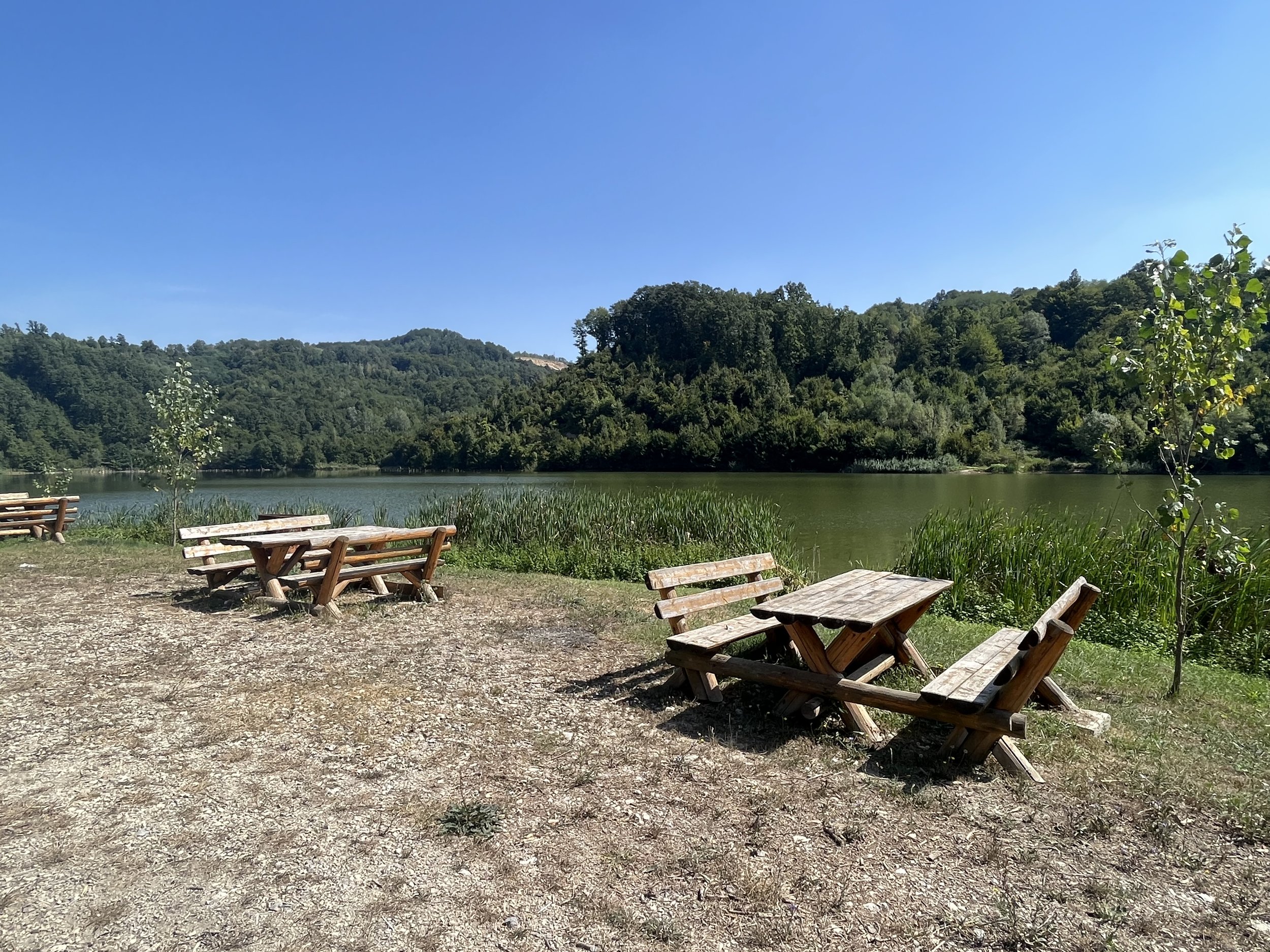
Benches by Lake Mezgraja © John Bills
A few kilometres later, we were standing at the edge of a quite beautiful lake. Lake Mezgraja was its name, proof that landscapes can sometimes discover a second life. The lake was formed when a surface coal mine was closed and eventually filled up with water. Where machines once peeled back the earth in search of black gold, water had patiently filled the hollow until it became a mirror for the surrounding forests. Industry transformed into gentle nature. Lake Mezgraja is hope in action, a place that seems to exist because someone paused long enough to notice. Anglers wait where excavators once laboured, and its silence feels earned rather than empty. A beautiful place, if you’ll allow the understatement.
And onwards into the hills, where further serenity was lying in wait. Tavna Monastery is hidden in the wooded foothills of Mount Majevica, standing close to where Ugljevik, Bijeljina, and Zvornik meet, with Lopare not far away, as though the monastery had chosen a place where boundaries dissolved into stillness. The exact date of its foundation remains uncertain, though tradition attributes it to the medieval Nemanjić dynasty. It was almost certainly established before the Ottoman conquest, because the empire from the east soon set out to destroy it. Tavna endured periods of destruction and renewal, surviving wars, fires, neglect, care, and the inevitable wilt of centuries. We didn’t linger long, but monasteries are as powerful in brevity as they are in time. Ugljevik sits 20 kilometres or so to the north, but it could just as easily be another world.
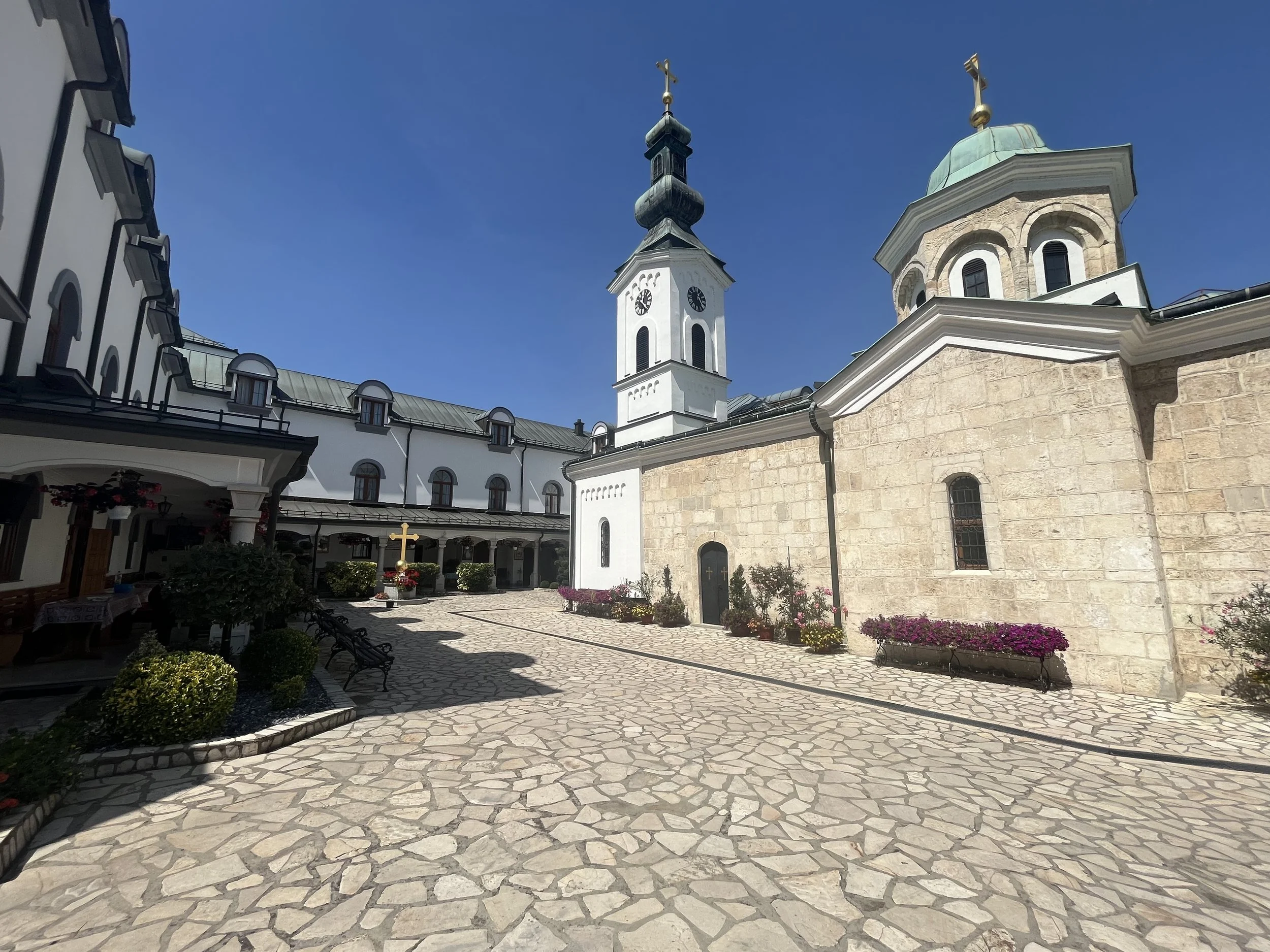
Tavna Monastery near Ugljevik © John Bills
We returned to Ugljevik, where the trio of charmers went back to work, and I spent a little more time wandering around the town. I stopped briefly at the Filip Višnjić Cultural Centre, but that fascinating structure and curious character will get their own attention in time. I’m up against the word count as it is. It was time to leave. The heat was as oppressive as when I had arrived, and the dormant bus station wasn’t about to resurrect and provide me a route to Bijeljina. A taxi had to suffice, and suffice it did.
Ugljevik is a curious place. The air is heavy, both because of the historical tug-of-war and the unreasonable heat, but the generosity of the town saw it bathed in new light. Maybe summer makes sense as a time for travel, as it asks us to slow down, and slowing down is exactly what Ugljevik requires. It is a town whose story has been written by the ground beneath it, where coal paid for livelihoods but demanded the town itself in return. Beyond the mine, the landscape tells a different story, where lakes have reclaimed excavations and monasteries hide among the trees. A place built by extracting nature's riches is best understood today through the beauty that surrounds it. Ugljevik is caught between purpose and possibility. The coal remains beneath the ground, but it is the forests, lakes, and quiet roads above it that stay with you long after you leave.