© John Bills
Welcome to the City of the Future. That’s what the sign welcoming you to Olovo says, and I’m not about to argue with signs. I can’t explain precisely why Olovo is the City of the Future, but it is a delightful little place nonetheless. There is something eminently livable about the place. Maybe it is the clean air, or perhaps it is the bright houses and abundant playgrounds. Maybe it is because I have only ever been there in summer. Either way, Olovo seems really pleasant, even if it isn’t overflowing with tourist attractions and things to do.
The city traces its history back to the 14th century, at least in a documented sense, when it was known as Plumbum. No, not just a funny name; it’s a moniker that gives a solid indication of why a settlement sprang up here in the first place, “plumbum” being the Latin word for lead, and all that. Translate that into Bosnian, and you’ve got yourself olovo, capitalised to become a town. The City of the Future with a long history? Hey, it’s Olovo!
TRANSPORT

© John Bills
Olovo’s bus station (Branilaca, +387 32 825 230) is a good one, with a working toilet and a friendly ticket counter. There is a timetable in the waiting room, but it might be wrong (it is definitely wrong). The room probably isn’t unlocked. A small shop is nearby, and the Aquaterm is right next door, making it the perfect pre-bus coffee stop. Or sauna and massage, if that is what you are doing. Olovo is on the route between Sarajevo and Tuzla, not quite halfway, but a fine place to stop if you are driving the M18 between the two big cities.
WHAT TO SEE AND DO

© John Bills
Aquaterm Olovo
The City of the Future’s most notable feature is a spa that harks back to a different time. The bright colours of Aquaterm Olovo’s exterior suggest as much, and a quick scan of the surroundings leaves the visitor in no confusion about why a spa was built here. Mountains, clean air, and rivers all come together in Olovo, and folks have been flocking here for rejuvenation since the resort opened in 1971. Various treatments are available, and the restaurant serves up decent grub. Branilaca, +387 32 829 600

© John Bills
Shrine of Our Lady of Olovo (Crkva Uznesenja Marijina)
Believed to be the oldest Marian institution in the Balkans, this beautiful church in Gornje Olovo has stood on this spot since the 15th century, although it is in a perpetual state of reconstruction. Local Catholics and Muslims have been working together to rebuild it, so keep an eye on this one. The structure itself is stunning, all proud angles and subtle flourishes, with gorgeous views of Olovo down below. As you’d assume from somewhere with centuries of history, the sanctuary has stories to tell, from its collection of icons to its status as a significant regional pilgrimage spot. The latter may explain why it is up a big hill, reminding me once more to fix my ever-pathetic cardio. Gornje Olovo

© John Bills
Old Mosque (Stara Džamija)
I’m learning to accept hills, but that doesn’t mean I’m about to stop sweating when stomping up the things. Olovo’s Old Mosque is in Gornje Olovo, a 10-minute uphill walk from the bus station, and it fits the mould expected from an old mosque on a hill. A small cemetery is next to the mosque, with one particularly interesting grave. I have no idea who is buried there, but the grave has been overgrown with bright flowers, which seems like a work of fiction waiting to happen. The Šejh Šehid Šejh Mehmed Efendija Hafizović Tekija is nearby, another winsome construction. Gornje Olovo

© John Bills
City Museum (Zavičajni Muzej)
I will be honest; I have never seen this place open. There are no opening times on the door, nothing to indicate that it might be a museum other than the big MUZEJ on the wall and a collection of artefacts visible through the windows. I will assume it tells the story of Olovo from years gone by to the years we live in, although I can’t say that with absolute confidence. Hopefully, someone can clear this up for me. Nice building, though. Branilaca

© John Bills
Ahi Evran Veli Kırşehir Mosque (Ahi Evran Veli Kırşehir Džamija)
Another pretty mosque, the Kirsehir Mosque (also called the City Mosque) in Olovo is also under construction and is strangely large. There isn’t anything strange about a mosque being large, of course, but the first view of this structure implies a dainty place for daily worship. Get a little closer, and you’ll see how it stretches, long and flat, as opposed to tall and vast. As the name suggests, it was financed by the Turkish city of Kırşehir, best known as Earth’s geographical centre. I didn’t know that, so now I must go to Kırşehir. Thanks. Branilaca

© John Bills
Olovo Sebilj
I don’t mean to disappoint, but such things are inevitable. I can’t find any information about the Sebilj in Olovo. I’m not even entirely sure if it is a Sebilj. It certainly looks like one, and that is enough for me. What’s most compelling at this Sebilj-like structure are the winsome buildings around, traditional structures embellished by yellow, green and orange flourishes, giving new light to a small square in the heart of town. Well, a car park, not a square, but I’m taking the poetic licence to the moon. The Municipal Court is next to the Sebilj, although that isn’t quite as fun to think about.
© Zeleni Vir / Facebook
Zeleni Vir
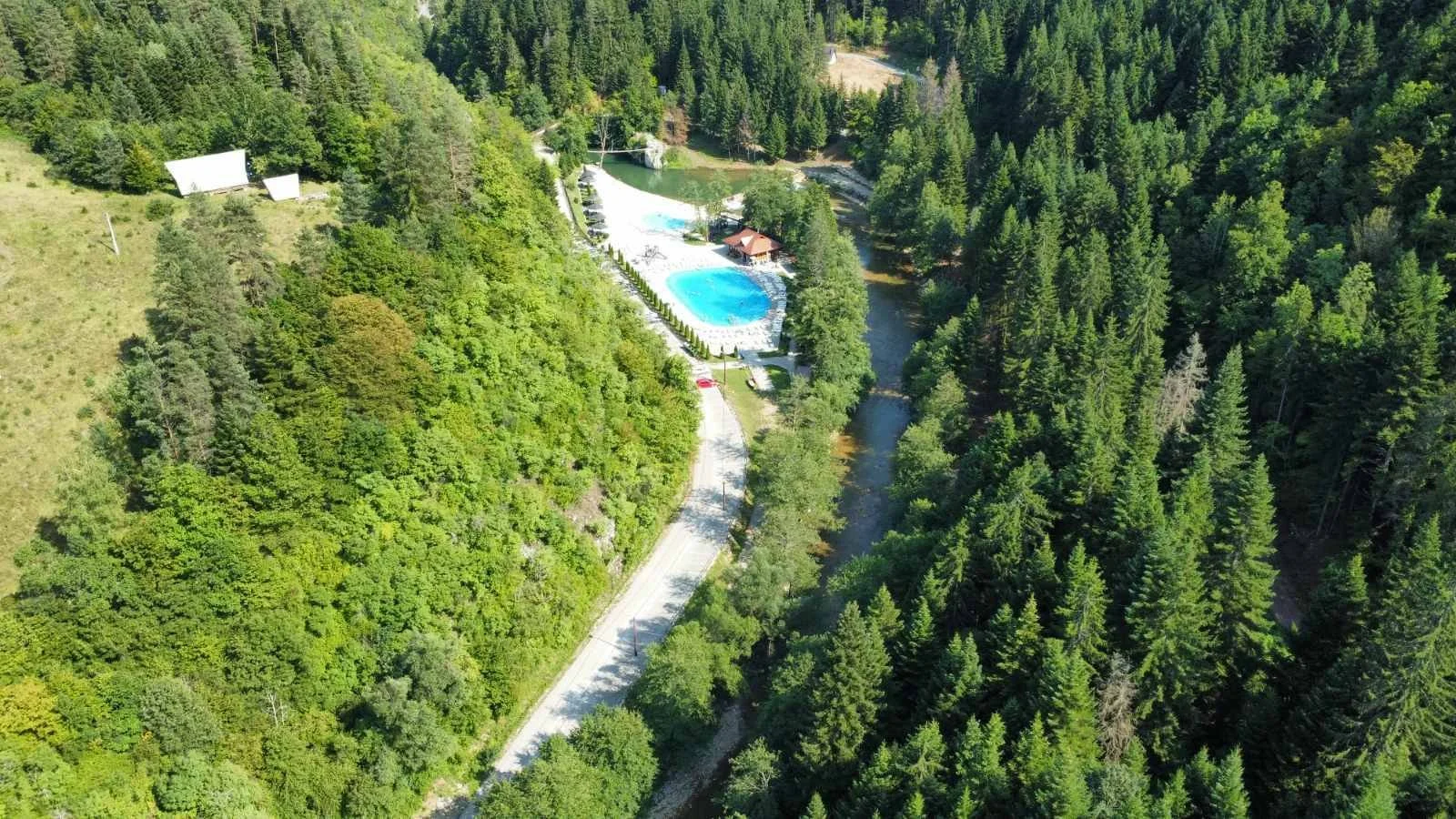
When the sun is shining (believe me, it shines like a mofo in summer), get your buns to Zeleni Vir. 3km from the centre of Olovo, Zeleni Vir is a riverside resort with food, drink, relaxation and splashing as far as the eye can see, although be aware that I’m using that figuratively, not literally. Either way, it is a great way to while away a summer day with good food, good drinks and good people.
© Eko BiH
Roman Bridge over the Orlja (Rimski most na Orlji)
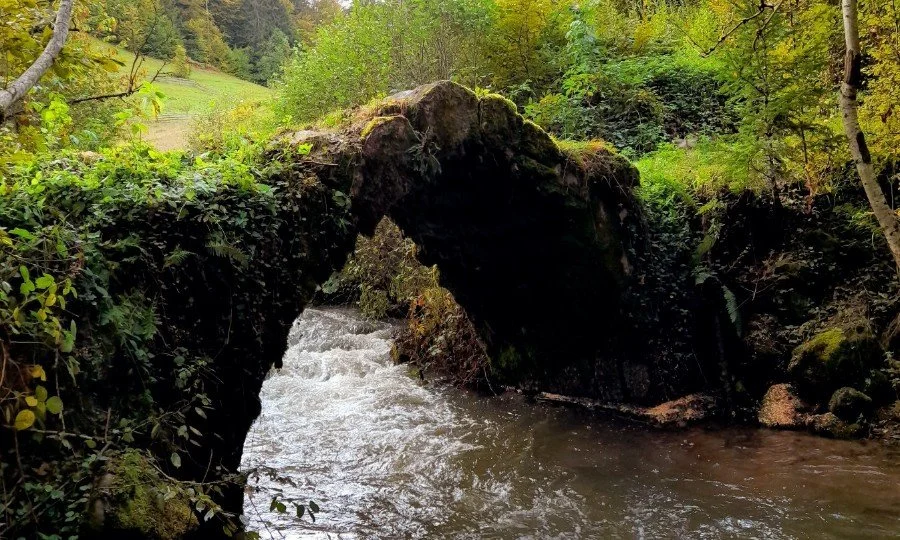
History really is spectacular, isn’t it? Even when it isn’t being particularly spectacular, it still manages to be so. That doesn’t make a whole lot of sense, but I think I know what I mean, and the ruins of the Roman Bridge in the hills above Olovo are a fine example. For one, it might not even be a Roman bridge, as the dilapidated condition of the bridge makes it pretty much impossible to tell. There isn’t a whole lot to look at, it being a dilapidated old bridge and whatnot, but a poor current condition doesn’t discount the value of the stories it holds within its stones. The bridge sits where the Orlja River flows into the Krivaja, near a village called Klinčići, a 20-minute, 11-kilometre drive west of Olovo. This is the old mining route, where silver and lead were transported between Olovo and Vareš, and that is enough to justify the bridge's existence (not that it needs justification). According to some, the old stećci stones were used to construct the bridge, which somewhat dispels the “Roman” aspect of it all, although there’s every chance this was a later addition. If nothing else, it’s a scenic spot, but the excitement here stems from the discursive tangents the bridge inspires.
© Faktor.ba
Obelisk in Bakići (Obelisk u Bakićima)
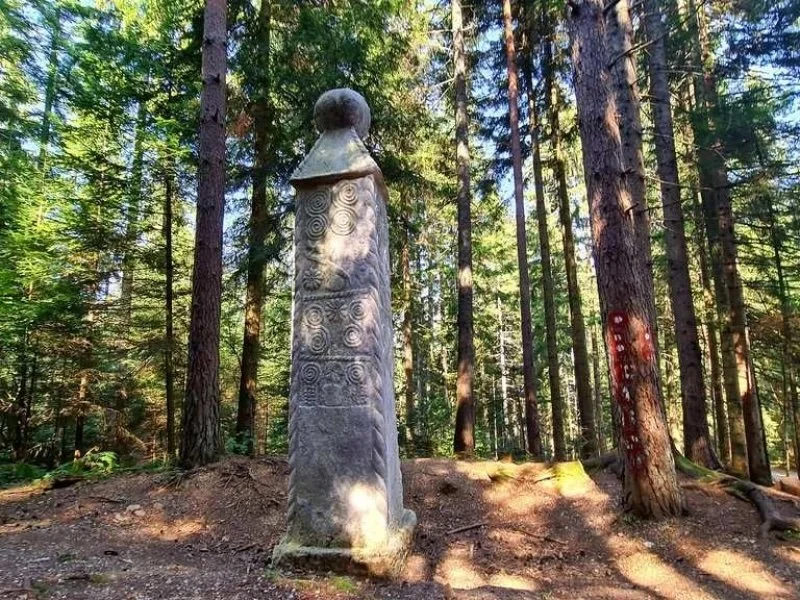
Not much is known about this imposing monument in the forest, but there sure are plenty of theories. This monolithic obelisk stands around 14 feet tall (rather tall, if you ask me), and the prevailing story is that it was erected by none other than Tvrtko I himself after wild boars injured the 14th-century Bosnian ruler during a hunt. You don’t want to mess with feral pigs, that’s for sure. Tvrtko survived the porky peril and decided to build the monument, and all attempts to move it have been unsuccessful. Hey, cool story! Probably not true, unfortunately, although I would wager that wild boars have injured folks here. Less excitable research suggests it is the Nišan of a wealthy nobleman who likely accepted Islam around the end of the 15th century. I prefer the Tvrtko/pig story, but I don’t make the rules. The obelisk is in the Vlaškovac forest just off the road in the village of Bakići, which itself lies on the road between Sarajevo and Olovo. Bakići
Čude Canyon
Bosnia and Herzegovina is a beautiful place. I may have mentioned that previously, can’t say for sure, but there’s never a bad time to repeat it. The spectacular Čude Canyon is further proof, as it dramatically sets its stall over nearly 4 kilometres between Petrovići and Bijeliš. The canyon is the work of the Stupčanica River and is all gorges and steep cliffs, and while there isn’t a whole lot to do there, that really doesn’t matter. If you need to be entertained in a place like this, you’re the problem. Gorgeous, gorgeous, gorgeous.
© Komisija za Očuvanje Nacionalnih Spomenika
Torah of the Ozmo Family (Tora u Olovu)
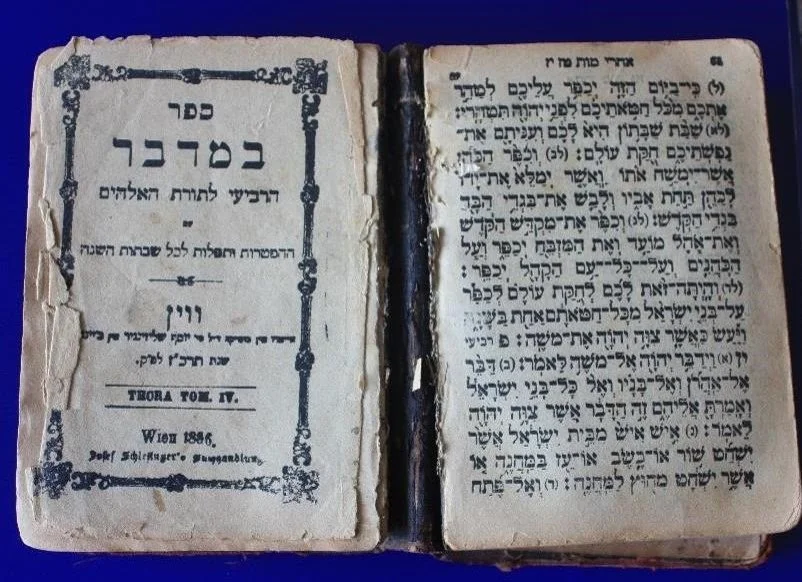
Printed in 1886, this special version of the Torah is kept under lock and key (in a display cabinet) in Olovo’s library. Nobody is entirely sure who it belonged to, but most like to believe that it was the Torah of the Ozmo family, and I’m happy to go along with that. The pocket-sized book was printed in Schlessinger’s famous Vienna printing house and is entirely in the Hebrew script. Nobody knows how it got to the library, adding another layer of mystery to the whole thing.
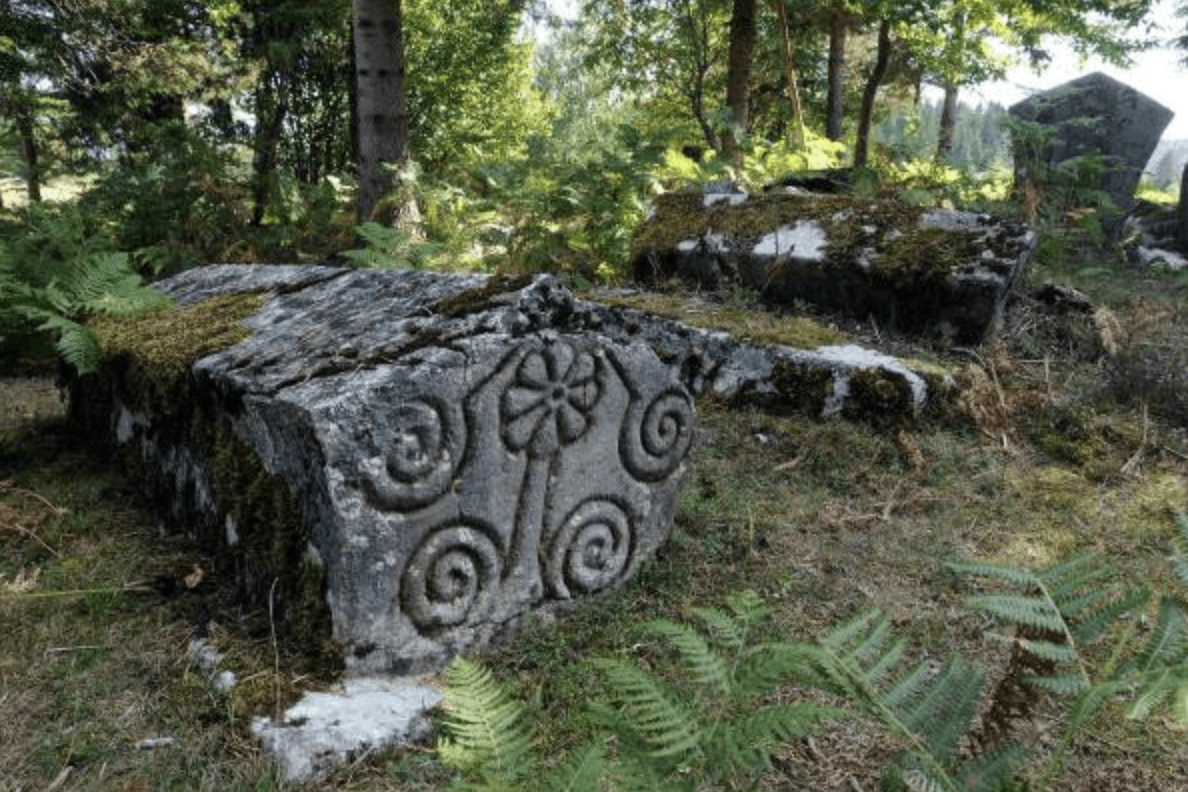
© Stecak WH
Mramor Necropolis (Nekropola Mramor)
If you’re on the old stećci hunt, Olovo provides fertile ground. There are heaps of stećak sites around the municipality, with the most notable found in the village of Musići. Known as the Mramor Necropolis (hence the headline), the necropolis features 80 stećci that sit in harmony with the elevated surroundings (it is located over 580 metres above sea level), with gables dominating. The necropolis is one of those that has made it onto the UNESCO World Heritage list, if you like a bit of UNESCO with your stećci.
BREWS, BOOZE, AND BITES

© John Bills
Wang dang doggy at the top of town, Behar (Branilaća +387 32 826 735) is a ćevabdžinica that doesn’t mess about, serving quality ćevapi in friendly surroundings. The town centre has a few cafes worth stopping in, with Azzaro (Branilaca, +387 61 853 692) at the top of the table. Oaza (Bosanska, +387 32 826 500) usually has dudes drinking beer outside, which is generally a good sign. The spa also serves food throughout the day, no matter the level of your ailments. If you’ve got your own wheels, Panorama (Sarajevska bb, +387 32 828 282) serves good food with even better views.
SLEEPING

© John Bills
Oh, how I wish I could recommend the Stari Hotel in the town centre, but that place is very, very closed. A few private apartments are dotted around, while accommodation is available at Aquaterm (Branilaca, +387 32 829 600). I’m not sure how I feel about recommending a stay at a rehabilitation centre; it feels a little off. My recommendation, not Aquaterm; that place is more than decent. There are also a handful of private apartments available for booking, many of which you’ll find on Booking.com.