VELIKA KLADUŠA
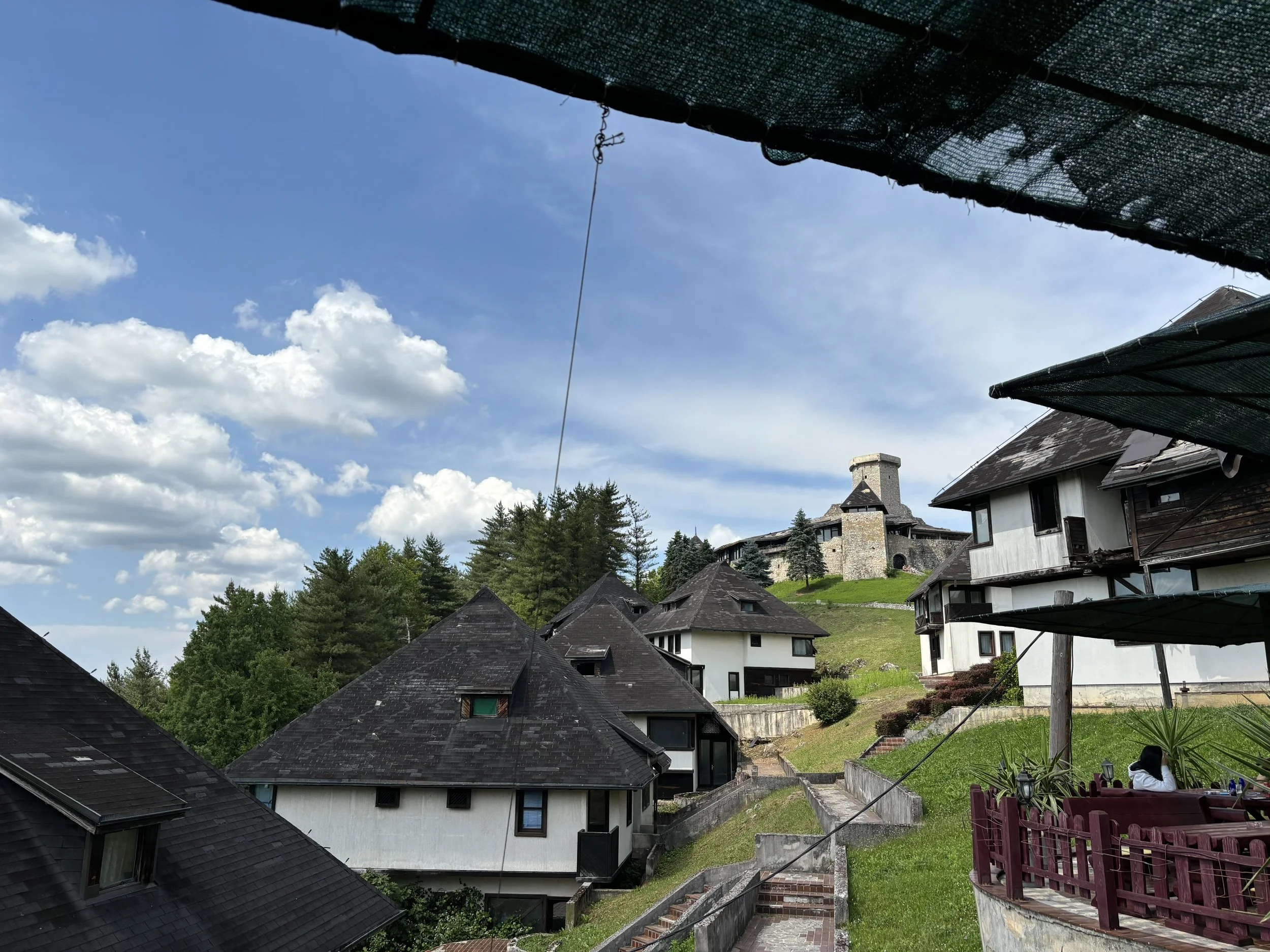
Velika Kladuša © John Bills
Hey, it’s Velika Kladuša, where Bosnia begins! If you’re heading into BiH from the northwest, you’ll likely cross the border just outside this small town with a big history. The landscapes are delightful, the history is, well, complicated, and the views from the fortress are utterly spectacular. Velika Kladuša doesn’t get the attention lavished on canton buddies Bihać, Bosanska Krupa, and Cazin, but that only adds another layer of charm to the town. If you’re into rolling hills, lush forests, impressive fortresses, stray dogs, and controversial wartime personalities, you’re going to love Velika Kladuša.
TRANSPORT
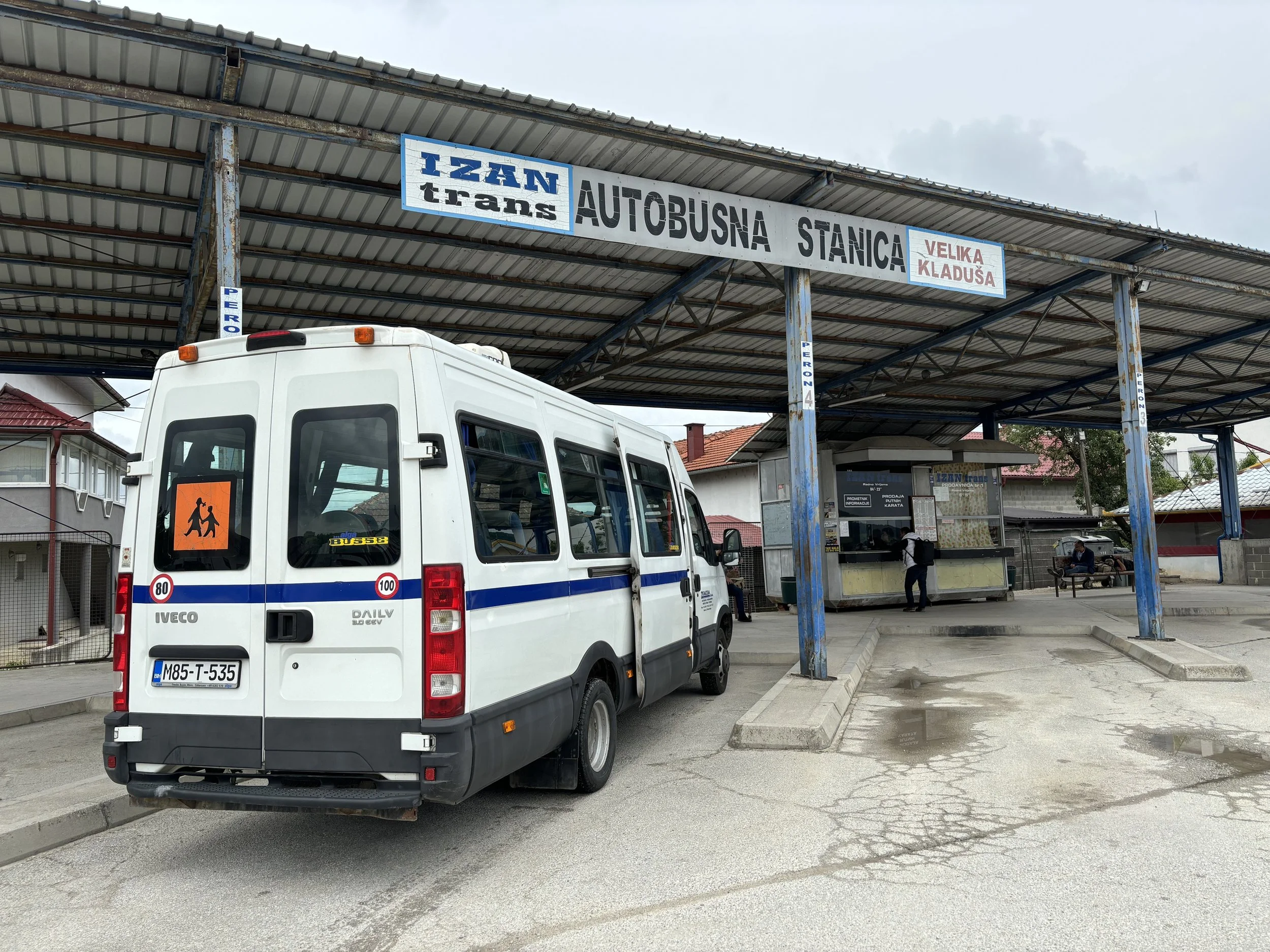
Velika Kladuša bus station © John Bills
There’s not much point in telling fibs, so let’s be honest. Velika Kladuša’s bus station is not the best. One of the worst, actually, although it isn’t really accurate to call it a station. More of a stop, or more of a bit of land outside the centre with a shack for tickets and lots of stray dogs. The station is a 10-minute walk from the central square, so it isn’t entirely atrocious. There is a decent cafe (and car wash) across the road from the station, if you need a coffee or want to get your car washed. Of course, if you are driving, you won’t need station info, but I digress. There are a handful of buses to and from Bihać and Cazin each day, and Kladuša is generally the last stop in BiH for those heading northwest (or the first stop for those entering from the northwest).
WHAT TO SEE AND DO
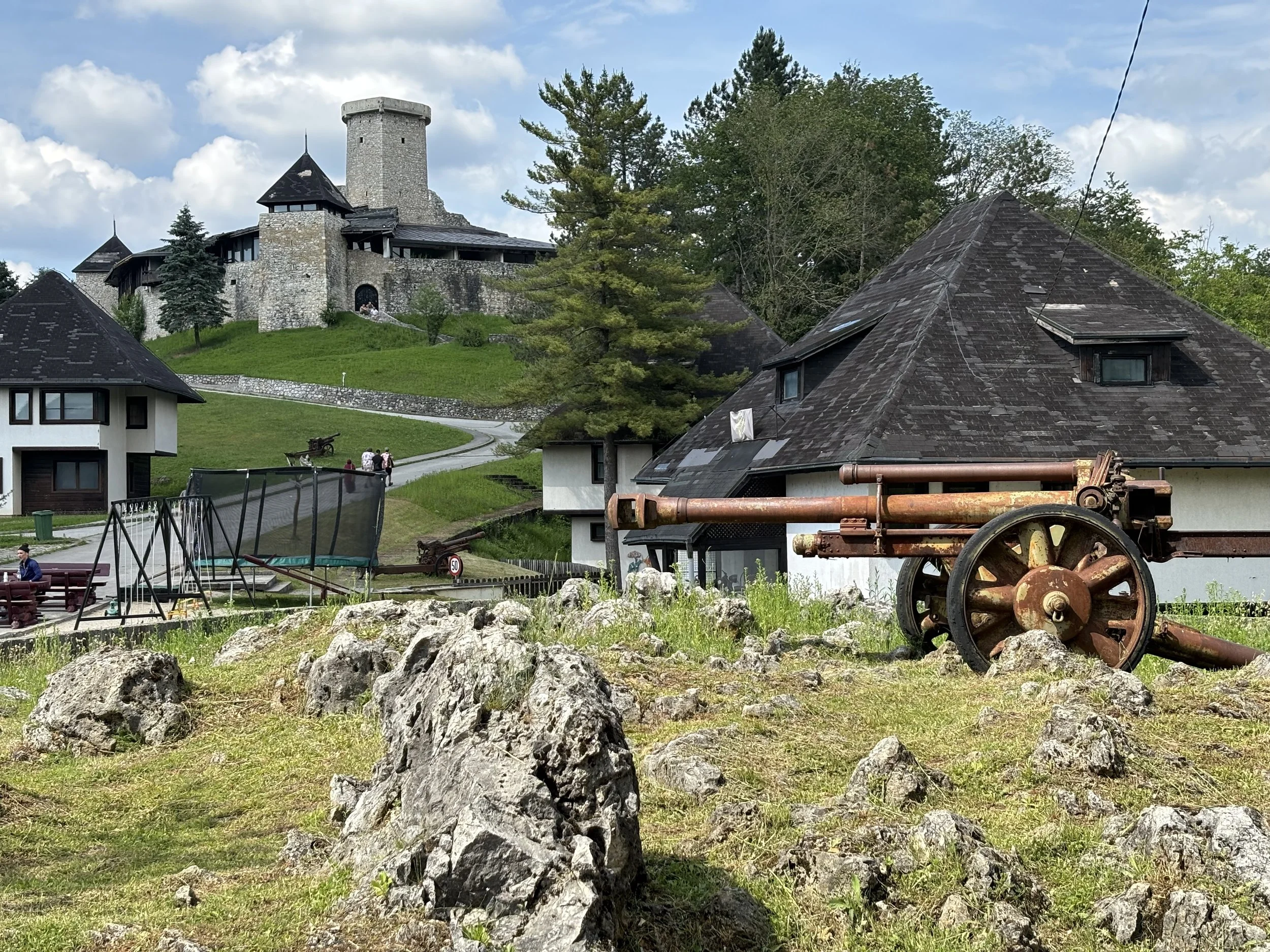
Fortress area in Velika Kladuša © John Bills
Stari Grad Velika Kladuša
First mentioned in 1280, Velika Kladuša’s castle fortress has seen its fair share of action over the centuries. It passed through the usual run of hands in those early centuries until the Ottomans captured it in 1633 (they had burned it down a century prior), and they then set about constructing much of what we see today. For the Ottomans, this castle was an integral part of their plans to continue conquering territory to the north, and its fortunes mirrored those of the wider Ottoman Empire. It was renovated many times, most notably in the 1970s when 16 traditional Bosnian-style buildings were constructed around the fortress for visitors (along with the restaurant that still stands today). Alas, if only I’d written this guide a couple of years ago, the main tower of the fortress was badly damaged in a fire in 2023, possibly an electrical fire, possibly after being struck by lightning. The cause matters not now, and the fortress is closed to visitors. You can still walk around the area and stop for coffee in the cafe, and I wholeheartedly recommend doing so. The views are spectacular.
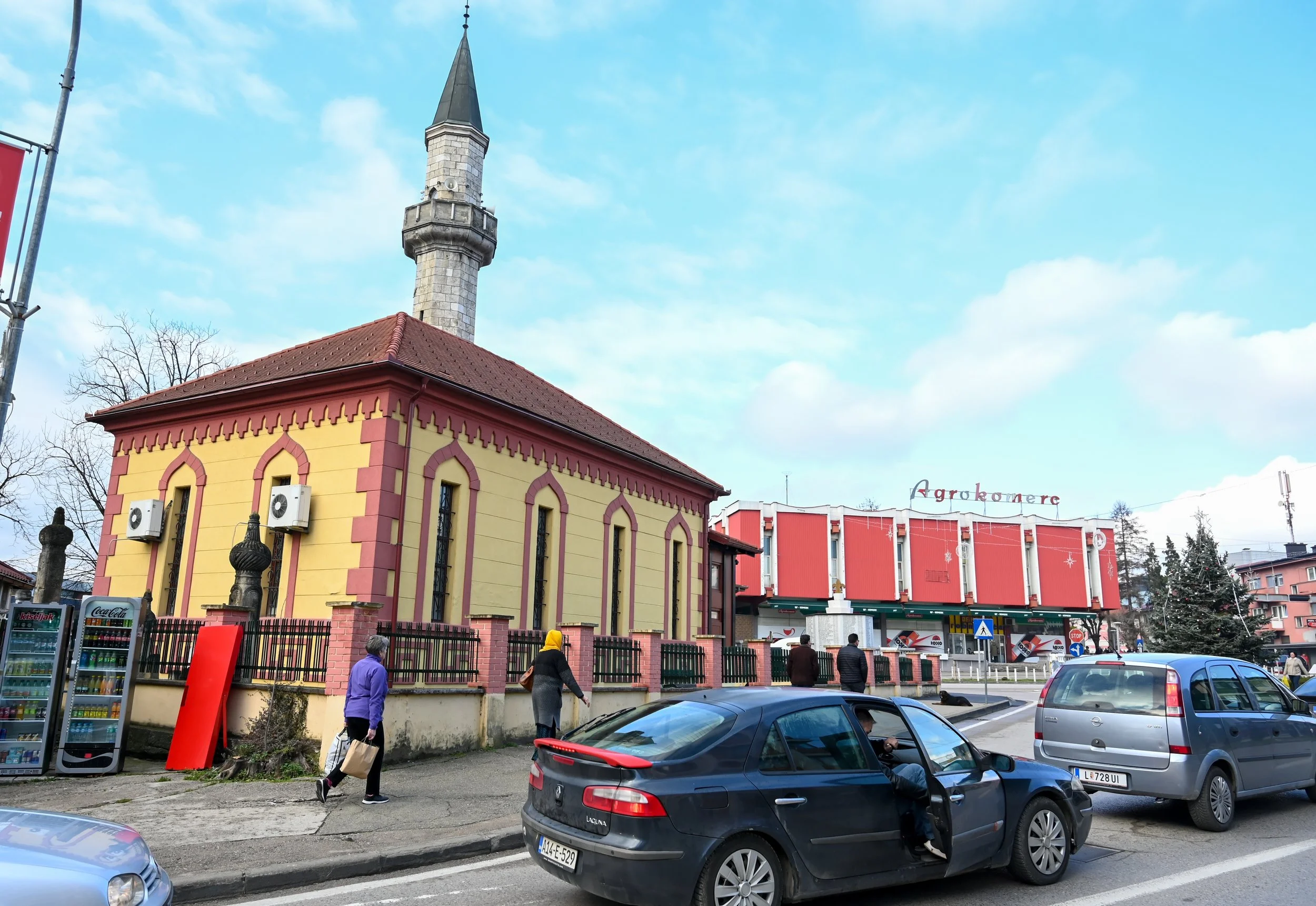
City Mosque in Velika Kladuša © Ajdin Kamber // Shutterstock.com
City Mosque (Gradska Džamija)
There is something special about the mosque in the centre of Velika Kladuša. It isn’t as old as many other mosques in the country, having been built in 1901 after the local Islamic community raised enough money to get the green light from the Austro-Hungarians. The mosque is a Moorish-ish beauty with terracotta-coloured walls and a gorgeously ornate door, a sturdy minaret, and the usual collection of memories in its gardens. Trg mladih
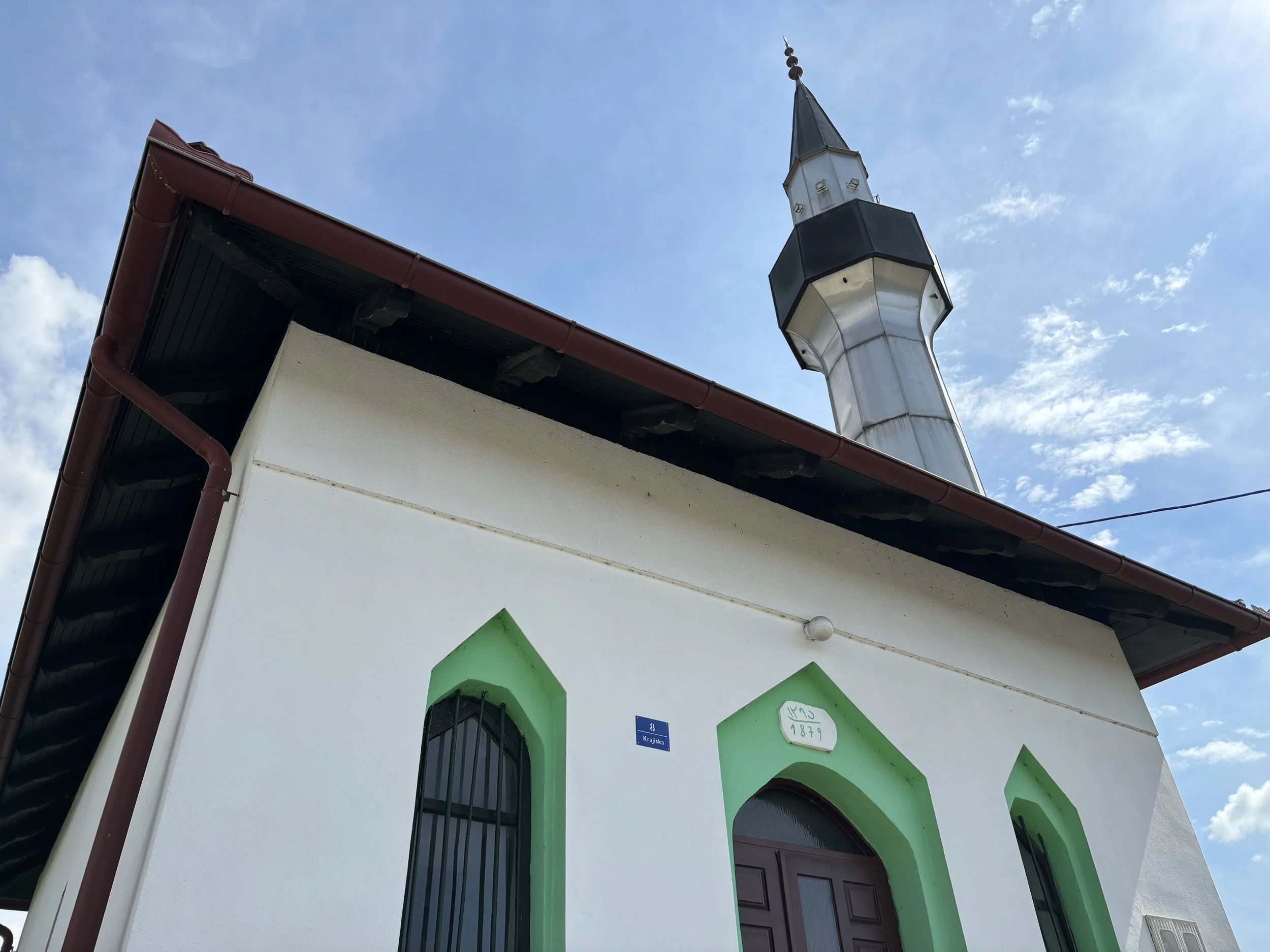
Old Zagrad Mosque © John Bills
Zagrad Mosques (Džamija Zagrad)
A dainty structure outside the centre of town, the 19th-century Old Zagrad Mosque sits idly by a stream without a care in the world. Constructed in 1879, the mosque itself is somewhat overshadowed (from an aesthetic perspective) by its octagonal minaret, a short, stubby finger to heaven that somehow manages to look both classy and cheap all at once. The construction of a more modern mosque nearby means that the old one is only rarely used, and the newer structure has it beat in beauty. This isn’t a contest, but the point stands. Zagrad
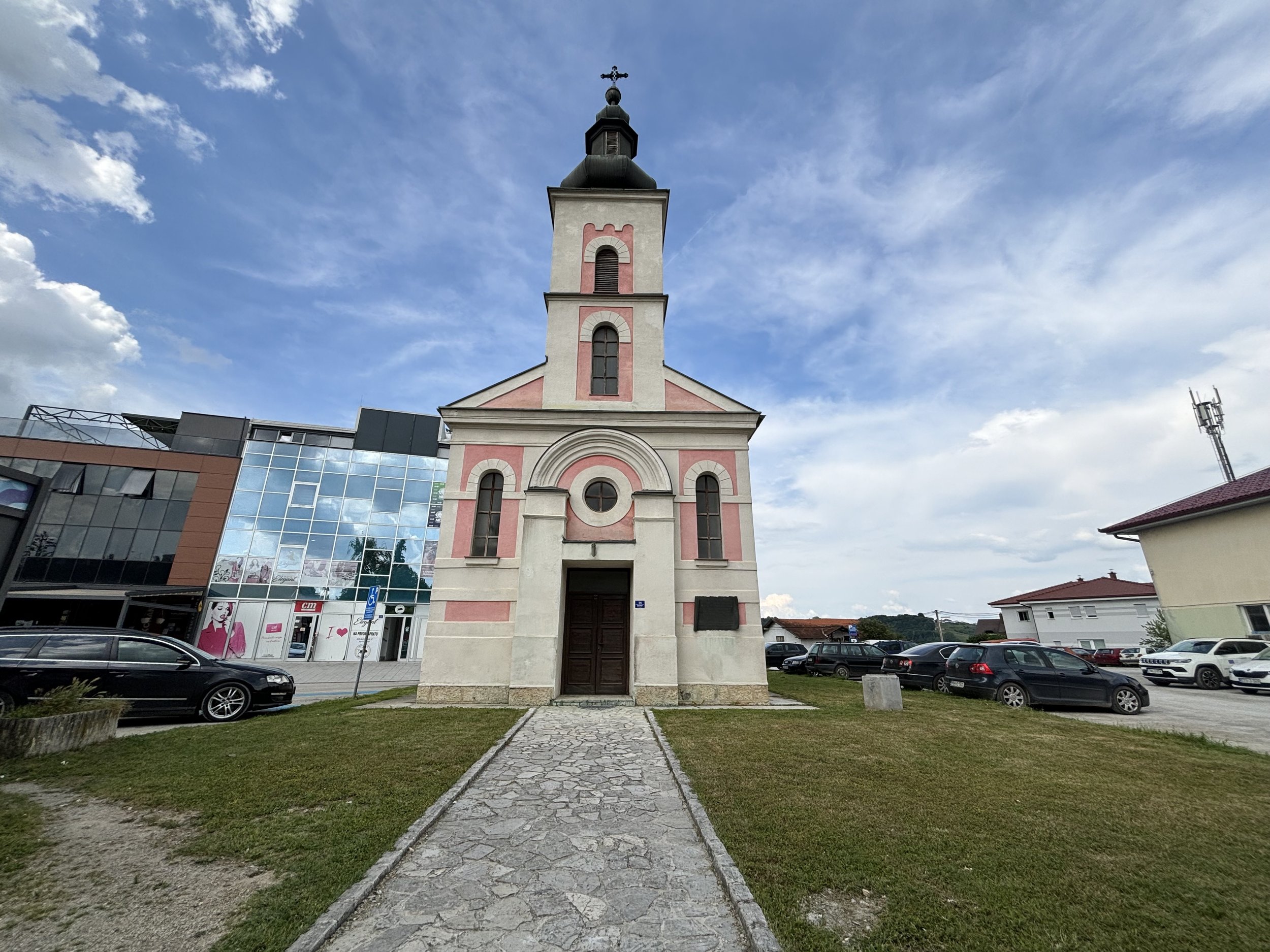
Orthodox Church in Velika Kladuša © John Bills
Church of St. George (Crkva svetog Georgija)
And just like that, by the side of the road, you find Velika Kladuša’s main Orthodox church. Constructed at the beginning of the 20th century, the Church of St. George is a plain stone structure that has seen tragedies aplenty over its decades, from World War II massacres to more recent damage, although the local community did protect it somewhat during the most recent war. The modern glass building behind the church makes for a somewhat jarring image, although that might just be me. Ibrahima Mržljaka
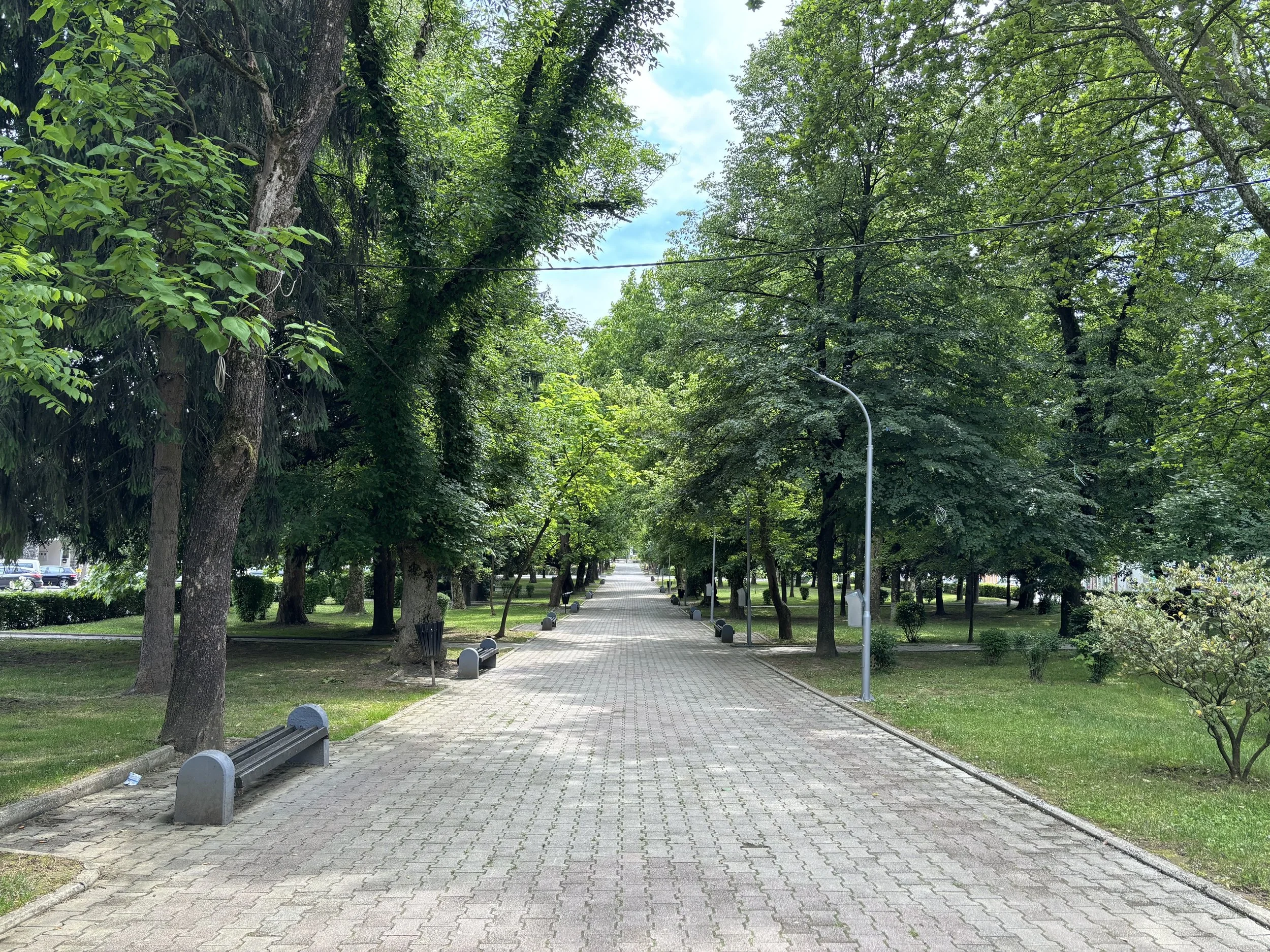
City Park in Velika Kladuša © John Bills
City Park (Gradski Park)
Smack bang in the centre of Velika Kladuša lies the City Park, a small but perfectly formed expanse of green that is perfect for relaxing in the shade on a hot summer’s day. There are a couple of monuments in the park (a striking World War II memorial takes most of the attention), and the park's layout makes it perfect for strolling up and down. Gotta get those steps in.
Stari Grad Podzvizd
Located some 5 miles outside town, in the hills surrounding Velika Kladuša, the Stari Grad in Podzvizd is another window into a past long forgotten. Declared a national monument in 2010, the remains of Podzvizd tell only a fraction of the story. Many believe it was built towards the end of the 13th century, making it one of the oldest fortresses in the country, and you’ll find hints of towers, guardhouses, ramparts and more. As with many defence structures around the country, the Ottomans invested considerable time and effort in developing it, and those flourishes remain in the form of the Podzvizd Mosque today. Podzvizd
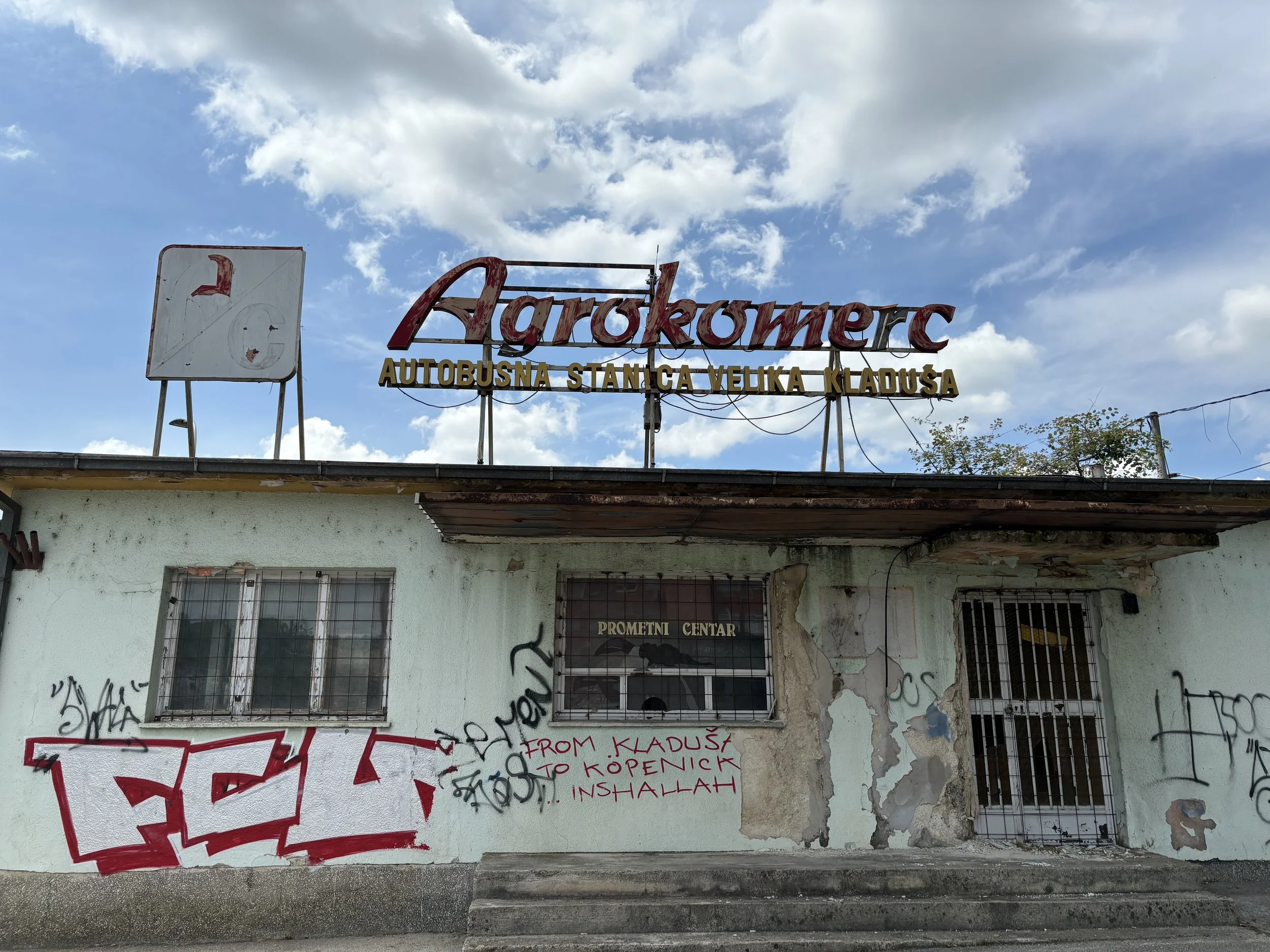
Agrokomerc sign above the old bus station in Velika Kladuša © John Bills
Agrokomerc
Okay, not exactly a tourist attraction and somewhat of a touchy subject, but you can’t really talk about Velika Kladuša without at least mentioning Fikret Abdić and Agrokomerc. What started as a chicken farm on the outskirts of town grew into one of Yugoslavia’s most successful food manufacturing companies and the driving force behind Velika Kladuša’s success. Fikret Abdić took over in 1967 and expanded the company, creating a network of farms in the area and ploughing money into regional roads, water, electricity, education, and more. At its height, Agrokomerc provided jobs for thousands and was a respected name heard throughout Europe. Alas, it was all a bit too good to be true, and the ‘80s saw charges of corruption, bribery, and dodgy dealings laid at the company’s door. The war put a stop to all that, by which point Abdić had made the jump from business to politics. Why does that always happen? Abdić actually beat Alija Izetbegović in the 1990 election, but that only led to further fragmentation. Velika Kladuša was isolated during the war, and Abdić eventually declared the Autonomous Province (later Republic) of West Bosnia and negotiated with the Serbs and Croats. He was either a traitor or a man singularly focused on Velika Kladuša. Of course, both of those will be true. It led to a war within the war for Bosnia’s Muslims, one that ended with Abdić defeated. He was arrested for war crimes in 2002 before being elected mayor of Velika Kladuša in 2016. Agrokomerc? It still stumbles along, a shadow of its former self, and you’ll see plenty of faded Agrokomerc signs around Velika Kladuša.
BREWS, BOOZE, AND BITES
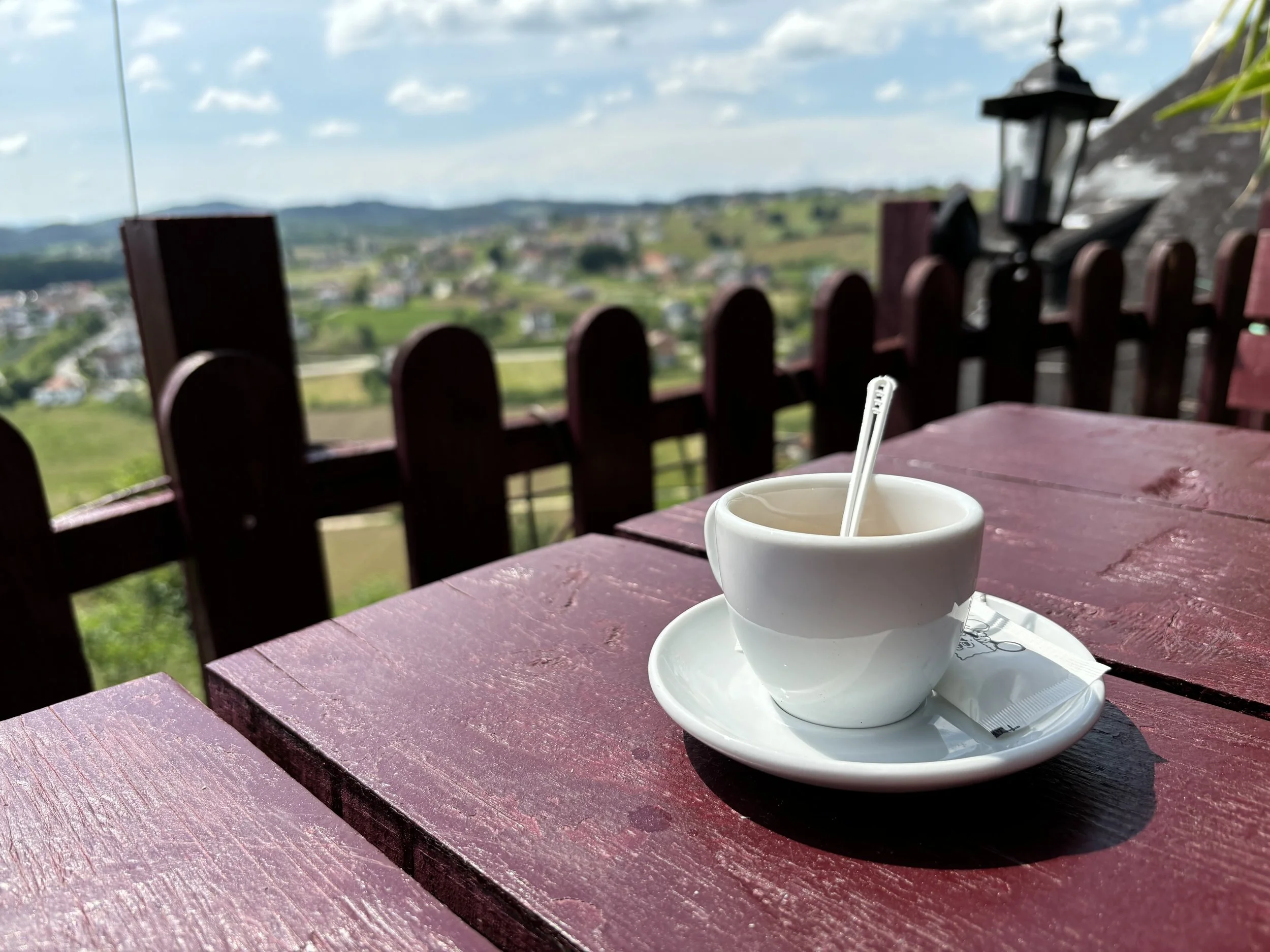
Coffee with a view in Velika Kladuša © John Bills
If you only stop for coffee in one spot in Velika Kladuša, head up to the fortress and make it Mejdan (Stari Grad). The coffee is more than decent, but it is the views that make it a must, views that stretch out far and wide and leave you in no doubt as to why the fortress is up here. Hopefully, you’ll have time for more than one drink in town, and there are a handful of decent options in the town centre, namely Central (Trg Mladih 3) and Grand (Ibrahima Mržljaka). There is also a cafe called Ghostbuster’s (Šerifa Omeragića), so I’m obviously going to give that some love. Bustin’ makes me feel good, after all, even if there is an incorrect apostrophe involved. On the food front, nothing stood out other than the hotels: Vrata Bosne (Ibrahima Mržljaka, +387 37 771 271) and Palace (Ibrahima Mržljaka, +387 37 770 270), although Napoleon deserves a mention.
SLEEPING
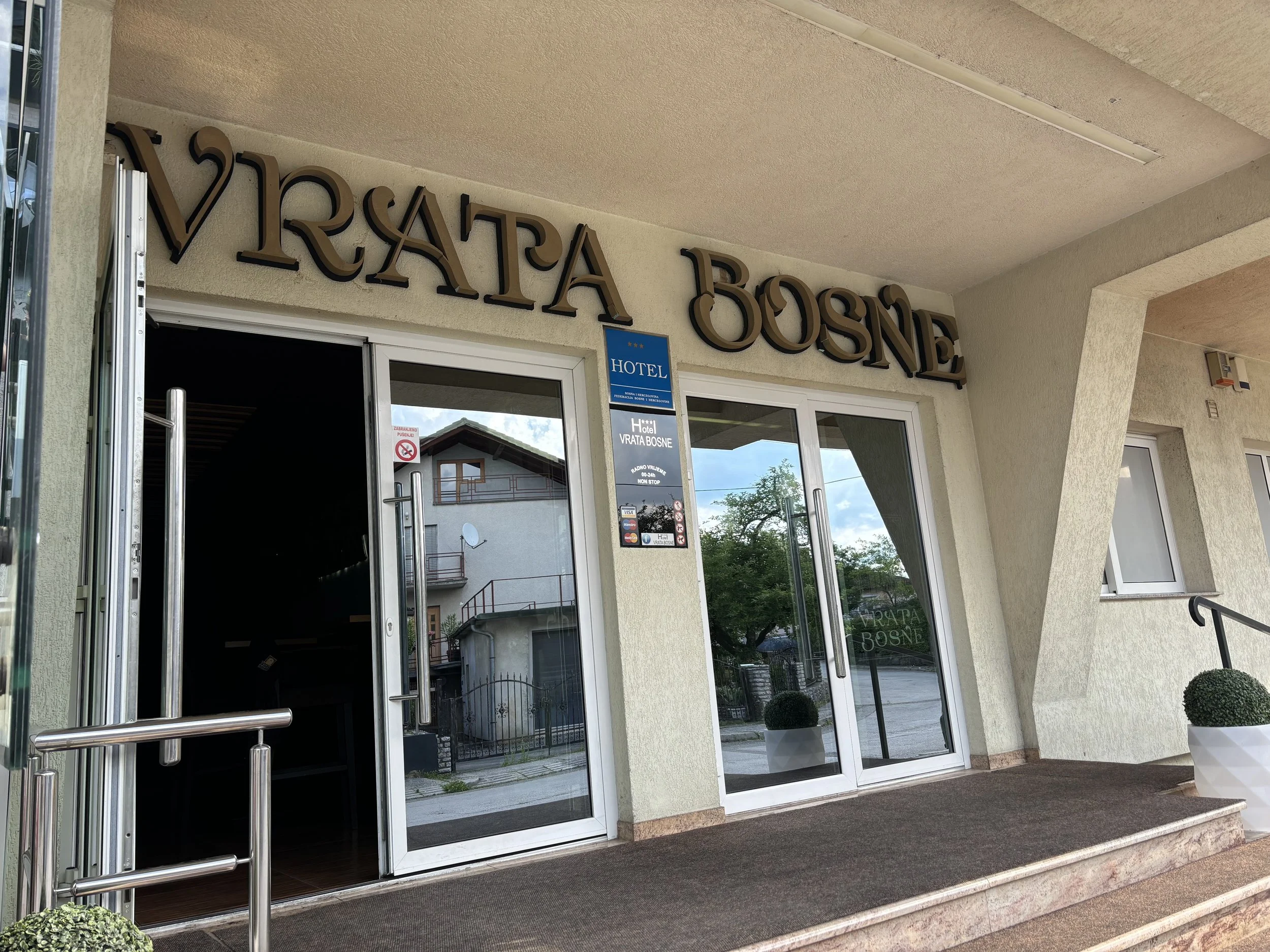
Hotel in Velika Kladuša © John Bills
Vrata Bosne (Ibrahima Mržljaka, +387 37 771 271) is the best bet in town, with a decent location to the north of the main square to go with friendly staff, good food, excellent coffee, and sexy red lighting. The fancy-pants Palace (Ibrahima Mržljaka, +387 37 770 270) is a little further out of town and is a little more on the high-quality side, with friendly staff, modern facilities, and some of the best food in town.