POFALIĆI
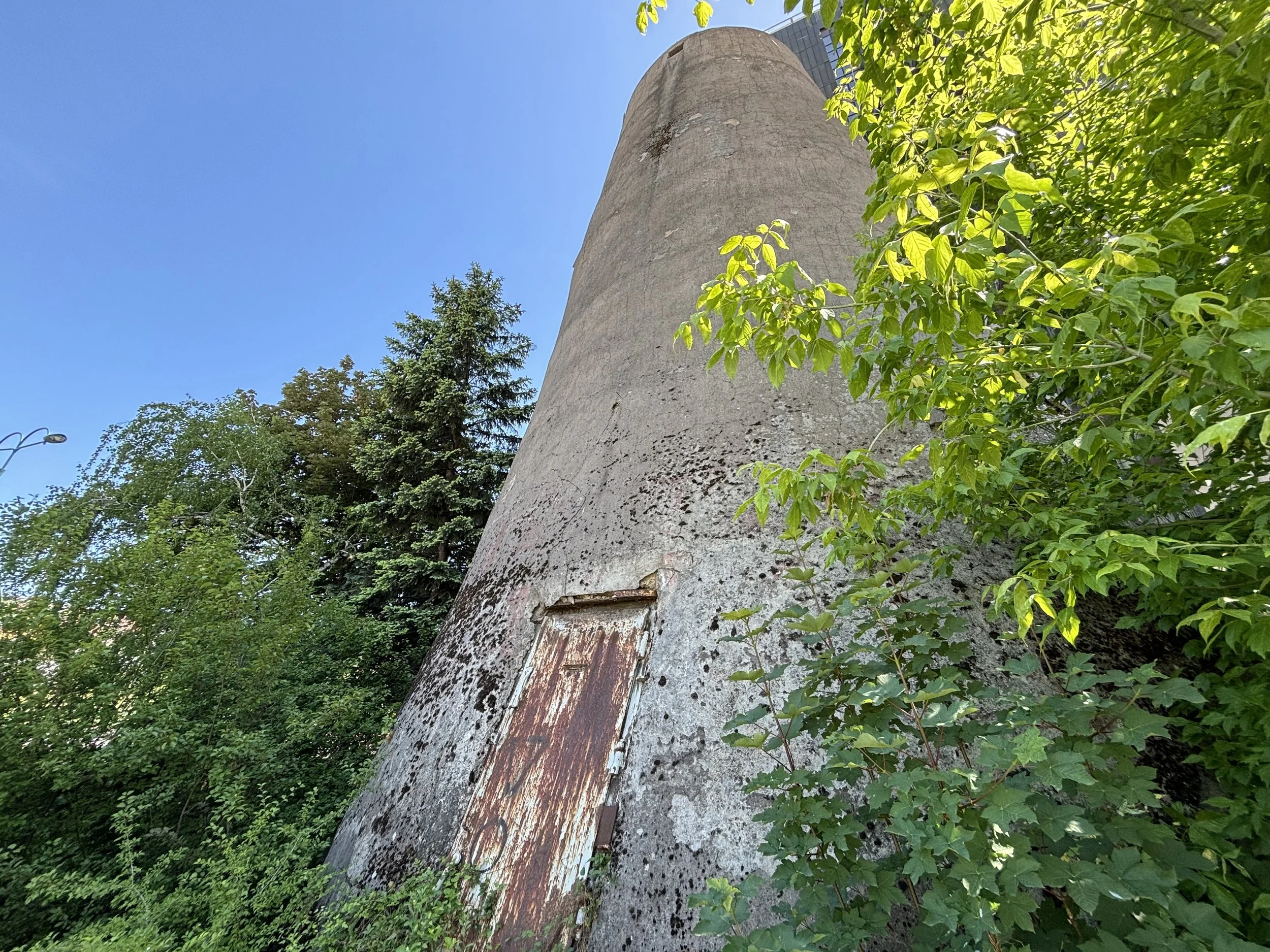
Winkel Tower © John Bills
Don’t expect much in the way of new information when it comes to the life and times of Novo Sarajevo, because I am lazy and there isn’t a whole lot to say. Novo Sarajevo is basically a collection of small settlements joined together, and Pofalići is one of the most notable today. Notable primarily because of its proximity to the city centre, but notable nonetheless. It is split into two sections, creatively named Pofalići I and Pofalići II, with the delightful Hum Hill rising above. It used to be a popular recreational site for local folks, although that isn’t so much the case anymore. Jumbo is here, and I’ll hear no bad words said against Jumbo.
TRANSPORT
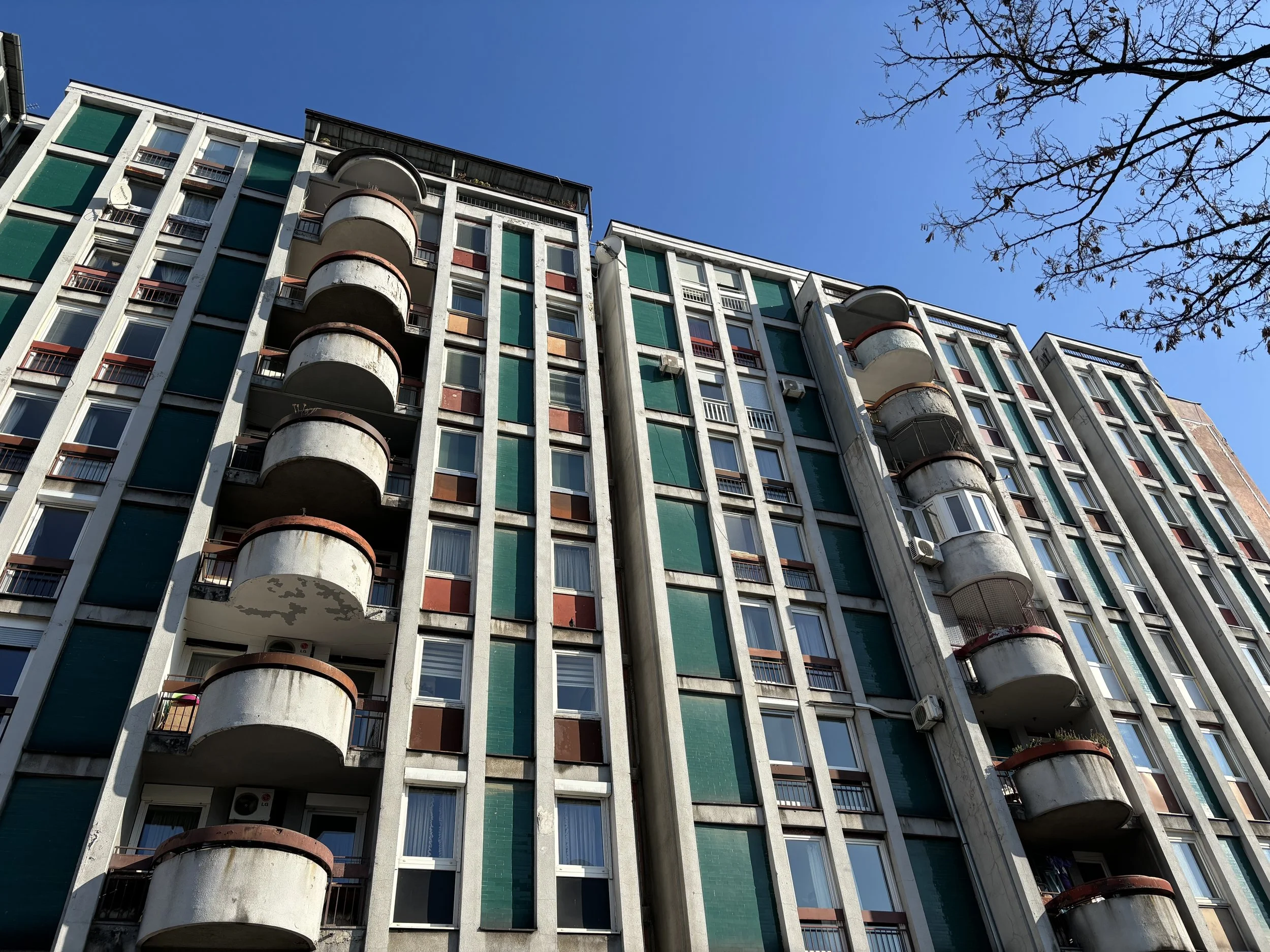
Residential building in Pofalići © John Bills
As modern Sarajevo is essentially a massive road with things on either side, Pofalići is easily accessed by pretty much all buses and trams heading out of the centre. The bus stop is next to a kids’ playground and residential building, although that likely doesn’t help too much, seeing as Novo Sarajevo is swamped with residential buildings.
WHAT TO SEE AND DO
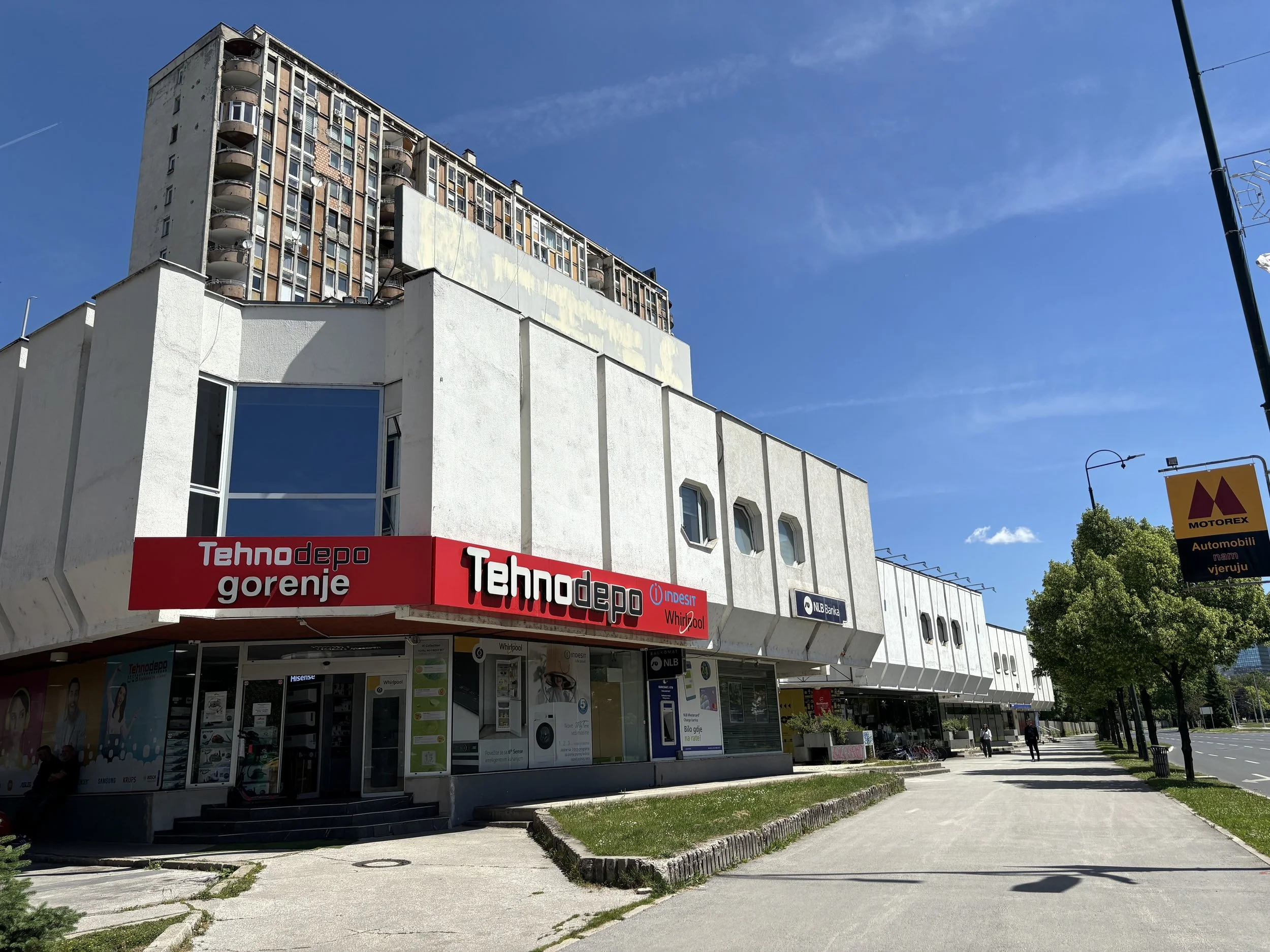
Cube Buildings in Pofalići © John Bills
Pofalići Cube Buildings
Sarajevo is overflowing with architectural curiosities lurking between those imposing residential blocks, and you can go ahead and add these cube charmers to the list. I can’t find a whole heap of information about them, but maybe that is for the best. A little mystery never hurt, after all. These bone-white cubes in Pofalići were constructed in the 1980s as part of Belgrade Faculty of Architecture graduate Srboslav Stojanović’s reworking of Novo Sarajevo. Srboslav? He was responsible for many of the residential blocks in Dobrinja, as well as hospitals in Foča, Kiseljak and Zvornik. The cubes largely go unnoticed today, housing a ragtag collection of shops and empty spaces, but they provide a striking visual contrast against another monolithic block. Zmaja od Bosne
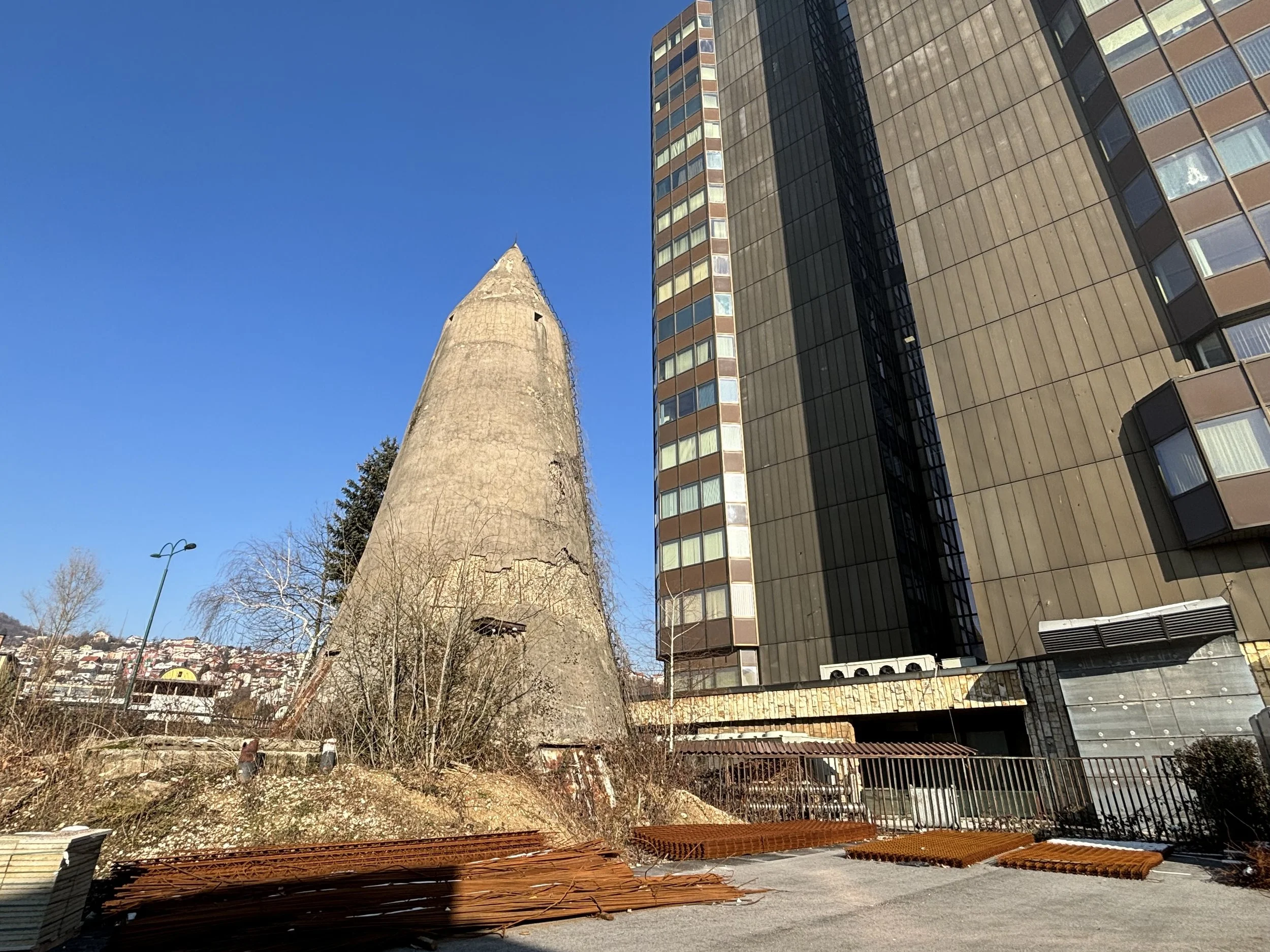
Winkel Shelter © John Bills
Winkel Shelters
Yes, Leo Winkel is a funny name. Chortle, chortle. Alas, the two weird conical structures in Pofalići that take the name of the Köln-born architect and builder are anything but chucklesome. There used to be four Winkel Shelters in these parts, providing shelter for the workers, engineers, and technicians at the nearby railway workshop. The Nazis built them during World War II, erected above ground because that was cheaper, and the bizarre conical shape makes sense, especially if you are in a plane trying to bomb the thing. Difficult to see from the air, and all that. As mentioned, only two of the hardy buggers remain, and one was used by the Association of Radio Amateurs in BiH for storing equipment. Get in touch with them, and maybe they’ll show you inside. Unlikely, but you never know. If not, admire them from the outside (the shelter, not the amateur radio folk) and then nip into Zeka for all your household requirements. Hamdije Čemerlića
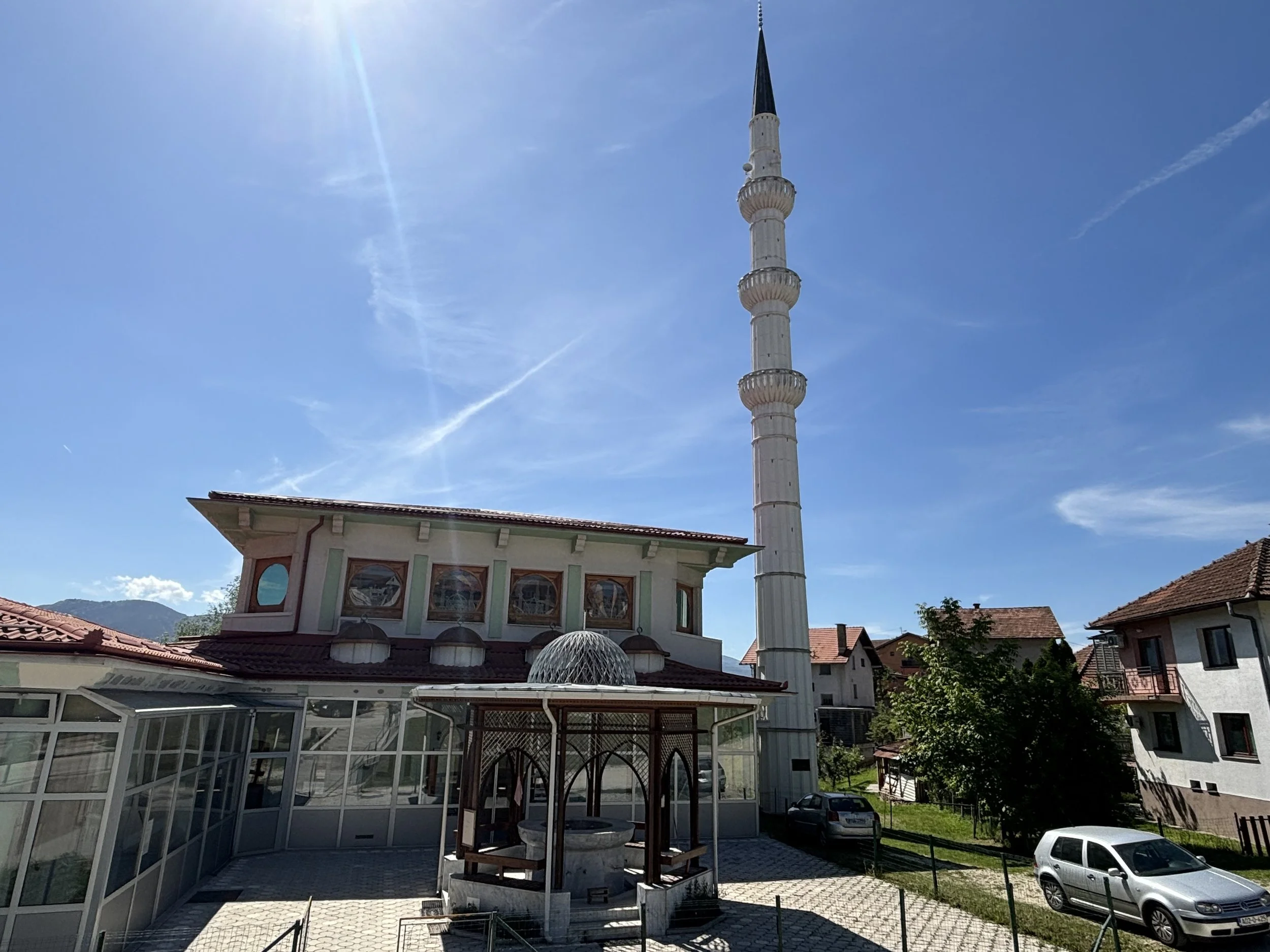
Pofalići Mosque © John Bills
Pofalići Mosque (Centralna Džamija Pofalići)
Not a whole lot to write home about here, as the mosque is more functional than flamboyant, although isn’t that how it should be? Located up the hill from Hotel Italia, the Pofalići Mosque is the central house of worship for around 3,000 households and was constructed in 1999, although the imposing minaret came about a decade later. There is a school building next door, and plans for some coffee-centric meeting point in the future. Orlovačka bb.
Sarajevo Tobacco Factory (Fabrika Duhana Sarajevo)
The doors closed in 2022, and it looks like a portion of the complex now belongs to Fine Foods, but Fabrika Duhana Sarajevo’s place in the city's history is eternal. Established in 1880, the city started pumping out cigarettes a couple of years later, producing the things manually until 1905. As business boomed and the company grew, this large complex was constructed in Pofalići in the ‘60s, paid for by the workers because socialism and all that jazz. It even stayed open during the war, making cigarettes out of textbooks, leading to the old quip that you couldn’t read about the wretched health hazards of smoking, but you might learn about revolution, engineering, physics or something else. A contract with Philip Morris meant Marlboro were produced here, although the power of the local Drina never waned. For the record, Sarajevo Drina are better than Belgrade Drina, and I’m yet to meet anyone who disagrees. Smoking kills, I guess I should say that, but you do you. Pofalićka 5
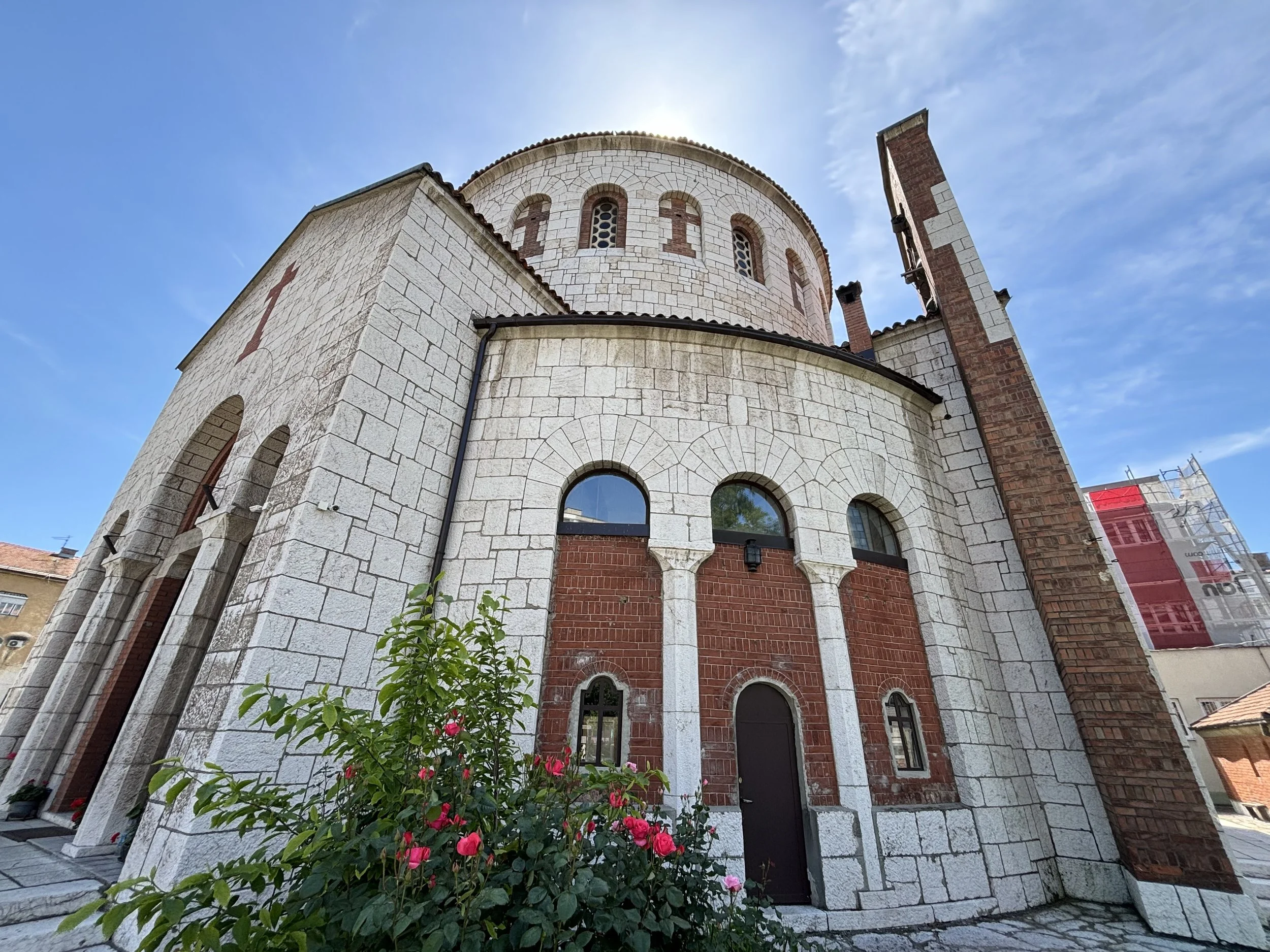
Orthodox Church in Pofalići © John Bills
Church of the Transfiguration of the Lord (Crkva svetog Preobraženja)
The only Orthodox Church in Novo Sarajevo, the Church of the Transfiguration of the Lord is a beauty. Consecrated in 1939 and completed a year later, the church was built to accommodate the growing city and used plans for a church in Split that had been under construction before being abandoned. Sarajevo is all the better for this Alexander Deroko-designed beauty, a circular structure made of white limestone with an interior painted by Montenegrin Jovan Zonjić. Zmaja od Bosne 43, +387 33 664 505
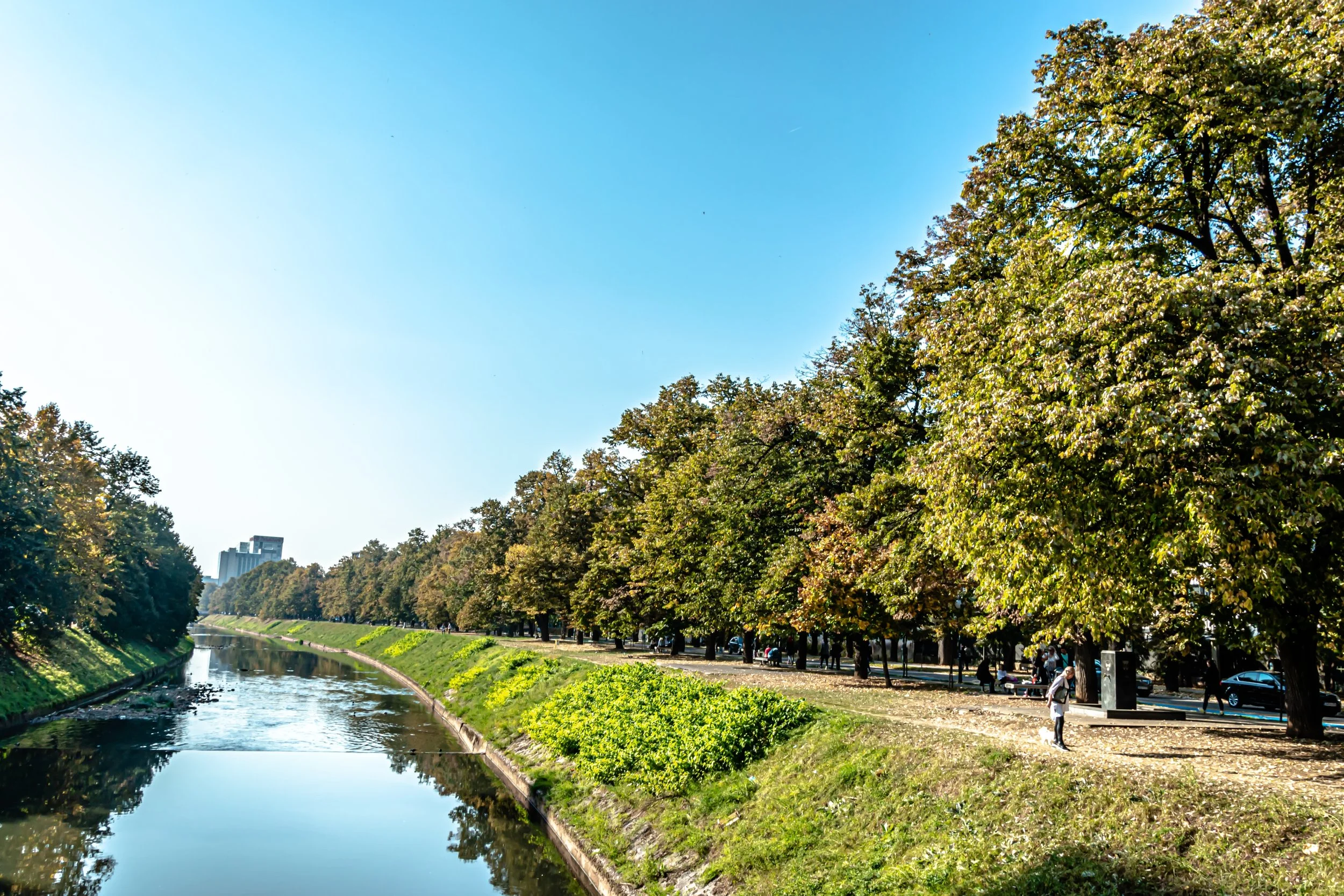
Vilsonovo Šetalište © Vedad.Ceric // Shutterstock
Vilsonovo Šetalište
It has existed under many names, but the central idea of this famous promenade has persisted throughout. Conceived under Austro-Hungarian rule (they sure did love a shaded walking area), it began life as Kalajeva Promenade (after Benjamin Kalaj) before being christened Vilsonovo Šetalište, after everyone’s favourite supposedly isolationist and freedom-loving but actually pretty expansionist and quite racist American president, Woodrow Wilson. During the fascist occupation in World War II, it was renamed after Mussolini, and the Yugoslavs called it Youth Promenade, but Wilson seems to have prevailed. Read into that what you will. No matter the name, this stretch of walking wonder is accentuated by nearly 500 linden and chestnut trees and can get hella busy in spring and summer. You can’t blame a single stroller, as it really is one of the most delightful stretches in Sarajevo.
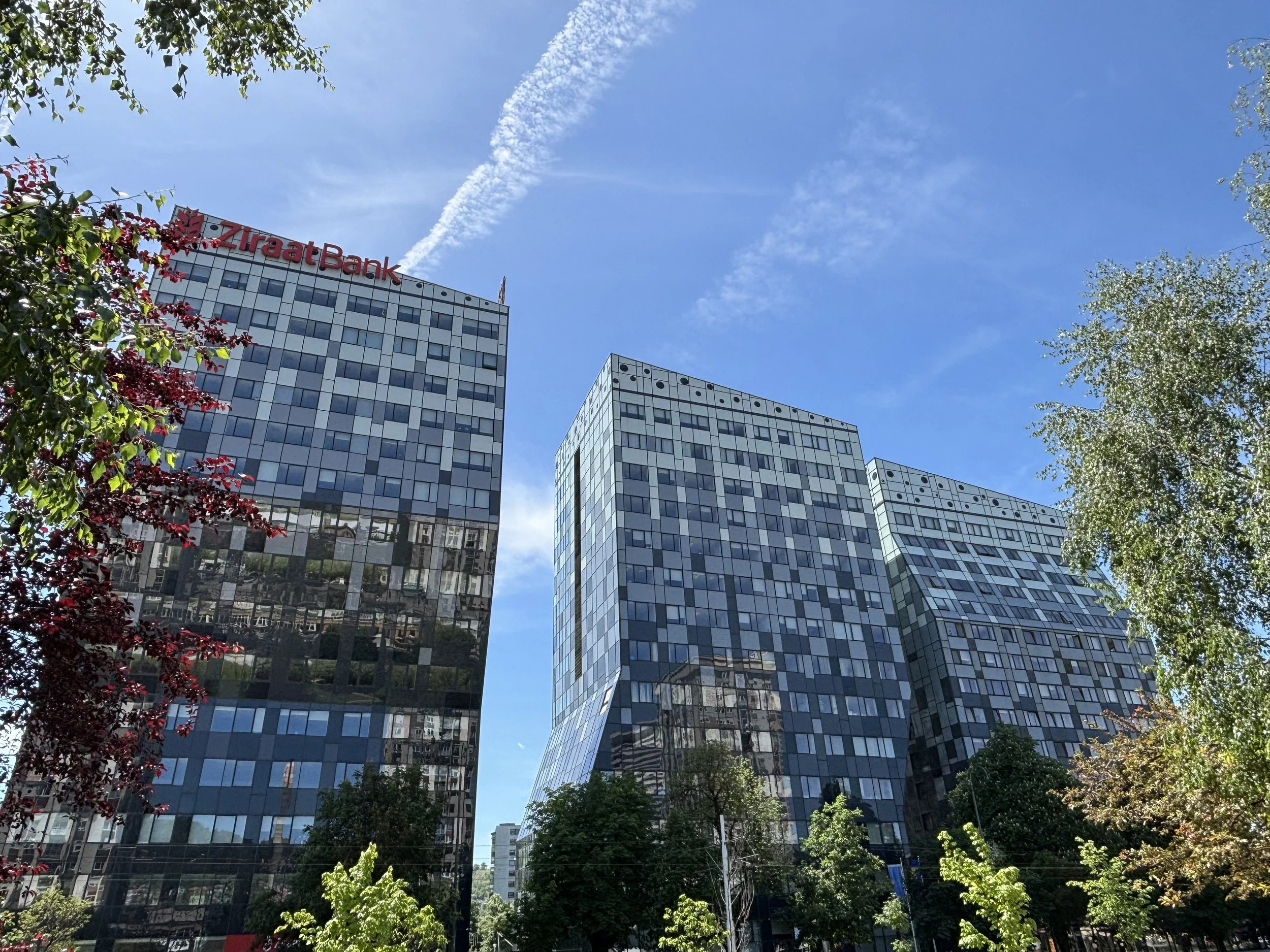
Blok S2 in Sarajevo © John Bills
Blok S2
Here’s another of those “it’s interesting because it is tall” buildings. Blok S2 in Pofalići is one of the tallest buildings in the city, top 10 at the very least, although it is actually three damn buildings. The skyscrapers are all glass facades with a charmless aura, a slice of Instagram in Real Life, and contain offices, shops, and other businesses. Why people are obsessed with building glass skyscrapers, I will never know. Zmaja od Bosne
BREWS, BOOZE AND BITES
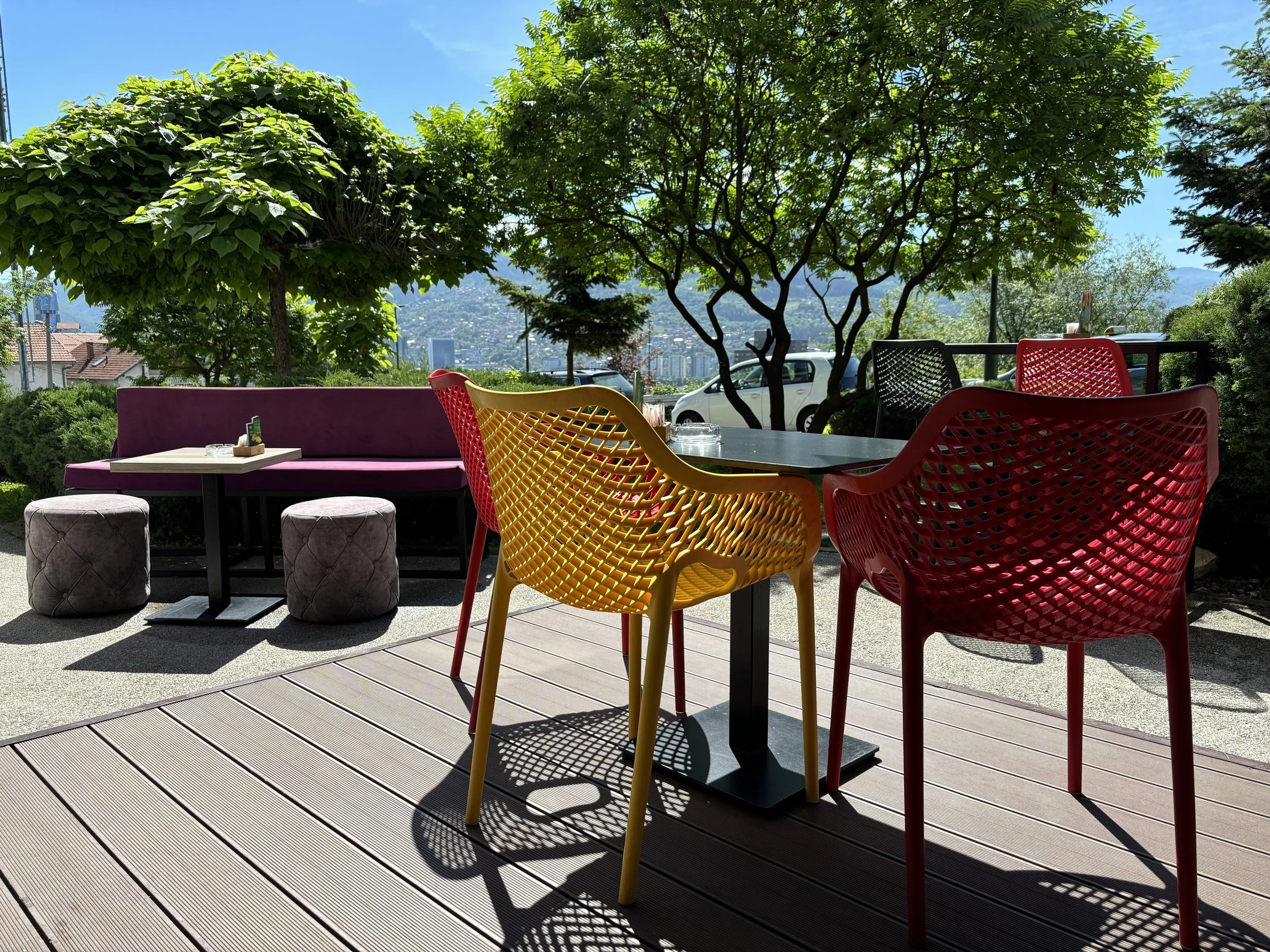
Cafe Hill in Pofalići © John Bills
There are lots of good informal fast-food spots in Pofalići, with Buregdžinica MM (Kolodvorska, +387 62 701 595) pumping out hot, high-quality pita throughout the day. It makes šareni burek frequently enough to warrant a mention in my book. For my sins, I also enjoy Chipas (Kolodvorska 12, +387 62 460 888) from time to time. Druga Kuća (Kolodvorska, +387 33 716 700) is an excellent cafe for getting some work done (or just slamming a couple of espressos). Billiard Darts Club 69 is also in Pofalići, and while I’ve not actually been (soft tip be damned), it offers exactly what you imagine. Trattoria Uno (Zmaja od Bosne 45, +387 33 875 014) is a half-decent spot for some Italian-ish food. On the hillside of the neighbourhood, Cafe Hill (Zahira Panjete 7D, +387 33 871 495) is a pleasant spot for a coffee by the mosque.
SLEEPING
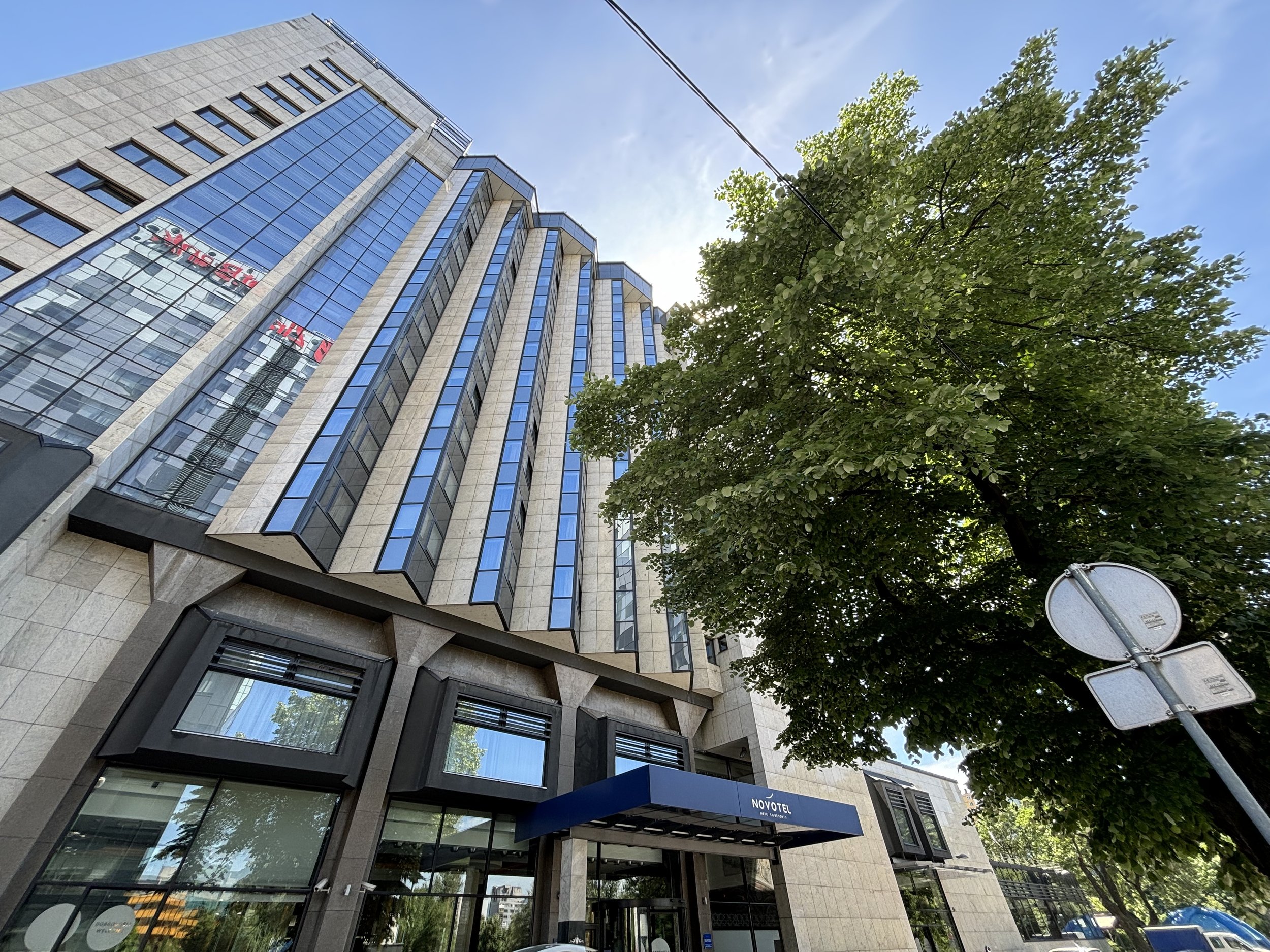
Hotels in Pofalići © John Bills
Pofalići is a decent option for anyone who wants easy access to the centre of town without having to deal with all the hustle and bustle (yes, there is hustle and bustle in Sarajevo). For whatever reason, its two most notable accommodation options are smack-bang next to each other, namely Boutique Bristol Hotel (Fra Filipa Lastrića 2a, +387 33 612 404) and the fancy-schmancy Mövenpick Hotel (Fra Filipa Lastrića, +387 33 705 000). I don’t think Hotel Italia (Pofalićka 7) is open anymore, but it looks pretty cool, at least from an old Yugo-era sort of perspective.